

Evacuation Brisbane Airport International Terminal Delays
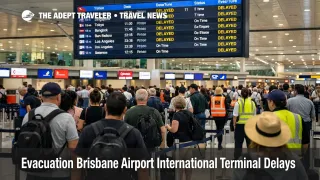
A precautionary evacuation on Level 4 of Brisbane Airport (BNE) International Terminal briefly disrupted outbound processing after smoke from air conditioning testing triggered the fire alarm. International passengers checking in, clearing security, or using lounges on Level 4 were pushed into delays, and traffic around the terminal precinct tightened as the building cleared and then reopened. If you are departing Brisbane soon, arrive earlier than normal, keep your airline notifications active, and expect staff to prioritize processing by departure time rather than by who arrived first.
The Brisbane Airport international terminal evacuation changed the normal first come, first served flow into triage processing, which matters because airline cutoffs for bag drop and boarding do not automatically move just because the terminal was paused.
According to Brisbane Airport, the incident began shortly after 800 a.m. local time when testing of an air conditioning unit's heating element created a small amount of smoke and activated the alarm. All passengers on Level 4 were evacuated, and the airport later said passengers returned and processing resumed, prioritized by flight schedules. Local reporting said fire crews responded, assessed the smoke, cleared the scene around 835 a.m., and passengers were allowed back inside while delays worked through the international departure bank.
Who Is Affected
The most affected travelers were international departures that rely on Level 4 functions, including check in desks, airline lounges, and the security screening step before reaching gates. When an evacuation clears that level, the impact is not only the minutes the terminal is empty, it is the restart backlog, when several flights suddenly compete for the same counters, lanes, and staffing.
Travelers with tight onward connections are the next group at risk, especially those connecting onto long haul segments where later alternatives are limited to one or two departures per day. Even if your first flight departs, a late push can erase your planned buffer at the transfer airport, and that can force an overnight stay if you miss the last bank of onward departures. Separate tickets add another layer of exposure because the second carrier may treat the missed segment as a no show, even when the delay started with a terminal disruption you could not control.
Airlines can also feel downstream effects across the day. When departures leave later, aircraft rotations slip, gates turn tighter, and crews can approach duty time limits, which can convert a morning departure delay into an afternoon cancellation or a late equipment swap. That is how a short terminal incident can ripple into later flights that were not even on the curb when the alarm triggered.
What Travelers Should Do
If you are still in the terminal when an alarm triggers, follow staff directions, and take your essentials with you, including passport, wallet, medications, chargers, and any item you cannot replace quickly. Once outside, open your airline app, and refresh your flight status and gate information frequently, because airlines may hold boarding, change gates, or shift boarding order as they rebuild the sequence.
Use decision thresholds, not hope. If you have checked bags and your airline's bag drop cutoff is approaching, go straight to your airline when reentry begins, because triage processing can mean your flight is prioritized, but the queue may still be long. If you are connecting onward and your updated arrival time leaves less than about 2 hours for an international to international transfer, or less than about 3 hours if you must clear immigration and recheck bags, ask immediately about moving to a later routing before your first flight boards, because that is when inventory is usually best.
Over the next 24 to 72 hours, monitor for second wave disruption. Watch your inbound aircraft assignment, your crew, and any schedule retiming from your airline, because late rotations and crew legality can affect flights well after the original incident is over. If you are traveling on a complex itinerary, consider adding a buffer night at your connection point, or shifting to a same airline, single ticket itinerary so protections are clearer if delays return.
How It Works
Airport terminals are designed as flow systems with choke points, and Level 4 at Brisbane's international terminal concentrates several of them in one place. When that level is evacuated, the first order effect is simple, processing stops, passengers pile up outside, and curbside traffic can snarl as people wait for updates and reentry.
The second order effects are where travelers get trapped. When the building reopens, staff often shift to departure time triage so the next flights out do not miss their slots, which can feel unfair if you arrived earlier, but it is an operational attempt to reduce the number of total missed flights. That triage can still produce missed check in cutoffs for later departures, and it can compress boarding windows as airlines try to turn aircraft on time. Those late pushes then propagate into the network, aircraft that leave late arrive late at the next station, gates get reassigned, and crews lose margin, which raises the odds of later day cancellations if duty time limits are reached. Industry coverage noted Level 4 includes key processing areas and that recent terminal upgrades have concentrated more screening and passenger flow functions on that level, which increases sensitivity when it is taken offline even briefly.