

Delta Basic Business Fares Coming in 2026
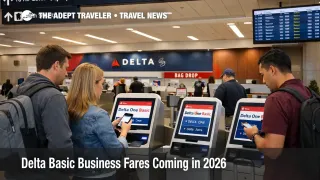
Delta Air Lines says it plans to introduce "basic" versions of its premium cabin fares in 2026, extending the same unbundled pricing logic it already uses in economy and extra legroom seating. The change matters most for travelers buying Delta One and domestic first class style products, plus anyone who expects premium tickets to include the usual bundle of flexibility, baggage, and loyalty earning. If you are shopping premium for a specific benefit, like easy changes, predictable mileage earning, or a smoother disruption recovery, you should start treating the fare label as important as the seat.
Delta President Glen Hauenstein framed the move as part of a three tier structure that repeats across products, basic, main, and extra, and said the rollout should happen throughout 2026. In the same remarks, he pointed to early performance from Delta's restricted tier in Delta Comfort as evidence that separating the seat from the add ons is producing better than expected results. The most practical takeaway for travelers is that the premium cabin will no longer automatically signal a single ruleset, it will signal a seat, then you will choose how much flexibility and earning you are buying on top of that seat.
Who Is Affected
The biggest impact will fall on travelers who buy premium cabins for risk management, not just comfort. That includes corporate travelers with meeting driven itineraries, travelers connecting to cruises or tours with fixed start times, and families booking complex multi city trips where a single delay can snowball into hotel nights and missed events. A basic premium ticket that limits changes, reduces refunds, or restricts rebooking priority can turn a small schedule slip into a much more expensive disruption.
Frequent flyers also have outsized exposure because the value proposition of premium is often tied to earning and benefits rather than the seat alone. Delta's current Delta Main Basic rules show how far the airline is willing to go on restrictions in exchange for a lower price, including limits on seat assignment timing and reductions in earning. Delta Comfort's Basic, Classic, and Extra comparison pages also show the airline's preferred pattern for presenting these choices at purchase. If Delta applies even part of that structure to Delta One and first class, travelers chasing SkyMiles, Medallion Qualification Dollars, upgrade pathways, and lounge access should expect to pay closer attention to the exact tier, not just the cabin name.
Travel advisors and corporate travel managers will need to update booking guidance and traveler training. When a premium cabin splits into multiple experiences, the error rate rises, people buy the wrong tier, miss the fine print, then discover the restriction at the worst possible moment, usually during irregular operations. That also pushes more workload onto airport agents and call centers, which is exactly when service channels are already overloaded.
What Travelers Should Do
If you are buying premium in 2026, slow down at the fare comparison screen and treat the fare tier as a contract, not marketing. Assume the basic premium option is designed for travelers who are confident the trip will not change, who can tolerate seat assignment limitations, and who do not need a predictable earning outcome. If you are planning a trip that touches weather sensitive hubs, has tight same day connections, or includes prepaid events, the safer default is to price the Classic or Extra equivalent, then decide whether the savings on basic is still worth it.
Use decision thresholds instead of vibes. If your trip has a non movable anchor, for example a cruise embarkation, a tour departure, a wedding, or a ticketed event, treat flexibility as a must have and avoid basic premium unless the rules explicitly protect same day changes and disruption rebooking. If your itinerary includes separate tickets, add a bigger buffer and avoid the cheapest tier, because the first flight slipping can become your problem to finance. If the premium upsell is mostly about comfort on a single nonstop, and you would not pay change fees anyway, then basic premium may be rational, but only after you confirm what happens to bags, seat choice, and earning.
Over the next 24 to 72 hours after Delta publishes the final rules, watch three things before you lock plans. First, whether basic premium earns SkyMiles and Medallion Qualification Dollars at all, or earns at a reduced rate, because that changes the real net cost for frequent flyers. Second, what change and cancellation pathways look like, including whether eCredits, refunds, or same day standby are restricted. Third, whether seat selection, upgrades, and lounge access are affected, because those are the benefits most travelers assume are automatic in premium cabins, and they are the first levers airlines use when they want to steer customers into higher priced tiers.
How It Works
Unbundling works by separating what used to be one product into multiple products that share the same physical seat. Revenue management can then discount seats that would otherwise go empty while still charging higher fares to travelers who value flexibility, bags, preferred seats, priority handling during disruptions, and loyalty earning. In practice, this often increases price dispersion, meaning two people in the same cabin can pay very different amounts and receive different rules, even though the onboard experience looks similar.
Delta has been building the scaffolding for this for several years. The airline has renamed and reorganized fare products in Delta Main, and it has introduced a Basic tier inside Delta Comfort with Basic, Classic, and Extra options presented side by side. Extending that pattern into Delta One and first class is the logical next step if the company believes premium demand is strong but price sensitivity still exists at the margin. The first order effect is that more travelers will be able to buy a premium seat at a lower price. The second order ripple is more complexity across the travel system, including higher risk of booking mistakes, more friction in corporate booking tools and agency workflows, and more uneven outcomes during disruption recovery when some premium tickets have fewer protections than others.
Airports and hubs absorb part of that complexity. When a thunderstorm, maintenance issue, or air traffic control constraint triggers rebooking waves, the rules attached to a ticket determine who can be moved quickly, who must pay to change, and who falls into slower queues. If more premium travelers are holding restrictive tickets, more of them will hit those hard edges during irregular operations, which can spill into longer lines, tighter hotel inventory near hubs such as Hartsfield Jackson Atlanta International Airport (ATL), and greater pressure on alternative routings when same day seats disappear.
Sources
- Delta Air Lines Announces December Quarter and Full Year 2025 Financial Results
- Delta Air Lines, Inc. (DAL) Q4 2025 Earnings Call Transcript
- Introducing Delta Comfort Basic: Delta's latest travel experience, unpacked
- Delta Main Basic (Basic Economy) Delta Air Lines
- Delta Comfort Delta Air Lines
- Delta reveals that 'basic' first and business class seats will arrive in 2026
- Delta is considering 'basic' first class, business fares
- Delta forecasts earnings growth on premium travel demand, places Boeing 787 order