

Morocco Atlas Storms Close Roads, Marrakech Transfers
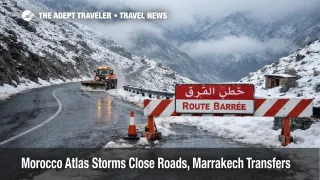
Winter storms across Morocco are disrupting access into the Atlas Mountains, with closures and slow moving traffic reported on high elevation routes that feed popular mountain bases from Marrakech, Morocco. The biggest traveler risk is not a single blocked road, it is unreliable transfer times that cascade into missed check in windows at remote riads and canceled guided excursions. Travelers with mountain stays in the next two to three days should prioritize road status checks before departure, and consider reordering the itinerary so Marrakech and other lower elevation stops happen first.
The Morocco Atlas road closures risk is rising because the national meteorological vigilance system is flagging snow and heavy rain conditions through January 22, 2026 in multiple provinces, a pattern that tends to produce rolling restrictions as crews clear passes and respond to localized slides and icing. Moroccan road authorities also reported widespread weather impacts across the national network in mid January, signaling that disruptions are not limited to one corridor.
Who Is Affected
Travelers transferring from Marrakech to High Atlas gateways are the most exposed, especially anyone with same day plans that depend on a precise arrival time, such as a guided trek start, a pre booked driver pickup for a point to point hike, or a fixed dinner seating at a mountain property. Independent drivers are also affected because closures can be enforced at control points, and detours may be limited or unsuitable for standard rental cars in winter conditions.
The Marrakech to Ouarzazate drive is a key pressure point because it relies on the high elevation Tizi n'Tichka Pass on National Road 9, and local reporting has described snow related stoppages there during recent events. Even when the pass reopens, convoy style traffic, reduced speeds, and intermittent clearing can stretch a drive that is normally straightforward into an all day transfer.
Travelers booked into riads and lodges in smaller mountain communities are also affected because the last mile tends to be on narrower secondary roads that can close first, and reopen last. When that happens, operators often shift to shorter valley routes, postpone starts by a day, or substitute lower elevation activities closer to Marrakech.
What Travelers Should Do
If you are still in Marrakech, treat the next 24 hours as a decision window. Check Morocco Meteo vigilance for the provinces on your route, then confirm road status using official road viability updates before you commit to a long mountain transfer. If alerts remain active for high elevations, build a buffer night in Marrakech so you are not forced into a risky late day drive.
For rebooking decisions, use a simple threshold: if your mountain leg requires arrival by early afternoon to start a trek, or if you have a same day onward connection south of the Atlas, postpone or reorder rather than hoping the pass clears on schedule. Weather driven road reopenings can happen, but the reopening time is rarely predictable enough for tight itineraries, and missed arrivals often cost more than one extra Marrakech night.
Over the next 24 to 72 hours, monitor three signals, updated vigilance levels from Morocco Meteo, any new reporting about high pass status on the Marrakech to Ouarzazate corridor, and operator messages about pickup feasibility on secondary roads. If you do travel, leave earlier than usual, plan daylight driving only, and keep food, water, and a charged power bank accessible in case you end up waiting behind a clearing operation.
Background
Mountain weather disruptions propagate fast through Morocco's travel system because a small number of high elevation corridors link Marrakech with the High Atlas and the desert side gateways. When snow or heavy rain hits, the first order effect is physical, crews restrict or halt traffic to clear accumulation, manage icing, and respond to slides or washouts. National level road bulletins routinely summarize these closures and reopenings as they unfold, reflecting how quickly conditions can change within a single day.
The second order effects show up immediately in traveler logistics. Transfers stretch, then knock into hotel operations, late arrivals force reassignments, and mountain properties may lose the ability to staff excursions or meals when supply runs are delayed. In Marrakech, the ripple is often an unplanned extra night, which tightens inventory for popular riads, and pushes tour rescheduling into fewer available guide slots once the weather breaks. Further afield, the Marrakech to Ouarzazate link matters because it is a staging path to desert itineraries, so delays in the Atlas can compress downstream plans, including pre booked camps, drivers, and timed sightseeing that is harder to reshuffle on short notice.