

EU Keeps 3 Hour Flight Delay Compensation Rule
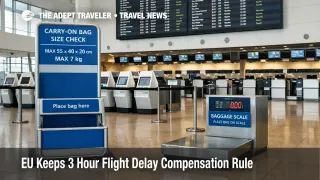
The European Parliament has voted to keep compensation tied to delays beyond three hours as it advances a rewrite of the EU's air passenger rights rules. The decision matters to travelers flying within Europe, departing the European Union, or returning on EU based carriers, because it shapes whether a common delay scenario remains claim eligible. Travelers should treat compensation rights as stable for now, plan documentation the same way they do today, and watch negotiations that could still reshape cabin bag rules, seating fees, and claim handling.
The EU 3 hour flight delay compensation baseline is still the Parliament's line in the sand, even though the wider reform package is not yet law. In its January 21, 2026 plenary vote, Parliament backed retaining the three hour trigger, opposed lowering compensation ceilings, and pushed for practical enforcement changes such as pre filled claim forms after disruptions and clearer baggage entitlements.
Parliament's position is also a response to the Council of the European Union's June 2025 stance, which would move compensation eligibility later, and would cap long haul compensation lower than today. That gap is now the core traveler facing uncertainty, not whether rights vanish overnight, but whether the final reform nudges airlines and passengers toward different delay outcomes, fee structures, and service expectations.
Who Is Affected
Any traveler on a flight departing an EU airport is in scope for the current rights framework and for any future reform, regardless of airline nationality. Many travelers arriving into the EU on an EU based carrier are also covered, which is why this debate matters for transatlantic and long haul itineraries that end in Europe, even if the outbound started elsewhere.
Families, travelers with reduced mobility, pregnant travelers, infants, and travelers who rely on airport assistance are singled out in the Parliament position because seating and assistance failures can turn a manageable delay into a missed flight and an overnight. Under the Parliament approach, airlines would still owe compensation, rerouting, and assistance if a traveler misses a flight because an airport fails to provide timely help to reach the gate.
Airlines and travel sellers are affected too, because delay compensation rules push operational choices. A stricter compensation trigger tends to raise the cost of letting delays drift, which can shift decisions toward cancellations, proactive rebooking, and schedule padding. Changes to cabin bag allowances can also ripple into boarding speed, bin space management, and ancillary revenue models, which is why baggage rules have become linked to passenger rights reform rather than treated as a simple commercial policy.
What Travelers Should Do
Start treating your claim file as something you build during the disruption, not after it. Keep boarding passes, booking receipts, and any airline messages about the cause of the delay or cancellation, and screenshot the arrival time once you land, because compensation is typically tied to arrival at the gate, not departure. Save receipts for meals, ground transport, and hotels when the airline does not provide duty of care support, and document what the carrier offered, because reimbursement disputes often come down to what was offered and what was reasonable.
Use decision thresholds that protect your onward travel, even if compensation is likely. If a delay is trending toward two hours and you have a tight connection, push for rebooking early, because seat inventory collapses fast once misconnect risk is obvious, especially on peak days. If a three hour arrival delay is likely and the reason appears within the airline's control, keep collecting evidence, but do not wait to protect onward plans, since compensation does not repair a missed cruise departure, a nonrefundable tour, or a separate ticket connection.
Over the next 24 to 72 hours, monitor three things: whether the Council signals willingness to accept the three hour standard, whether baggage language hardens into a specific free allowance, and whether claim processing reforms, such as pre filled forms after disruptions, remain intact. Also watch how major carriers message cabin bag policy, because airlines sometimes preempt policy shifts by adjusting fare families, boarding priority products, and gate check practices before a rule change formally applies.
How It Works
Europe's core air passenger protection is Regulation (EC) No 261/2004, commonly referred to as EU261, which sets rights to compensation and assistance in cases such as long delays, cancellations, and denied boarding. The reform effort has been running for years because member states, the Parliament, the European Commission, airlines, and consumer groups disagree on where to set the compensation trigger, how large payouts should be, and how to define extraordinary circumstances that exempt carriers.
In June 2025, the Council set out a position that would generally require longer delays before compensation applies, including a four hour threshold for many journeys under 3,500 km and a six hour threshold for longer journeys, with compensation levels adjusted accordingly. Parliament's January 21, 2026 position rejects that delay threshold shift, and argues for keeping the three hour standard, while also pushing a stronger, traveler friendly package, including a free personal item plus a small cabin bag up to 7 kg, adjacent seating protections for children under 14 and travelers with reduced mobility, and a requirement that airlines provide pre filled forms to simplify claims.
Because the institutions are not aligned, the reform's ripple effects are already visible in how airlines plan operations and pricing. At the source, delay compensation rules change the economics of holding a flight versus canceling and rebooking, especially when crews and aircraft are out of position. Those choices cascade into connections, as a single disrupted rotation can strand passengers and crews at hubs, which then tightens later departure banks and reduces same day rebooking options. Hotels near hubs feel that second order impact when stranded passengers need overnight rooms, and customer service systems are stressed when claim volumes surge, which is why the fine print around duty of care, documentation, and processing deadlines matters as much as the headline compensation trigger.
Sources
- Europäisches Parlament will bestehende Fluggastrechte sichern
- Council sets position on clearer and improved rules for air passengers
- EU parliament votes to retain three-hour limit for flight delay compensation
- Regulation (EC) No 261/2004, EUR Lex consolidated text
- European Parliament Doubles Down on Damaging EU261 Reforms