

Brisbane Airport Evacuation Delays International Flights
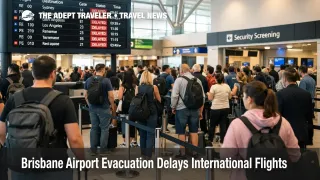
Brisbane Airport evacuation delays disrupted international departures at Brisbane Airport (BNE) after a precautionary evacuation cleared level 4 of the international terminal. Departing passengers were moved outside, which temporarily halted normal check in and screening flows for outbound flights. Travelers with tight long haul check in cutoffs and onward connections were the most exposed, because even a short interruption can cascade into missed baggage acceptance windows and boarding sequences. The airport later reported passengers had returned to level 4 and processing resumed, with prioritization based on flight schedules.
Brisbane Airport said the alarm was triggered after testing an air conditioning unit's heating element created a small amount of smoke shortly after 8:00 a.m. local time on Tuesday, January 13, 2026. That kind of cause matters for traveler decision making because it usually produces a sharp, short disruption, followed by a restart surge that creates longer queues than the initial interruption.
Who Is Affected
The highest risk group is anyone departing internationally from Brisbane Airport during the restart window, especially travelers checking bags, travelers who require document checks at the counter, and travelers connecting from a domestic flight with minimal buffer. When level 4 is disrupted, the immediate chokepoints are airline check in desks, security screening, and the gate boarding sequence that depends on passengers being processed in time.
The second risk group is anyone with onward travel that depends on the Brisbane departure leaving close to schedule, including domestic connections elsewhere in Australia after an international arrival, and international itineraries that rely on timed connection banks at hubs. Even when a delay is under two hours, the misconnect risk spikes for itineraries booked on separate tickets, because the onward carrier may treat you as a no show even if the first flight was delayed.
Brisbane Airport's update said incoming international services continued, and there was no impact to domestic terminal operations. That split is common in terminal incidents, but it can still strand outbound passengers if they are already airside and cannot return quickly to their original processing path.
What Travelers Should Do
If you are caught in a terminal evacuation, focus on preserving your place in the reprocessing wave. Keep your passport and boarding documents on you, stay near your airline's service point once the all clear is given, and watch for boarding order changes that may move flights with imminent departure times ahead of others. If you have checked baggage but have not received a bag tag receipt, ask for confirmation your bag is accepted, because a restart surge can create mismatches between bag drop timestamps and carrier cutoffs.
Decide early whether to wait or rebook based on connection math, not hope. If your itinerary includes a connection under two hours, or you are on separate tickets, you are usually better off requesting rebooking as soon as your departure is expected to miss the last workable connection. If you are traveling long haul with one protected ticket, waiting can be reasonable when the airline has later same day options, but once delays threaten to push you into the next day, ask about overnight accommodation policies and meal vouchers before you leave the airport area.
Over the next 24 to 72 hours, monitor three things, your flight status in the airline app, your boarding time changes, and your rebooking options across partner carriers. Save screenshots of delay notices, keep receipts for meals, ground transport, and lodging, and request written confirmation of the delay reason if you need to file a travel insurance claim or a reimbursement request later. Brisbane Airport said the trigger was smoke during air conditioning unit testing, so you should also keep the airport's public update as part of your documentation set.
Background
Terminal evacuations create disruption through a predictable chain. First order effects hit processing capacity at the source, check in counters pause, security lanes stop, and gate boarding halts because passenger flow is interrupted. When the terminal reopens, the system does not restart smoothly, it surges, because passengers who were already in the building and passengers arriving for later flights converge into the same constrained lanes at the same time. That is why the longest lines often appear after the all clear, not during the initial evacuation.
Second order ripples spread beyond Brisbane Airport quickly. Airlines may hold departures for late arriving passengers or bags, but that can knock aircraft off their planned rotation, which then shifts crews, gate availability, and later departures. Missed connections concentrate at downstream hubs, creating rebooking load that can spill into partner carriers and, in busy periods, into limited hotel inventory for passengers forced into an overnight stay. Local outlets reported delays affecting multiple outbound services on January 13, 2026, which is consistent with a short terminal interruption producing hours of recovery work as airlines rebuild sequences and reassign resources.
For travelers, the practical takeaway is that an evacuation can be operationally brief but still break a trip if it lands inside critical cutoffs. The safest posture for international departures from Brisbane is to build extra buffer on days when terminal operations are disrupted, avoid separate tickets when you need a tight onward connection, and keep documentation, because claims often hinge on proving both the timeline and the reason for delay.