

UK ETA Enforcement Feb 25, 2026, Denied Boarding Risk
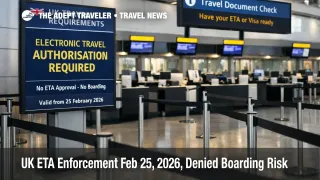
The United Kingdom is locking in February 25, 2026, as the date when carriers will strictly enforce Electronic Travel Authorisation requirements for eligible visa free visitors. The practical shift is that the risk moves forward in the journey, from a border decision on arrival to an airline, ferry, or rail document check before you depart. If you need an ETA and show up without one, you can be denied boarding and lose the entire travel chain that follows, including timed connections, prepaid hotels, and tours.
The Home Office has been clear about the operating model behind the deadline, "no permission, no travel." In other words, carriers will be expected to confirm that you have digital permission, via an ETA or an eVisa, before transport to the UK.
Who Is Affected
If you are a visitor who does not need a visa for a short stay, and you do not already hold UK immigration status, you are likely in the group that must carry an ETA before February 25, 2026 travel. GOV.UK describes this as travelers from Europe, the United States, Canada, Australia, and other visa free nationalities, and it directs travelers to the official checker rather than guessing from memory.
Exemptions matter because they can create airport confusion. British and Irish passport holders do not need an ETA, and people with permission to live, work, or study in the UK generally travel on that status instead of an ETA. Dual British or dual Irish citizens are a special case, because they cannot get an ETA based on their British or Irish citizenship and are strongly advised to travel with a valid British or Irish passport, or the appropriate entitlement document, to avoid being denied boarding from February 25, 2026.
Transit is another common trap. The Home Office factsheet says eligible visitors who take connecting flights and go through UK passport control need an ETA, while passengers transiting through Heathrow Airport (LHR) and Manchester Airport (MAN) who remain airside and do not pass passport control "do not currently need an ETA." That distinction is itinerary specific, and it can change if your connection becomes a rebooking that forces you to clear control, collect bags, or switch terminals landside.
What Travelers Should Do
Apply early, and treat "three working days before departure" as the safe buffer even if many approvals arrive in minutes. The Home Office says most decisions are automated within minutes in the UK ETA app, but it still recommends applying at least three working days in advance to account for cases needing extra review.
If your ETA is delayed or you are traveling on separate tickets, use a clear decision threshold: if you are inside 72 hours of departure without approval, shift to a later flight you can actually make, or move the trip date, rather than gambling on airport day resolution. Airlines cannot "override" the requirement at check in, and a denied boarding outcome often strands you with rebooking costs, missed hotel nights, and broken onward connections.
Over the next 24 to 72 hours before departure, monitor three things: your ETA status, your passport validity, and whether your itinerary will force UK passport control during a connection. If you are unsure, use the official tools, and cross check your situation against UK Entry Requirements For Tourists In 2026, because "transit without passport control" assumptions can collapse quickly when irregular operations trigger reroutes, terminal changes, or overnight reaccommodation.
How It Works
An ETA is a digital permission to travel that is linked to the passport you used to apply. It is not a visa, it does not guarantee entry, and it is designed to let the UK screen travelers before they board. The current ETA fee is £16, it is generally valid for multiple trips for up to two years or until your passport expires, whichever comes first, and the Home Office has signaled an intent to raise the fee to £20 in the future.
The disruption mechanics are straightforward but nasty in practice. The first order effect is at the departure point, check in, bag drop, and gate staff become the enforcement layer, and travelers who assumed "I will sort it on arrival" can be stopped before they ever board. The second order ripples spread across at least two more layers. Tight UK connections become higher risk if you might need to clear passport control during a rebooked transit, and denied boarding events tend to push demand onto the same day call center, reissue, and hotel inventory pools, raising reaccommodation friction for everyone on the disrupted departure bank, not just the passenger without an ETA.