

LOTR Anniversary New Zealand Hobbiton Tours Surge 2026
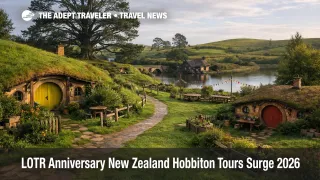
"The Lord of the Rings" anniversary year is translating into real travel demand for New Zealand, with tour operators reporting more requests for itineraries that include filming locations. A big share of that attention continues to funnel toward Hobbiton, the Waikato movie set experience that lets travelers walk through the Shire landscape in person. For travelers, the practical change is that what used to be an easy add on now behaves more like a timed, capacity managed attraction, meaning you need to sequence tickets, transport, and lodging earlier to avoid arriving to sold out tour slots.
The nut graf is simple, LOTR New Zealand Hobbiton tours are drawing more travelers into New Zealand planning cycles for 2026, tightening availability for timed experiences, long haul flight connections, and self drive logistics.
Who Is Affected
The most exposed travelers are Tolkien fans and set jetting planners who want Hobbiton plus at least one additional filming region on the same trip, particularly those building a self drive loop. Reports tied to the anniversary year point to strong Hobbiton volumes, including an estimate of about 600,000 visitors last year with similar levels projected for 2026. When a single anchor experience pulls that kind of demand, it changes the shape of an itinerary, because you stop building the trip around hotel check in times and start building it around tour departure times.
U.S. travelers are a key segment in this story because demand is arriving via long haul routes and significant lead time. Tourism New Zealand has highlighted that Hobbiton is a highly recognized location among U.S. travelers and has reported survey style signals that a meaningful share of Americans cite the films as motivation. Even if your own trip is not film focused, the spillover shows up in the same infrastructure, rental cars, small town accommodations, and day tours you might want for a broader New Zealand itinerary.
Travel advisors and custom tour operators are also affected operationally. As more clients ask for the same named stops, advisors have to protect timed inventory, build more conservative connection buffers, and keep alternatives ready when a single sold out slot would otherwise force a full day replan.
What Travelers Should Do
Start with ticketed, timed items first. If Hobbiton is nonnegotiable, secure the tour time, then map flights, lodging, and the drive plan around it. Add at least one buffer night after arriving in New Zealand if you are coming off a long haul flight, because delays, jet lag, and bag delivery issues can easily turn into a missed tour window when you are trying to land, connect, pick up a car, and drive on the same day.
Use decision thresholds instead of vibes. If you have a tight chain of flights into Auckland Airport (AKL) and a same day, fixed Hobbiton time, rebook when your inbound itinerary requires a short domestic connection or leaves you with little margin for baggage, car pickup, and driving time. If you have a buffer day, you can usually wait longer before changing flights because you have room to absorb a delay without losing the core experience you came for.
Monitor three things over the next 24 to 72 hours as you book and as you travel. Watch your tour operator or attraction confirmation messages for schedule changes, watch airline operational updates for long haul delays that can shift arrival times by half a day, and watch weather conditions if you are driving rural roads or planning hikes that double as filming location scenery. For paperwork, verify your entry requirements early, including the NZeTA workflow referenced in Visa Requirements for U.S. Travelers: A Global Guide, so an avoidable documentation issue does not become the reason you miss a prepaid experience.
Background
Set jetting is travel demand driven by film and streaming locations, and New Zealand is one of the clearest modern examples because "The Lord of the Rings" trilogy used more than 150 locations across both islands. The Shire experience is concentrated at Hobbiton on the Alexander family farm in Waikato, and the set today is built for visitors, with dozens of permanently reconstructed hobbit hole facades and guided tours that run on fixed departure times. That operating model matters because it creates a bottleneck, the tour time becomes the critical path item, and everything else has to flex around it.
The travel system ripple is straightforward. First order effects show up at the attraction and its transport corridors, where limited daily tour capacity and fixed departure times convert demand into sellouts and missed slot risk. Second order effects show up in gateways and connections, because long haul arrivals feed domestic positioning flights, rental car counters, and hotel check in waves, and disruptions at any one layer can break the chain. A delayed international arrival can force a missed domestic leg, which can then push a traveler into an unplanned overnight, which then pulls inventory away from other travelers during peak periods. The more the itinerary is built around named filming sites, the more that cascade can cost, because you are not just late, you are late for a specific slot that might not have availability again for days.
Sources
- 25 years later, The Lord of the Rings is still driving tourism traffic to New Zealand | Hindustan Times
- Our Story | Hobbiton(TM) Movie Set Tours
- Hobbiton(TM) Movie Set Tour | Hobbiton(TM) Movie Set Tours
- The Lord of the Rings Trilogy | 100% Pure New Zealand
- The Lord of the Rings filming locations | 100% Pure New Zealand
- New Zealand is hitching its economic future to Amazon's Lord of the Rings series | Quartz