

Srinagar Airport Snowfall Closure Cancels Flights
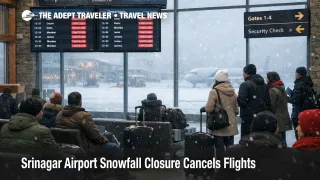
Heavy snowfall in Kashmir halted flight operations at Sheikh ul Alam International Airport (SXR), commonly called Srinagar International Airport, on Tuesday, January 27, 2026. Airlines canceled flights after the runway became unavailable for safe aircraft operations in continuing snowfall and poor conditions. Travelers trying to leave Srinagar after the holiday weekend faced immediate strand risk, and the practical next step was to pivot to rebooking and lodging extensions while monitoring airport advisories and airline updates for restart signals.
The Srinagar airport snowfall closure matters because it removes the Valley's primary air exit route at the same time winter weather can also degrade the main road corridors, which turns a manageable delay into a multi layer disruption that can take several days to unwind.
Who Is Affected
Travelers with flights to, from, or through Srinagar on Tuesday, January 27, 2026 are the most directly affected, especially passengers on tight same day onward connections through major hubs such as Delhi. When an airport shuts for snow, cancellations do not only remove today's seats, they also push demand into the next available departures, which can fill quickly and force longer routings or overnight waits.
Tourists attempting to exit Kashmir on fixed hotel checkout days are also exposed because weather that closes the airfield can also restrict movement on key roads, including the Jammu Srinagar corridor, limiting the fallback option of driving out to connect with another airport. That combination increases the likelihood of unplanned hotel extensions in Srinagar and rebooked tours across the Valley as operators adjust itineraries around road access and visibility constraints.
Travel advisors, group tours, and travelers on separate tickets carry added risk. When flights cancel, reaccommodation queues surge, and separate tickets can leave travelers with an unprotected onward segment, which turns a weather event into a cost and logistics problem that is harder to resolve quickly.
What Travelers Should Do
If you are currently in Srinagar, treat lodging and communications as your first priorities. Contact your airline using whichever channel is fastest, confirm whether you have been auto rebooked, and secure a room extension before inventory tightens near popular areas and around the airport corridor. Keep essential medications and cold weather gear in your carry on, and preserve proof of disruption in case you need to document missed connections or claim coverage through trip insurance.
Use a clear threshold for waiting versus rerouting. If you must depart within 24 hours for an international connection, a cruise embarkation, or any prepaid plan that cannot slide, start searching for alternates immediately, including later departures from Srinagar once operations resume and longer reroutes via Delhi or other hubs that still have seats. If the main highway remains restricted and you cannot reliably reach an alternate airport by road, prioritize air reroutes over last minute private car plans that may stall at checkpoints or closures.
Over the next 24 to 72 hours, monitor three signals that indicate recovery is becoming durable rather than temporary. First, sustained improvement in snowfall intensity and visibility, because repeated stop start conditions can produce repeated cancellations even after a partial restart. Second, airline waiver language and seat availability patterns, because waivers may expand to cover additional travel dates as the backlog clears. Third, highway status and local advisories, because road reopening can provide options for repositioning, but only when conditions are stable enough to support predictable travel times.
How It Works
Snow closures at mountain adjacent airports propagate through the travel system faster than most travelers expect. At the source, continuous snowfall and low visibility reduce runway friction and approach stability, which can force the airport to suspend operations until surfaces are cleared and conditions meet safety thresholds. Even after snowfall slows, clearing is not instant, airports must remove snow, manage refreezing, and restore safe braking action and taxiway usability before a sustained restart can occur.
The second order effects often hit harder than the initial closure. Aircraft that were scheduled to arrive cannot position for later departures, crews can run into duty time limits while waiting, and airlines may cancel additional rotations to rebuild a workable schedule. That cascade concentrates demand into fewer flights, which is why travelers can face sold out inventory and higher fares for multiple days after a single day of snow disruption.
In Kashmir, road impacts can amplify the airport problem. When key corridors deteriorate or close, the usual backup plan, driving to another gateway, becomes unreliable, which increases hotel extension demand in Srinagar and pushes tour operators to reshuffle Valley itineraries around what roads are passable. That ripple can extend into missed onward flights from larger hubs, delayed baggage reunification, and pressure on local transport services as more travelers try to move at the same time when conditions briefly improve.
Sources
- Snowfall disrupts Srinagar flights; rain, fog under watch across Delhi NCR
- Flights to and from Srinagar airport cancelled due to snowfall
- All flights to and from Srinagar cancelled amid heavy snowfall
- Snowfall shuts Srinagar airport, flights cancelled; tourists stranded
- Srinagar Airport Passenger Advisory