

AHLA 2026 U.S. Hotel Industry Report Outlook And Costs
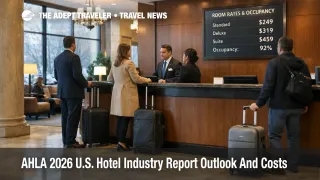
The American Hotel and Lodging Association released its 2026 State of the Industry report on January 27, 2026, outlining a more optimistic demand outlook for the year ahead, while also warning that cost pressures are still constraining profitability. The report points to major travel catalysts, including the FIFA World Cup and America250 celebrations, as tailwinds for hotel demand in 2026. For travelers, the practical takeaway is that availability and pricing may tighten in event driven markets even as many hotels continue to run lean on labor and absorb higher operating expenses.
AHLA's topline figures frame that mix of strength and constraint. Hotels generated $85.1 billion in local, state, and federal taxes in 2025, up $1.7 billion from 2024, and AHLA projects nearly $87 billion in 2026. Guest spending in 2026 is projected at nearly $805 billion, a 1.7 percent increase over 2025, while rising expenses are cited as a key reason gross operating profit per available room remains around 90 percent of 2019 levels.
Who Is Affected
Travelers planning trips that overlap with large, time boxed demand surges are the most exposed, because hotels can fill faster and reprice more aggressively when compression hits. The FIFA World Cup is scheduled for June 11 through July 19, 2026, and America250 is anchored around July 4, 2026, which creates a long summer window where specific cities and weekends can see unusually tight hotel inventory.
Business travelers and conference attendees are also affected by the operating environment AHLA describes. When labor and other expenses remain elevated, some properties limit services, adjust housekeeping cadence, or reduce food and beverage hours to protect margins, and that can change the value calculation between similarly priced hotels.
Destinations that depend heavily on international inbound travelers, particularly those that rely on higher spend overseas visitation, face a different risk profile. AHLA flags inbound travel as still below pre pandemic levels, which can mean uneven recovery between gateway markets and domestic leisure heavy regions, and that unevenness can show up as wide rate gaps from one city to the next.
What Travelers Should Do
If your 2026 trip lines up with event windows, lock in refundable rates early, then keep watching for price drops or newly released inventory. Hotels often open and close room types as group blocks shift, and the best value frequently appears in short bursts, not as a steady trend.
Use clear decision thresholds. If your trip is non essential and prices spike above what you would consider normal for the market, move dates by a few days, or shift to a nearby submarket with better transit access. If the trip is fixed, for example match days, graduation weekends, or a timed family event, prioritize cancellation flexibility over a small upfront savings, because being forced to rebook late is when total costs jump.
Over the next 24 to 72 hours after you book, monitor total price components, not just the nightly rate. Recheck resort fees, destination fees, parking, and breakfast policies, and confirm the property's current service model, including housekeeping frequency and late arrival staffing, because cost pressure can translate into operational changes that matter to arrival timing and next morning plans.
Background
AHLA's report is a snapshot of hotel demand, cost structure, staffing, and policy conditions, translated into forecasts for the year ahead. The traveler relevance is not just whether demand rises, it is how that demand translates into room availability, total trip cost, and service levels on the ground.
The first order impact sits at the property level. When operating costs rise faster than revenue, hotels try to protect profitability through pricing, labor scheduling, and service design. That is how a national story becomes a traveler experience, higher rates during compression periods, fewer staff during off peak days, and more variability in what is included in the base rate.
Second order ripples move through the broader travel system. Big event demand shifts flight load factors, rental car availability, and ride hail pricing, which can push more travelers into later arrivals, split stays, or day trip patterns. In markets where hotels are staffing tight while occupancy rises, bottlenecks tend to show up at check in peaks, elevator banks at convention shift changes, and breakfast rush windows, which then affects meeting start times, tour pickups, and airport transfer buffers.
There is also a supply mix angle that matters when traditional hotel inventory is constrained. Apartment style lodging can look like an easy pressure valve, but it can carry different operational and consumer protection risks, especially when a platform or operator fails abruptly. Adept Traveler's deeper explainer on that tradeoff is here, What Sonder's Collapse Means for Apartment Hotels.