

Holland America 2027 2028 Legendary Voyages List
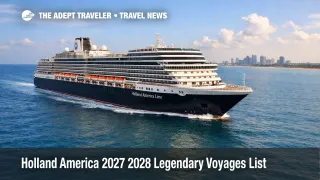
Holland America Line has unveiled its 2027 and 2028 Legendary Voyages, longer cruises designed around a single region or travel story. The lineup ranges from 28 to 47 days and includes a 47 day Ultimate Mediterranean and Atlantic Passage roundtrip from New York, a 28 day Pan Am 100th Anniversary voyage from Miami, and a refreshed 28 day Legendary Amazon Explorer roundtrip from Fort Lauderdale. Travelers booking these extended sailings should plan flights, visas, and pre cruise hotels earlier than usual, because one missed connection can erase a large share of the trip's value.
For travelers weighing Holland America Legendary Voyages, the change is a wider 2027 to 2028 menu of long, region focused itineraries with more overnights, themed programming, and tighter planning needs around flights, documents, and shore time.
The headline itinerary, the 47 Day Ultimate Mediterranean and Atlantic Passage, is positioned as a deep Mediterranean sweep with 21 ports across 12 countries, plus late nights and overnights that materially change what you can do on shore without paying for private tours that race the clock. In the same season, the Pan Am partnership voyage aims at travelers who want a nostalgia narrative, retracing historic routes across the Caribbean, Mexico, and Latin America from Miami on October 30, 2027, aboard Zuiderdam.
The Amazon option matters for a different reason, river time is operationally fragile, and long distance travelers often stack flights, transfers, and hotels around a sailing that has fewer substitutes if something breaks. Holland America says the refreshed 28 Day Legendary Amazon Explorer will sail roundtrip from Fort Lauderdale, Florida, in January 2028, which simplifies logistics for U.S. based travelers compared with one way routings that force separate flights at both ends.
Who Is Affected
The most obvious audience is repeat cruisers who can take four to seven weeks away and want to unpack once while still feeling like they covered a full region. The less obvious audience is travelers building a single "big trip" around one long cruise, because Legendary Voyages shift costs and risk away from day to day decisions and into the bookends, flights, hotels, and documentation become the trip.
First order effects start at the ports of embarkation and debarkation. A Miami departure pulls demand into South Florida hotel nights, and it concentrates flight risk into a narrow check in window where weather, air traffic control delays, or a late arriving inbound can snowball into a missed sailing. A New York roundtrip creates similar stakes, with the added reality that Northeast winter and shoulder season weather can disrupt the very flights travelers rely on to protect a same day arrival plan.
Second order ripples land in at least two other layers of the travel system. Long voyages change shore excursion inventory dynamics because popular overnights and late nights create peaks in demand for guides, drivers, and timed attractions, and those peaks often arrive long before casual travelers notice. They also change onboard behavior in ways that affect planning, passengers have more sea days to fill, and that makes dining reservations, enrichment programming, and special events more central to the experience than on a one week sailing.
Finally, multi country itineraries widen the documentation surface area. The Amazon narrative in particular increases the odds that travelers add independent land time, and that is where visa and entry misunderstandings can derail flights before the cruise even begins. Travelers who plan to add time in Brazil should align entry requirements early, not after airfare is ticketed. A practical starting point is Brazil Entry Requirements For Tourists In 2026.
What Travelers Should Do
Start by treating the start day as a high risk travel day, even if the cruise is calm and leisure coded. Build at least one pre cruise hotel night, pick flight options that land by early afternoon when possible, and keep embarkation documents, key medications, and one change of clothes in carry on bags so a delayed checked bag does not become a week one problem on a month long itinerary.
Use a decision threshold for rebooking versus waiting that is stricter than what you use for shorter cruises. If you are on separate tickets and your arrival is projected after mid afternoon, the safer move is usually to shift flights or add an extra hotel night, because port traffic, check in cutoffs, and schedule variability can erase any remaining margin. If the cruise is the anchor purchase, sacrificing a small airfare difference is often rational compared with risking a full missed embarkation.
Over the next 24 to 72 hours after booking, monitor three things. First, watch for itinerary level updates or segment refinements, because long voyages sometimes adjust port times as plans firm up. Second, watch for shore excursion inventory to appear, then prioritize must do overnights quickly. Third, track airline schedule changes for your gateway flights, because long lead bookings can change multiple times before sailing, and each change is a chance to improve, or accidentally worsen, your buffer.
Travelers comparing Holland America's long sailings with other extended options can also reference Holland America Grand Voyages Depart U.S. Coasts for how long itineraries tighten the cost of mistakes at embarkation. For Pacific planners who may pair future long cruises together, Australia South Pacific Cruise Season 2027, Holland America is a useful baseline for how the line is building longer arcs in 2027 and early 2028.
How It Works
Holland America uses Legendary Voyages as a middle ground between typical one to two week cruises and full Grand Voyages. The key design choice is narrative cohesion, each sailing is built to stay in one region, or to follow a story, long enough that overnights, late nights, and thematic programming are not just add ons, they shape how the itinerary functions.
That structure propagates through traveler logistics. Longer port calls encourage independent touring, but they also increase the value of documents, transfers, and insurance choices because the trip is harder to replace if something fails. Onboard, Holland America emphasizes enrichment style touches such as themed events, cultural performances, a resident classical ensemble, and creative classes, which matters because sea days are a large share of the calendar on a 28 to 47 day sailing.
The practical takeaway is that booking one of these voyages is less like buying a cruise and more like assembling a small travel system. Flights, hotel nights, entry rules, and shore logistics are not optional fine print, they are the infrastructure that protects a long itinerary from a single point failure at the start.
Sources
- Holland America Line Unveils 2027-2028 Legendary Voyages Showcasing Extraordinary Global Exploration
- Legendary Voyages
- 47-DAY LEGENDARY ULTIMATE MEDITERRANEAN & ATLANTIC PASSAGE Cruise Itinerary
- 28-DAY LEGENDARY AMAZON EXPLORER Cruise Itinerary
- 28-DAY PAN AM 100TH ANNIVERSARY LEGENDARY VOYAGE Cruise Itinerary