

Tigray Flights Suspended, Ethiopian Cancels Mekelle
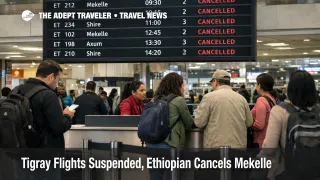
Ethiopian Airlines has paused passenger flights between Addis Ababa and Ethiopia's Tigray region for a second day, citing "unplanned circumstances" in messages to customers while providing no public, detailed explanation. The suspension cuts off the fastest, most reliable access to Mekelle and other northern cities that typically rely on domestic air legs routed through Addis Ababa Bole International Airport (ADD). For travelers, this is not a minor delay story, it is an operational stop tied to a rapidly shifting security environment, which means today's workable itinerary may not be workable tomorrow.
With Tigray flights suspended, trips that depend on same day domestic connections through Addis Ababa are vulnerable to cancellation, stranding, and abrupt reroutes, especially for Mekelle access.
Operationally, the affected flying is the domestic network that links the capital to Tigray airports. Reporting indicates cancellations on Addis Ababa routes to Alula Aba Nega Airport (MQX) in Mekelle, plus Axum Airport (AXU) and Shire Airport (SHC), which are key air access points for the region when they are operating. Reuters also reported that clashes in disputed western Tigray raised fears of renewed conflict at the same time flights were canceled. Separately, an Associated Press report cited a security official linking the suspension to renewed conflict concerns, including reports of military movements, which helps explain why overland workarounds can become riskier when flights stop.
Who Is Affected
Travelers already in Tigray are the most exposed group because a flight suspension can turn a planned departure into an open ended wait, with limited same day alternatives. If you were counting on an air bridge back to Addis Ababa for an international departure, you should assume misconnect risk is high until the carrier restores service and flights operate normally for at least a full schedule cycle.
Inbound travelers are affected in two ways. First, anyone flying into Addis Ababa on a single ticket that continues to Mekelle, Axum, or Shire can see the domestic sector canceled, forcing a reissue, a date change, or a refund depending on fare rules and the airline's disruption handling. Second, travelers on separate tickets face compounding risk: an international ticket may remain valid while the domestic ticket collapses, leaving you to absorb hotel nights and ticket changes unless your insurance, card benefits, or employer duty of care program covers it.
Humanitarian travel, NGO operations, diaspora visits, and business trips into northern Ethiopia carry an additional layer of exposure because timelines often include fixed meetings, convoy windows, site access approvals, and third party security requirements. When flights are suspended, pressure rises to "make it work" overland, and that is exactly when security conditions, road reliability, and checkpoint dynamics can deteriorate quickly.
For broader destination context and risk framing, see Ethiopia and the recent advisory explainer, Ethiopia Advisory Remains Level 3, Build Buffers and Avoid High-Risk Regions.
What Travelers Should Do
If you are due to travel within 24 hours, treat the trip as disrupted now, not later. Check your Ethiopian Airlines booking status, and if you are connecting at Addis Ababa Bole, pre plan a hotel night and ground transport from the airport so you are not improvising after midnight. Keep every receipt, and document the cancellation notice inside your airline app or messages for insurance and employer reimbursement.
If your itinerary's purpose is discretionary, postpone rather than chase workarounds. A useful threshold is simple: if you cannot complete the trip without an Addis Ababa to Tigray domestic sector, and flights are not operating today, you are gambling on a restart that may not happen on your timeline. Rebook only when you can see published flights operating normally again, and you have a buffer day on both ends of the trip.
Over the next 24 to 72 hours, monitor three signals: confirmed flight reinstatement with aircraft actually operating, independent reporting of local security conditions, and any updates to government travel advisories or employer security guidance. If you must travel for mission critical reasons, align with a duty of care provider on routing and extraction options before you move, not after you arrive.
How It Works
A regional flight suspension in Ethiopia propagates through the system because Addis Ababa is the hub. When domestic legs to Tigray stop, travelers can bunch at the hub waiting for rebooking, which increases the odds of overnight stays in the capital and creates knock on pressure on hotel inventory, airport ground transport, and onward international connections. That second order effect matters even if you are not headed to Tigray: fewer seats and more disrupted passengers can tighten availability on other domestic routes as the airline protects its network.
The next ripple is behavioral. When flights stop, some travelers shift to overland options, and reporting from the region suggests people have already attempted to leave by car or bus amid uncertainty. That shift can increase congestion, raise prices, reduce predictability for timed connections, and, most importantly, push travelers onto routes where conditions can change fast during security scares. From a risk perspective, an air suspension is often a signal to slow down, not a reason to speed up.
On rebooking and refunds, the hard truth is that "unplanned circumstances" can mean different handling depending on fare type, point of sale, and whether your flights are on one ticket or split across separate bookings. If you booked via an agency, you may need the agency to touch the ticket. If you booked direct, start with the airline's manage booking tools, then move to live support if you need a reroute, a date shift, or a refund. If your trip is employer travel, escalate early because duty of care programs can often secure accommodations, alternate routings, and traveler tracking faster than ad hoc personal rebooking.
Sources
- Ethiopian Airlines cancels flights to Tigray region after clashes
- Ethiopia's national carrier cancels flights to Tigray region as fears grow of renewed fighting
- Ethiopia: Flights from capital to Tigray cancelled as tenions mount
- Ethiopian Airlines suspends Tigray flights after clashes
- Alula Aba Nega Airport (MQX) @ OurAirports
- List of airports by IATA airport code: S