

Ice Cancels Cape May Lewes Ferry Sailings Feb 2
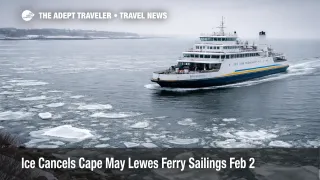
Icy conditions across the Delaware Bay forced the Cape May-Lewes Ferry to cancel at least some Monday morning crossings on February 2, 2026, creating immediate schedule gaps for travelers relying on fixed sailing times between southern New Jersey and coastal Delaware. Travelers most affected are those with time sensitive onward plans, including airport departures, rail connections, cruise or tour meet times, and same day hotel check ins that were built around the ferry as the fastest cross bay link. The practical next step is to confirm live operating status before you commit to the terminal, then decide early whether to wait for later sailings or pivot to a road reroute that removes the water crossing risk.
Operationally, this is a different disruption pattern than a typical windy day. Ice can restrict safe maneuvering near the terminals, and it can persist even when winds ease, especially if overnight temperatures keep refreezing thin channels and pushing floes back into the approach area. That means a cancellation can be the start of a rolling day, not a single isolated miss.
Who Is Affected
Travelers booked on the specific canceled morning departures are the direct impact group, including foot passengers, drivers, and anyone traveling with a tight arrival window. Local reporting said the canceled trips were the 700 a.m. departure from Cape May, New Jersey, and the 845 a.m. departure from Lewes, Delaware, with the cancellations attributed to icy conditions across the Delaware Bay.
The next tier includes travelers on later sailings whose plans assume the schedule will normalize quickly. When early trips drop out, demand concentrates on the next departures, which can mean longer vehicle staging lines, limited standby options, and higher odds that a later sailing becomes capacity constrained even if it operates. That ripple matters most for travelers on separate tickets or separate reservations, for example a ferry plan that feeds a nonrefundable rail ticket, a timed tour entry, or a hotel check in that cannot be flexed.
A third group is anyone using the terminals as part of a broader driving itinerary. If you switch from ferry to road at the last minute, you often create a cluster of secondary frictions, higher parking utilization near the terminals, tighter same day rental car availability, and more congestion on the alternative highways as multiple parties make the same pivot within a short window.
What Travelers Should Do
If you were counting on a specific morning sailing, treat the ferry as uncertain until you see a same day operating update that matches your departure window, not just a published seasonal schedule. Confirm status on the official ferry site and any service alert channels before you leave for the terminal, because a terminal arrival without a confirmed sailing can strand you with few fast alternatives.
Use a clear decision threshold for waiting versus driving. If arriving late breaks the rest of your day, for example a flight departure, a rail departure, a cruise boarding cutoff, or a meeting you cannot move, pivot to the road reroute early rather than hoping a later sailing appears on time. Driving around the bay typically adds hours compared with the direct crossing, and it can include tolls and winter road variables, so the safest approach is to decide while you still have margin rather than after you have already lost it.
Over the next 24 to 72 hours, monitor for repeating freeze patterns. Marine conditions and sustained cold can keep ice issues active even on days with lighter wind, and that is when travelers get caught by a morning looks fine, afternoon degrades pattern. Check the latest Delaware Bay marine forecast and advisories, and plan a larger buffer if temperatures stay below freezing overnight.
Background
The Cape May Lewes Ferry is a timed, capacity limited link, so disruptions propagate differently than on a highway. At the source layer, ice restricts safe docking and approach, which can force cancellations even when visibility is good and winds are manageable. Once one or two sailings are removed, the schedule loses elasticity, because later departures have a fixed number of vehicle and passenger slots and cannot always absorb the displaced demand.
The second order ripple shows up across at least two other layers. First, road alternatives become the pressure valve, which pushes more vehicles toward bridge and highway corridors and increases the odds of arrival bunching at the destination, especially for hotel check ins and event arrivals that are concentrated around similar times. Second, local ground services tighten, because sudden pivots toward driving can compress terminal area parking and same day car rental inventory on both shores, and that can strand travelers who planned to be foot passengers but now need a vehicle to recover.
Weather context matters because ice is sticky. A wind event often clears once winds ease, but ice can persist through multiple tide cycles, and it can reform after sunset if temperatures remain low. National Weather Service marine products for the Delaware Bay area early on February 2 showed advisory level marine conditions, reinforcing that operational risk can remain elevated even without headline snow on the ground.