

Labadee Haiti Port Calls Pulled From Royal 2026
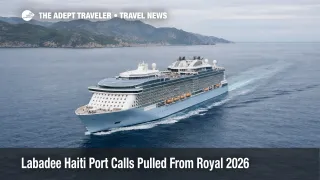
Royal Caribbean has extended its suspension of calls at Labadee, its private destination in Haiti, and it will not visit Labadee at any point in 2026. Guests booked on Caribbean sailings that listed Labadee are affected first, because the line is swapping in other ports or adding sea days, which can change excursion value and connection timing. Open your cruise planner now, confirm the replacement port or sea day, and then decide whether to keep the sailing, or adjust shore plans and insurance for the new routing.
The Labadee Haiti pause 2026 turns a signature private destination day into an itinerary variable, so travelers should treat every sailing that once listed Labadee as a likely port swap until Royal Caribbean restores calls.
Royal Caribbean's public travel update says it has "suspended all visits to Labadee for the remainder of 2026" while it continues to monitor the situation with its Global Security and Intelligence team. That language matters for travelers because it frames the change as a security driven operational decision, not a short, weather style disruption that is likely to clear on the next rotation.
What the change looks like on real itineraries is not one single pattern. Some sailings are revised to call elsewhere, and some are revised into a sea day, depending on where open berths exist and how late the change hits the sailing calendar. Unofficial sailings circulated to travel sellers and tracked by Royal Caribbean Blog show substitutions that include Nassau, Grand Turk, Puerto Plata, Cozumel, and San Juan, as well as added sea days on some departures. Travelers should use those examples as a clue to the kinds of swaps that are happening, but rely on their own booking's updated itinerary as the final truth.
Who Is Affected
Anyone holding a 2026 Royal Caribbean booking that originally advertised Labadee is affected, including guests who chose a specific sailing because the private destination day anchored their shore plan. It also affects travelers who stacked independently booked plans on top of the original port sequence, such as a third party tour in a substitute port, a hotel night timed to an early morning arrival, or flights booked to match the pre change disembark rhythm.
Families and multi cabin groups tend to feel the change more, because Labadee days are often used as the "easy logistics" stop where everyone can do something without splitting into different ports and different transport. When that becomes a new port with different geography and different peak demand, groups can lose the simplicity they planned around, and costs can rise if last minute tours or beach clubs price higher than what they expected.
Travelers sailing close to holidays and school breaks are also more exposed to second order effects. When multiple ships concentrate into fewer substitute ports, the experience can shift even if your sailing technically "kept the same number of ports," because berthing windows tighten, popular venues sell out faster, and return to ship traffic compresses. That crowding risk is especially relevant when a replacement port is a high volume stop that already runs near capacity on peak days.
What Travelers Should Do
Start with immediate verification and buffers. Open the Royal Caribbean app or your cruise documents, screenshot the updated itinerary, and then re check anything you booked off ship that assumed the old port order, including private transfers, tours, dining reservations near the pier, and day passes. If the replacement is a sea day, adjust expectations for onboard demand, because entertainment, pools, and dining will run at "sea day load" instead of "port day load," and that can change what you want to reserve.
Use a decision threshold for rebooking versus waiting that is based on money at risk, not disappointment. If the revised itinerary removes the main reason you chose the sailing, or if your replacement port requires additional cost to replicate what Labadee would have provided, treat that as a trigger to price alternate sailings now while inventory still exists. If your priority is simply a warm weather cruise and the new port sequence still works, it can be rational to hold, but only after you reprice shore days and confirm you are not creating a tight connection problem on embarkation or return.
Monitor three things over the next 24 to 72 hours after you receive a change notice. First, watch for a second revision, because late port swaps sometimes cascade into different port hours or a different replacement once berthing is confirmed. Second, check your shore excursion wallet, because Royal Caribbean says shore excursions canceled due to a ship missing a port are refunded, but you still want to verify the refund method and timing. Third, re check the cruise line's travel update page for Labadee status in case the pause language changes again.
Background
Royal Caribbean's own policy language is clear that it may change ports of call, and it says it is not liable for losses tied to those itinerary deviations, which is why travelers should treat independent add ons as the fragile layer of the plan. In practice, the most dependable "compensation" tends to be mechanical, not sentimental, meaning your missed port shore excursion is typically refunded when the port is skipped, and everything else depends on what you personally booked and what your insurance covers.
The broader context is that Haiti has remained under a Level 4 "Do Not Travel" advisory from the U.S. Department of State, and security conditions continue to be cited as a reason for limited U.S. government ability to assist. That matters even for a private cruise enclave because itinerary planning is an ecosystem problem, not a beach problem. When a port is removed for security reasons, the first order effect is the obvious one, your ship does not go there. The second order ripple is that ship rotations and port allocations shift, which pushes demand into substitute ports, and that can change berth times, tender or pier operations, and the availability of local tours.
A third ripple is in traveler positioning and risk management. Haiti related aviation restrictions and security alerts can affect the broader perception of the destination region, even when your cruise never intended to call at the capital. For example, reporting from Reuters has described continued U.S. flight restrictions to Port au Prince due to armed group risks to civil aviation, reinforcing why cruise lines may prefer longer pauses over repeated short resumptions.
If you want a mental model for how "one node breaks the day," compare the way a single chokepoint can disrupt cruise timing in Puerto Vallarta, as described in Protest Roadblocks Puerto Vallarta Cruise Access Jan 31. The mechanism is different, but the traveler lesson is the same, when access or safety assumptions change, the itinerary becomes a moving target, and your job is to reduce nonrefundable dependencies.
Sources
- Travel Updates
- Royal Caribbean Cancels Visits to Labadee Through 2026
- Royal Caribbean Extends Labadee Cancellations (Again)
- Royal Caribbean cancels stops to its Caribbean port through end of 2026
- Haiti Travel Advisory
- US FAA extends Haiti capital flight restrictions until March 2026
- Can Royal Caribbean change a cruise itinerary or Port of call
- Do I receive a refund for my shore excursion if the ship misses a port