

BER Freezing Rain Halts Departures, Cancellations Grow
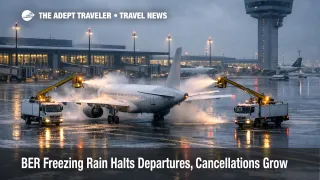
Berlin Brandenburg Airport (BER) temporarily stopped departing flights after freezing rain and snow made it difficult to de ice aircraft safely on February 5, 2026. The operational problem was not runway length or air traffic control, it was that precipitation froze on contact, which can overwhelm normal de icing cycles and holdover times when conditions fluctuate minute to minute. As a result, airlines and the airport warned travelers to expect cancellations, long delays, and crowded rebooking channels while departures restarted slowly later in the morning.
The key traveler takeaway is that a departure pause at BER rarely stays isolated. Even when arrivals are less constrained than departures, the network still breaks because aircraft that cannot leave Berlin cannot operate their next segments, crews run into duty time limits, and gates fill as late aircraft stack up. That combination turns a morning weather interruption into an all day reliability problem, and it is why travelers should treat February 5 as an irregular operations day even after the first takeoffs resume.
To put it plainly, BER freezing rain departures halted and the recovery tail can run into the next departure banks, especially for flights that rely on the same aircraft and crew to operate multiple legs across Germany and nearby European hubs.
Who Is Affected
Outbound passengers are hit first, especially anyone on the first wave of morning departures and anyone holding onward connections later the same day. The immediate risk is not just a late flight, it is losing the last viable onward option if the delay pushes you past a connection bank or if your airline cancels to protect the rest of its schedule.
Connecting travelers are exposed in two ways. First, missed connections compound quickly when many passengers are reaccommodated onto the same few later departures. Second, even if your onward flight is on time, you can still miss it if your inbound flight to Berlin runs late, because aircraft and crews arriving into BER are often the same assets needed to depart again. That is the hidden mechanism behind "arrivals are still operating" headlines, rotations still break.
Travelers trying to reach the airport also face elevated risk. The same freezing rain that disrupts de icing degrades road conditions, slows rideshares, and can ripple into regional rail reliability. Local transit interruptions in Berlin added another layer of uncertainty, which matters because a weather day can turn a normal buffer into an inadequate one.
What Travelers Should Do
If you are booked to depart BER on February 5, 2026, treat your itinerary as unstable until your airline shows a credible new departure time and a confirmed aircraft assignment. Check rebooking options in the airline app first, then pivot to phone or airport staff only when you need an exception, because queues lengthen quickly on weather mornings. If your trip includes a same day event, cruise, or long haul connection, move early rather than waiting for incremental delays that quietly eliminate your remaining alternatives.
Use decision thresholds instead of hope. If your new departure time would land you with a short connection, or would arrive late enough that you lose your only workable onward option, that is the point to reroute via a higher frequency hub. In this situation, hubs such as Frankfurt and Munich often provide the widest rebooking inventory within Germany, while nearby options like Zurich, Vienna, Amsterdam, or Warsaw can be practical depending on alliance and ticket rules. If you are already in Berlin and conditions make airport access unreliable, consider switching to a later flight the next day if your airline offers a waiver, because the ground game can be as disruptive as the air game.
Over the next 24 to 72 hours, monitor two signals rather than headlines. First, watch whether cancellations continue even after departures resume, because that indicates airlines are still shedding flights to reset crews and aircraft. Second, watch the weather warning trend for Berlin and Brandenburg, because repeated freezing rain cycles can force repeated de icing slowdowns and extend the recovery tail. For broader context on how these days typically unfold, see Flight Delays - Travel News and Guides from The Adept Traveler.
How It Works
Freezing rain is operationally nasty for airports because it can create a continuous, fast accumulating ice layer on aircraft surfaces and on ramps. Standard de icing involves spraying heated fluids to remove contamination, then applying anti icing fluid to slow re accumulation, but both steps depend on conditions that allow a predictable "holdover" window. When precipitation intensity and temperature hover near freezing, the practical holdover window can collapse, meaning an aircraft that was just treated may no longer be guaranteed clean by the time it reaches the runway.
That technical constraint becomes a system constraint quickly. First order effects show up at the source as departure queues, gate holds, and cancellations when de icing capacity cannot keep up. Second order effects propagate as aircraft and crews fall out of position, which forces downstream cancellations at other airports that were expecting those aircraft later in the day. The third layer is traveler behavior, hotels near airports tighten as stranded passengers need rooms, and rail and road links become more valuable but less reliable if the same weather is impacting the region.
This is why rerouting guidance should not focus only on Berlin. On a weather day, an alternate hub can be "better" even if it adds distance, because higher frequency and larger fleets create more recovery options. It is also why travelers should watch other German hubs for congestion during the rebound, including disruptions like the recent snow capacity cuts at Frankfurt, which show how quickly a major hub can become a bottleneck when winter operations degrade capacity, see Frankfurt Snow Closes FRA Runways, Diversions Grow.