

Fifth Circuit Ends Airline Fee Disclosure Rule
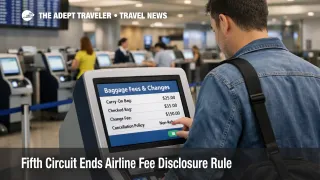
A federal appeals court in New Orleans vacated a U.S. Department of Transportation rule that would have required airlines and ticket agents to show certain add on fees, including baggage and change fees, earlier in the booking path. Air travelers and travel advisors were the practical audience for the rule, because it targeted both online shopping displays and some ticket agent workflows. For travelers, the immediate takeaway is simple, you cannot rely on a consistent federal standard for upfront bag and change fee visibility, so you need to do an all in price check before you click buy.
The Fifth Circuit airline fee disclosure rule was vacated, which means the April 2024 regulation titled "Enhancing Transparency of Airline Ancillary Service Fees" is no longer in effect.
In its short, unsigned opinion, the full U.S. Court of Appeals for the Fifth Circuit held that DOT did not satisfy Administrative Procedure Act notice and comment requirements because the public did not have an opportunity to comment on a study that DOT treated as critical to the rule. The court said DOT relied on that study to justify its cost benefit analysis, and that procedural defect compromised the entire regulation, so the remedy was vacatur of the full rule.
Who Is Affected
Travelers booking U.S. airline itineraries are affected first, especially those comparing multiple carriers where baggage policies, carry on pricing, and change terms drive the true trip cost. This bites hardest on leisure trips with checked bags, families traveling with multiple travelers on one record, and anyone booking basic economy style products where the bag, seat, and change restrictions are often the price lever.
Travel advisors and other ticket agents are also affected, but differently. A standardized requirement to surface fees in early shopping steps can reduce back and forth, reduce "fare shock," and make quotes easier to defend. At the same time, parts of the industry, including ASTA, had objected to how the rule would have applied to offline transactions, where a long standing client relationship often already includes a known set of fee expectations and airline specific caveats.
Airlines and trade groups are the direct legal winners, because the rule that would have required new displays and system changes is vacated. The lawsuit challenging the rule was filed in May 2024 by Airlines for America, the International Air Transport Association, the National Air Carrier Association, and multiple U.S. airlines, and the rule was stayed in July 2024, so carriers did not have to implement it while litigation proceeded.
What Travelers Should Do
Start treating every fare you see as a partial number until you verify baggage pricing, carry on rules, seat selection costs, and the change and cancellation terms for that exact fare brand. If you are comparing an airline site to an online agency or a metasearch result, force yourself to reach the final price breakdown screen, then write down what is included and what is not, because those gaps are where the trip cost usually moves.
If you might need to change plans, pick a decision threshold before you book. For example, if a schedule is uncertain, a meeting might move, or weather could force date shifts, you should price the trip under two scenarios, fly as planned and change once, then decide whether paying more upfront for a more flexible fare is cheaper than risking a future change fee or a restrictive fare rule. If you are using points, do the same exercise, because the cash fee might be low while the redeposit rules or the fare difference can still be costly.
Over the next 24 to 72 hours, monitor two things, airline fee pages for your specific carrier and route, and any DOT signals about whether the department restarts a revised version of the rulemaking. The Fifth Circuit noted that DOT, now under a different administration, indicated an intent to redesign or rescind the approach, so the practical environment can still shift, just not on the timeline this rule would have created.
How It Works
This rule sat in the plumbing between airfare advertising and the checkout flow. The first order effect would have been a more consistent requirement to present key ancillary fees during shopping, not only after you commit to a fare. When those fees are not standardized in early displays, the travel system shifts cost discovery downstream, which changes behavior in predictable ways, more abandoned carts, more calls and chats to agents, and more disputes about what was, or was not, included.
Second order ripples extend beyond the booking screen. When travelers discover bag or change costs late, they often rebook to different flights, which can push demand into different departure banks and tighten seat inventory on popular times. That, in turn, increases misconnect risk for tight self built itineraries, because the "best value" flight a traveler switches into may have shorter buffers or different connection airports. On the agency side, late fee discovery increases servicing time per booking, especially when a client needs multiple what if scenarios, and that can slow down holds, ticketing deadlines, and reissue timelines when disruptions occur.
Finally, this is part of a broader swing in U.S. aviation consumer regulation. The ruling turned on a procedural Administrative Procedure Act problem, not a traveler friendly versus airline friendly policy debate, but the outcome still matters to trip planning because it removes a single nationwide standard that would have made apples to apples comparisons easier.
Sources
- Per Curiam Opinion, Airlines for America v. U.S. Department of Transportation (5th Cir., Feb. 3, 2026) (PDF)
- Airlines win challenge to appeals court ruling on consumer fee disclosures (Reuters, Feb. 3, 2026)
- Appeals court vacates Biden airline fee disclosure rule (Travel Weekly)
- U.S. Airline Ancillary Fee Rule Vacated On Procedural Grounds (Aviation Week)