

Antigua Culinary Month May 2026 Restaurant Week
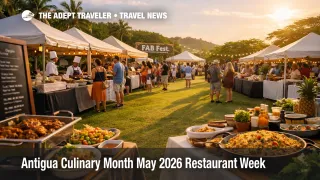
Antigua and Barbuda is bringing back Antigua and Barbuda Culinary Month in May 2026, positioning it as a full month of food focused travel planning rather than a single weekend festival. The program is built around a fixed Restaurant Week window, a flagship Food, Art, and Beverage festival day, and a regional hospitality symposium, plus chef led events that can turn a standard beach trip into a reservation driven itinerary. If you are considering Antigua for spring shoulder season, the practical change is that specific dates now matter for dining access, pricing predictability, and how far in advance you should lock in restaurants and accommodations.
The Antigua and Barbuda Tourism Authority is emphasizing an all Caribbean heritage roster of visiting chefs across the month, alongside local chefs and restaurants. In the public announcement of the 2026 return, ABTA highlighted headliners including Nina Compton, Paul Carmichael, and Tristen Epps, along with other Caribbean heritage chefs and beverage talent who will appear across multiple events, not just a single gala dinner.
Who Is Affected
Independent travelers and food forward planners are the most affected because the biggest upside, and the biggest friction, is reservation access. Restaurant Week runs May 3 to May 17, 2026, and ABTA says more than 50 restaurants are expected to participate, which can spread demand across the island but also creates a surge of diners targeting the same dates.
Resort guests are also affected because Culinary Month nudges travelers off property. The event mix is designed to pull visitors into local dining rooms, cookshops, and festival venues, which can shift how you choose meal plans, whether you rent a car, and how late you want to be out if you are balancing early excursions the next morning. The "Eat Like A Local" concept is positioned as a guide to local operators and neighborhood favorites, so travelers staying in more self contained resorts may want to plan transport and timing in advance.
Industry attendees and travelers blending business with leisure are a third group, because the Caribbean Food Forum is scheduled as a one day conference on May 21, 2026 at the John E. St. Luce Conference Center in St Johns. Even if you are not attending, that date can influence lodging patterns and evening restaurant demand in and around St Johns, particularly if visiting speakers and delegates overlap with leisure travelers arriving for the festival weekend.
What Travelers Should Do
Start by treating May 21 through May 24, 2026 as the highest demand block. The Caribbean Food Forum is May 21, 2026, and the headline FAB Fest event is Saturday, May 23, 2026 at Cedar Valley Golf Club, with additional chef events listed around that same window. If your ideal trip includes the forum plus the festival, build in a buffer night on each side so a single late reservation or transport snag does not force you to miss the one day anchor events.
Use a simple decision threshold for Restaurant Week: if you care about a specific restaurant, or you are traveling with a group of four or more, book early and shape the rest of the itinerary around those reservations. If you are flexible and your goal is value plus variety, you can wait longer and decide based on what is available at the $25, $50, or $75 tiers, but you should still plan transport because the win of Restaurant Week disappears if you are paying peak taxis for every dinner.
Over the 24 to 72 hours before you travel, monitor the official Culinary Month event listings for any location, time, or ticketing changes, especially for events that list venues and capacity limits. Also watch for updates on the "Eat Like A Local" experience if you want to prioritize cookshops and smaller operators, because those places can have limited hours and sell out earlier in the day than full service restaurants. Your practical goal is to arrive with a short, realistic list of dining targets by area, plus a fallback plan in case your first choice is full.
How It Works
Culinary Month works as a demand concentrator across several layers of the travel system, and that is why it is useful for travelers but also where it can bite poorly buffered itineraries. The first order effect is at the restaurant and venue layer: Restaurant Week pulls diners into prix fixe menus across a defined date range, while FAB Fest concentrates high foot traffic into a single venue day, creating predictable peaks in dinner reservation pressure and local transport demand.
The second order ripple tends to show up in lodging patterns and day planning. Travelers who might normally book a shorter resort stay can justify adding nights to cover both Restaurant Week and the festival weekend, tightening inventory in popular beach areas and in St Johns around conference timing. At the same time, the Eat Like A Local framing nudges travelers to explore beyond the resort corridor, which increases the importance of realistic drive times, parking expectations, and the tradeoff between renting a car versus relying on taxis, particularly on event days when many people are moving at similar times.
A third ripple is in booking behavior and trip value math. Fixed price dining tiers can make Antigua feel more predictable for travelers comparing islands, but only if you plan enough structure to actually use the prix fixe options and not default to last minute, high markup dining because you missed the best reservation windows. ABTA is explicitly marketing the month as a reason to travel for food, which means you should expect more travelers who build their entire itinerary around dining moments, not just beach time.