

NYC Ferry Ice Shutdown Delays Waterfront Travel
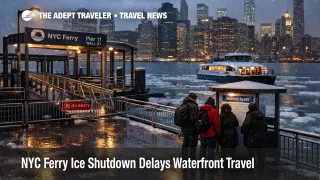
NYC Ferry has suspended service across all routes because unsafe ice continues in the East River, the Hudson River, and New York Harbor. The shutdown is not a minor delay scenario, it removes a whole layer of waterfront capacity that many visitors use for hotel moves, sightseeing hops, and time sensitive transfers from neighborhoods where ferries are the simplest link to Manhattan. If you planned to use NYC Ferry as your primary connector, the practical move now is to switch to subway and bus routing, then add a buffer for slower street travel and longer waits for vehicles.
NYC Ferry's latest operational update, posted February 5, 2026, said service would remain suspended through the weekend because large ice floes are still moving through the harbor. The operator also signaled that temperatures rising above freezing by mid week could support a gradual return next week, likely starting with limited or modified routes rather than a full network restart.
The shutdown began earlier in the week cycle when ice conditions intensified, and local reporting captured NYC Ferry's warning that the closure could last for several days once service was halted systemwide.
Who Is Affected
Travelers most affected are those staying in waterfront neighborhoods that commonly use ferry landings to avoid midtown transfers, including visitors moving between Manhattan and Queens, Brooklyn, the Bronx, Rockaway, and Staten Island's St George area. NYC Ferry's route structure, including the East River, Astoria, South Brooklyn, Rockaway oriented service, and the St George route, is designed to bypass crowded rail corridors, so a full suspension pushes that demand back onto subways, buses, and streets.
Visitors should also expect indirect impacts even if they never planned to step on a ferry. When a whole transit mode disappears, rideshare volume rises, taxi queues lengthen, and crosstown and river crossings can slow, especially during morning and evening peaks. That matters for airport days because the last leg from a hotel to an airport is often the least flexible part of a trip.
Do not assume every ferry in New York is down. NYC Ferry is one system, while the Staten Island Ferry is a separate operation with different vessels, routes, and decision making. Some local coverage during this ice cycle reported the Staten Island Ferry operating on a normal schedule even as NYC Ferry remained suspended, so travelers should check the specific operator for the route they plan to use.
What Travelers Should Do
If your plan depended on a ferry segment, switch your routing now rather than waiting at the landing. For Manhattan's Wall Street Pier 11 area, default to nearby subway service and treat rideshare as a backup when luggage or mobility needs make stairs and transfers impractical. For East 34th Street and the FDR corridor, plan for the subway as the backbone, then use a short bus or car leg to close the gap to the waterfront.
Use a clear threshold for rebooking versus waiting when ferries were part of an airport day. If losing the ferry forces a street based transfer of more than about 30 minutes in normal conditions, assume it can be an hour or more at peak times, then decide whether to leave earlier, shift to an earlier flight, or add a night near the airport. If you are on separate tickets, or you have a hard cutoff such as a cruise all aboard time, treat the ferry outage as a reason to widen your buffer, not as an inconvenience you can absorb later.
Over the next 24 to 72 hours, monitor two things in parallel. First, NYC Ferry's service updates for signs of a partial restart, because a staged return may bring back only certain routes first. Second, watch street level conditions around your neighborhood and landing area, because even after service resumes, ice and wind driven changes can trigger last minute operational pullbacks. If your broader trip also touches weather vulnerable flight days, fee free change waivers can sometimes reduce the cost of shifting flights away from the most fragile recovery windows, which can be useful when surface transport reliability is already degraded. For related context, see Winter Storm Gianna US Flight Waivers Through Feb 6.
How It Works
Ice disrupts ferry operations in two linked ways, navigation and docking. Even when a vessel can move through brackish river ice, large floes and shifting sheets can reduce speed, compress schedules, and create unpredictable gaps between boats. The bigger constraint for a citywide network is often landings, if ice accumulates around docks, gangways, and pilings, safe approaches and secure docking can become unreliable, especially when wind pushes ice against specific shoreline segments.
Those first order constraints create second order ripple effects through the travel system. When NYC Ferry capacity drops to zero, displaced riders shift to subways and buses, which increases platform crowding and can slow boarding times at key transfer stations. At the same time, street demand rises for taxis and rideshares, which can lift prices and extend pickup times, especially in areas where curb space is limited near waterfront parks and piers. For visitors, that combination is what turns a simple cross river hop into missed timed entries, late restaurant seatings, and tighter airport margins.
NYC Ferry's February 5 update pointed to a likely mid week improvement window, with temperatures forecast above freezing and a planned gradual return to service. Travelers should read that as a staged ramp, not an instant reset, because partial operations can still leave certain neighborhoods without reliable ferry timing for another day or two even after boats reappear on some routes.