

Seabourn Venture Antarctica Record Voyage Reaches 70°S
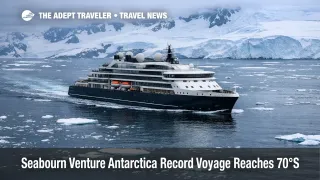
Seabourn Venture pushed farther south than Seabourn says it has ever gone before during its ongoing Antarctica Exploration sailing in the Antarctic Peninsula region. The ultra luxury expedition ship reached 70° South, and Seabourn framed the milestone as the most southerly point in both Seabourn and Carnival Corporation history during the voyage that runs from January 28 to February 9, 2026. For travelers, the practical takeaway is not the record itself, it is what the routing implies about operational ambition, and how quickly conditions can reshape landings, zodiac plans, and day by day timing once a ship commits to deeper south corridors.
Seabourn also said this voyage included its first ever exploration of George VI Sound, which sits well beyond the peninsula's more commonly visited lanes. In the same update, the line described landing guests directly onto Antarctic sea ice at about 69.5° South for a Champagne toast, plus a visit to historic Base E on Stonington Island, a rarely visited former British research station. These are the kinds of moments expedition travelers book for, but they also highlight why Antarctica itineraries should be treated as conditional plans rather than guaranteed checklists.
The nut graf is simple. The Seabourn Venture Antarctica record voyage shows how ice, weather, and access windows can unlock rare sites on one departure, and remove them on the next, even when the brochure looks similar.
Who Is Affected
This is most relevant to travelers currently sailing, or about to sail, on Seabourn Venture in Antarctica during the same late January through early February window, because the same sea ice and weather regime drives what is possible. It also matters to anyone shopping expedition cruises who is comparing brands on itinerary depth, landing variety, and the likelihood of visiting less traveled areas such as George VI Sound, because these decisions affect price, packing, travel insurance value, and how much buffer time you should build around the cruise.
The first order travel system effect sits on the ship itself. When a captain and expedition team push farther south, the ship is operating in narrower windows for navigation, landings, and zodiac transfers, and the margin for schedule recovery shrinks if weather shuts down operations for a half day. That can move planned landing sequences, compress shore time, and change wildlife and site opportunities, even if guests still experience a high quality expedition day.
Second order ripples show up quickly in at least two other layers travelers feel. One is air and hotel logistics at the gateway. Most travelers are transiting through southern South America gateways to reach the ship, and even small shifts in disembark timing can stress tight flight connections, trigger extra hotel nights, or force reprotected flights that are limited in peak season. The other is the broader expedition market, where headline making sailings can push more travelers to book similar dates and ships, which can tighten cabin inventory and lift fares, especially for longer voyages and higher demand cabin categories.
If you are comparing expedition products across operators, it can also be useful to separate the headline route from the mechanics that actually determine your experience, such as the expedition team's operating style, zodiac procedures, landing cadence, and the ship's ability to pivot. For readers tracking expedition capacity shifts and substitution risk in other regions, the recent small ship disruption in Alaska is a reminder that niche inventory can disappear fast, and replacement options can be limited, see Alaskan Dream Cruises Shutdown Alaska Refunds 2026. For a different example of how onboard programming and wildlife priorities can shape traveler choices, see MSC Poesia Alaska Whale Observer Program Summer 2026.
What Travelers Should Do
Start with immediate actions and buffers. If you are booked on an Antarctica expedition cruise in the next few weeks, avoid same day flights after disembarkation, and add at least one buffer night on the back end in the gateway city when possible. Plan for waterproofing and cold weather layers that support zodiac operations, because landing plans can change, but the exposure profile stays the same, cold, wet, and windy, often with long stretches outdoors.
Set a clear threshold for rebooking versus waiting. If your trip's value depends on a specific site or a deep south routing, treat that as a preference rather than a promise, and choose flexible air, refundable hotels, and travel insurance that matches your risk tolerance. If you have not booked yet, and you are selecting between similar departures, prioritize the operator's transparency about contingency planning and landing variability over marketing language about specific stops.
Over the next 24 to 72 hours, monitor what actually moves the needle. Watch your operator's daily expedition updates and the onboard app for landing plans and timing, and keep an eye on weather and sea ice conditions that can close zodiac operations. In practical terms, you are monitoring whether the ship is losing half days to wind and visibility, because that is what tends to cascade into reshuffled landings, changed wildlife focus, and knock on pressure on flights and hotels at the gateway.
Background
Antarctica expedition itineraries are permission and conditions driven trips, not fixed route cruises. Operators plan a target set of landing sites and scenic corridors, but the actual execution depends on sea ice extent, wind, swell, visibility, wildlife considerations, and regulatory constraints that govern where, and how, landings can occur. When a ship goes deeper south, the system becomes more sensitive, because navigation and landing windows tighten, and recovery time shrinks if weather interrupts operations.
That is why a record reaching day can coexist with last minute substitutions on another sailing. The first order effect is on the expedition day plan, where a closed landing forces a pivot to zodiac cruising, a different site, or a scenic sail, often with a different timing profile. The second order ripples move through onward travel. A delayed return to port or a late disembark can push travelers into expensive reaccommodation in the gateway city, and limited flight inventory can turn a one day slip into a multi day cascade during peak season. Travelers who plan Antarctica as a tightly stacked trip without buffers are the most exposed to these compounding effects.