

Hyannis Nantucket Harbor Ice Cancels Ferries
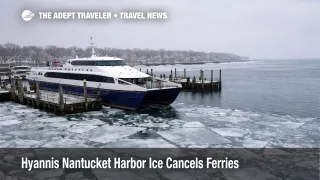
Harbor ice has repeatedly disrupted ferry operations between Hyannis, Massachusetts, and Nantucket, Massachusetts, with Hy Line Cruises canceling high speed sailings during the late January and early February cold stretch. The operational change travelers feel is not a single weather day, it is the persistence of ice driven cancellations that can keep schedules unreliable across multiple days, even when storms are not the headline factor. If you are traveling on a short stay, or you are trying to connect from Cape Cod to flights, you now need a backup plan that does not depend on a single fast ferry sailing.
Local reporting describes Hy Line fast ferry departures turning back or canceling outright when ice conditions in Hyannis Harbor make safe transit difficult, with some cancellations stretching across consecutive days as the deep freeze holds. On Nantucket, harbor icing has also been significant enough to prompt official warnings and periodic ice management, including icebreaking activity to keep channels usable.
Who Is Affected
Foot passengers relying on Hyannis as the primary gateway are the first group exposed, especially anyone booked on high speed sailings that are most sensitive to harbor and channel conditions. Travelers with separate ticket connections are the second group, for example a morning boat plan that feeds a midday flight, or a late afternoon return that is meant to avoid an overnight on Cape Cod. Once a sailing drops, the practical problem is not just delay, it is that the remaining departures can fill quickly, and the next available spot may be the next day.
Vehicle travelers can also feel the knock on effects. Even when you are not on a fast ferry, harbor and channel conditions that slow operations tend to compress capacity and push more people into fewer departure windows. That increases standby uncertainty, creates longer terminal waits, and can push travelers into last minute lodging changes on either side of the water.
The ripple extends beyond the docks. If boats cancel, demand shifts to regional flights, which can tighten seat availability and raise the cost of switching modes, and it can also push more travelers to consider private charters. In at least one recent stretch of ice related disruption, local reporting noted Cape Air adding extra service between Hyannis and Nantucket to help absorb demand.
What Travelers Should Do
If you are traveling on February 11, 2026, or within the next few days while cold conditions persist, treat the ferry as conditional transport. Check the operator's real time alerts before you leave for the terminal, and again just before your planned departure, because cancellations can cascade across the day as conditions evolve. If you are already on Cape Cod, avoid arriving at the dock with no alternative, and keep your luggage, ID, and payment method ready for a same day mode switch.
Set a decision threshold that protects the rest of your trip. For same day connections, a practical cutoff is to switch to a flight as soon as your planned sailing is canceled, or as soon as the next available boat would put your onward travel at risk. If your itinerary includes a non refundable hotel night, a prepaid car pickup, or a cruise or tour start, bias toward switching modes earlier rather than waiting for a later ferry that may also be canceled.
Over the next 24 to 72 hours, monitor three things, the ferry operator's service alerts, the Nantucket harbor condition updates, and any notice of icebreaking support that can temporarily improve channel reliability. Nantucket has issued public advisories about icing conditions, and local coverage has described Coast Guard icebreaking activity in the harbor, both of which are useful signals for whether disruption is likely to persist. If you can move your travel by a day, that is often the cleanest fix, because it reduces the pressure to accept the first available seat when service resumes.
Background
Harbor ice is a different operational problem than wind or open water seas. The constraint is not only the weather during the crossing, it is whether vessels can safely maneuver in confined harbor areas, maintain control in the channel, and dock without damage. When ice thickens in Hyannis Harbor or in the approaches to Nantucket's waterfront, high speed boats can become impractical to run, and even traditional service can slow as captains prioritize safe handling and ports manage channel access.
The travel system ripple starts at the pier. Once sailings cancel, passenger loads concentrate into fewer departures, rebooking lines build, and standby becomes less predictable. The second layer is air and lodging. Travelers pivot to flights out of Barnstable Municipal Airport (HYA) and Nantucket Memorial Airport (ACK), or they add an unplanned hotel night on Cape Cod or Nantucket, which can tighten room inventory during a disruption stretch. The third layer is onward connections and local services, where missed transfers, late arrivals, and compressed arrival windows can break car rentals, dinner reservations, and timed activities. That is why persistent Hyannis Nantucket ferry ice is more trip breaking than a single day cancellation, it forces travelers to treat the route as a capacity constrained system until temperatures moderate and channels stay reliably clear.