

DHS Shutdown Risk Hits TSA Lines Feb 14, 2026
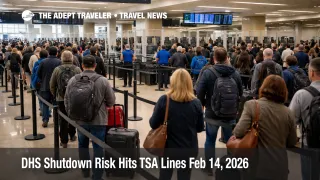
A Department of Homeland Security funding lapse is set to begin on U.S. airports' busiest weekend rhythm, which is why travelers should expect slower Transportation Security Administration checkpoint flow starting Saturday, February 14, 2026. The most important practical detail is that TSA screening generally continues during a funding lapse, but many screeners are required to report as essential personnel while pay is delayed, a dynamic that has historically increased call outs and reduced the number of open lanes as the lapse drags on. Travelers with early departures, tight connections, and checked bags face the highest risk, because a longer security queue can spill into missed boarding windows.
The change in plain language is that DHS shutdown TSA lines could grow longer at U.S. airports from February 14, 2026, even if flights operate normally, because screening throughput depends on staffing, open lanes, and morale over multiple days.
Who Is Affected
Any traveler departing a U.S. airport can be affected, but the pain is not evenly distributed. The first pinch point is the checkpoint itself, where lane count and secondary screening capacity determine how quickly a surge clears. Large hubs with concentrated departure banks tend to see the biggest visible line swings, because they have more travelers arriving in short windows, and because any reduction in staffing can force checkpoint consolidation that lengthens queues in bursts rather than evenly all day.
Business travelers and families flying on the morning peak are also more exposed, because the margin for error is smaller. When a funding lapse extends beyond a few days, the risk shifts from isolated long lines to a pattern of slower mornings, longer rebooking lines at customer service, and more travelers missing the first flight of the day and rolling onto later departures. That, in turn, tightens seat inventory across the day and increases the chance of forced overnights at hub airports, especially if weather, maintenance, or air traffic flow restrictions also show up.
The second order ripple matters even if the issue starts at TSA. More missed departures mean more last minute rebooks, which can disrupt aircraft rotations and crew positioning, because airlines may need to protect later flights by swapping equipment, holding a departure for misconnecting passengers, or reassigning crews to preserve legality. Hotels near major hubs can tighten quickly when rebooked passengers spill overnight, and ground transport can surge when more people are leaving the airport later than planned.
What Travelers Should Do
Start with buffers that match your airport type, not your usual routine. For a large hub, plan to arrive earlier than normal for both morning peaks and late afternoon peaks, and treat the first weekend, February 14 to 16, 2026, as higher risk because traveler volume is already elevated. If you are checking bags, build in extra time for the bag drop cutoff, because you cannot recover a missed bag deadline with a faster run through security.
Use clear decision thresholds so you do not chase a bad plan. If you see heavy checkpoint waits, a long precheck queue, or public reports of lane consolidation, it is usually smarter to rebook to a later departure the same day than to gamble on a tight boarding window, especially on separate tickets. If your itinerary includes an international segment, treat a missed first flight as a potential chain reaction, because later options can be limited and reaccommodation may require long holds.
Over the next 24 to 72 hours, watch signals that indicate whether disruption is widening or stabilizing. TSA operational messaging and testimony related to shutdown planning can offer clues about staffing stress, while airline travel waivers can be an early sign that carriers expect persistent passenger misconnects at certain hubs. For day of travel, lean on airport published checkpoint indicators and official wait time tools, and be prepared to shift to carry on only if your bag drop window is at risk.
How It Works
A DHS funding lapse does not usually close airports, but it can change how smoothly they run. Screening is a throughput system, and throughput depends on staffing levels, lane availability, and the rate of secondary screening and bag checks. During a partial shutdown, many TSA officers continue working as essential employees, but delayed pay can increase absenteeism and worsen staffing gaps over time, particularly at high volume checkpoints where the job is already physically demanding.
When fewer lanes are open, the line does not just get longer, it becomes less predictable. A short surge, like several flights checking in at once, can produce a rapid queue increase that takes an hour to unwind, and that is why early morning departures are fragile. Once passengers miss flights, airlines must rebook them, which increases counter congestion and call center loads, and can force last minute aircraft and crew adjustments to protect the rest of the schedule. That is the bridge from a checkpoint problem to a network problem, because more missed departures can create knock on delays as aircraft swap, crews reposition, and later flights absorb disrupted passengers.