

Royal Caribbean Smart Glasses Rules Limit Use Onboard
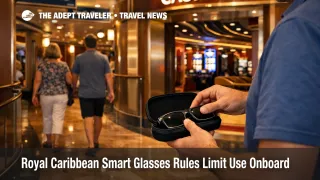
Royal Caribbean has updated its prohibited items guidance to limit where smart glasses that can record audio and video may be used onboard its ships. The language now says smart glasses are not allowed to be used in certain onboard areas, including, but not limited to, public restrooms, Youth Program areas, medical areas, and the casino. For travelers, the practical change is that wearing smart glasses around the ship may still be fine in many public spaces, but you should plan on removing them before entering sensitive venues where privacy, health, and security concerns are highest.
The change matters because smart glasses are designed to capture content hands free, and that raises a higher risk of bystander recording than a phone that is clearly held up. Cruise ships also compress personal space, so unwanted recording can happen at short distances in corridors, lounges, and venues where people may not notice a camera. Royal Caribbean's updated wording frames the issue as both passenger privacy and onboard security, and it places responsibility on guests to comply with venue specific restrictions that can vary by space.
Who Is Affected
This update affects guests sailing on Royal Caribbean ships who plan to bring any brand of smart glasses with recording capability, including popular models such as Ray Ban Meta and Oakley Meta glasses. It also affects travelers who rely on prescription smart glasses as their primary eyewear, because a venue restriction can become a practical mobility and comfort problem if you do not have a backup pair available.
Families are more likely to encounter the rule because Youth Program areas are explicitly included, and those spaces often sit near other high traffic corridors during sea days. Casino visitors are also directly affected, because casinos typically enforce strict controls on photography and recording to protect game integrity and patron privacy. Guests who anticipate using smart glasses for travel documentation should assume enforcement is more likely in the listed venues, and they should choose alternate devices or defer recording to shore days when local rules allow it.
What Travelers Should Do
Before you sail, recheck the cruise line prohibited items guidance and your sailing's pre cruise information, then plan a simple workaround. Pack a regular pair of glasses if you depend on prescription lenses, and assume you will need to switch eyewear when you enter restricted venues such as the casino, medical center, restrooms, or youth spaces.
If you are already onboard, treat this like a venue rule, not a debate, and make decisions that keep your day moving. Remove smart glasses before entering listed areas, follow crew instructions if challenged, and avoid testing boundaries in spaces where privacy complaints escalate quickly. If you need to access medical services, or you are dropping off children at youth programming, plan for a short handoff window where you may need to stow the device.
Over the next 24 to 72 hours, monitor for clarifying language and ship specific enforcement notes, especially in the Royal Caribbean app or printed guest materials. The phrase including but not limited to is a signal that additional restricted areas may be communicated onboard, and it is common for ships to align enforcement with venue managers, such as casino security, youth staff, and medical teams. If your trip depends on hands free capture for accessibility or other needs, contact the cruise line before sailing to document your situation and understand how the policy will be applied.
How It Works
Cruise lines manage privacy and security in a confined environment where guests cycle through sensitive spaces multiple times a day. Public restrooms and medical areas are obvious privacy zones, and youth programming adds additional safeguarding expectations. Casinos are a separate security layer, because surveillance and fraud controls are integral to operations, and recording devices can create disputes, compromise game protection measures, or capture other guests without consent.
Operationally, a policy like this does not just affect the guest wearing the device. It propagates into staffing and incident response, because security teams and venue staff may need to intervene, confiscate, or document noncompliance, which can disrupt service flow in high traffic areas. It can also ripple into guest relations, because disputes over recording often become complaint cases, and those cases consume staff time that would otherwise go to itinerary changes, accessibility needs, or customer service. For travelers, the second order effect is friction, you may spend more time navigating venue entry rules, and you may want to shift content capture to open decks, ports, or clearly permitted spaces to avoid interruptions.
Royal Caribbean is not alone in addressing this category. MSC Cruises has published a stricter restriction that bars devices capable of covertly or discreetly recording or transmitting data, including smart glasses, from ships public areas, which effectively removes most onboard use outside private spaces. That contrast suggests the industry is experimenting with enforcement scope, and travelers should expect more brands to update rules as smart glasses adoption rises.