

Construction Risk Milos Sarakiniko Coastline
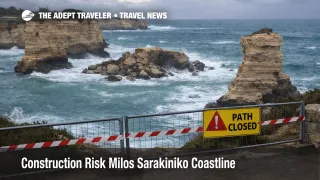
Coastal construction and hotel development disputes on Milos, Greece, are intensifying scrutiny of the island's fragile volcanic coastline, including the world famous Sarakiniko formations. Travelers planning beach time, photography stops, or north coast stays are most exposed to changing conditions, especially as projects move through permits, appeals, and court decisions. The practical takeaway is simple, verify access and on site conditions before you go, keep your day plan flexible, and build extra time into transfers that rely on narrow coastal roads.
The Construction Risk Milos Sarakiniko Coastline now looks less like a single closure and more like a stop start pattern of works, legal actions, and restoration orders that can alter access and the visitor experience while long term protections remain unsettled.
Scientific groups have warned that Sarakiniko's volcanic ash and sandstone formations are unusually vulnerable to scarring, erosion, and long lasting visual damage when heavy machinery cuts into the landscape. Reporting in February 2026 notes that legal protections specific to Milos's landscape are still not in place, even after public backlash helped push authorities to revoke a contentious permit near Sarakiniko. The island's debate is not only about whether tourism should grow, it is about what kind of growth avoids turning Milos into a rapid buildout model that residents associate with overcrowding elsewhere in the Cyclades.
On the enforcement side, Greek authorities have shifted from debate to targeted actions. In late January 2026, the Environment Ministry ordered the company behind the canceled Sarakiniko area hotel project to restore the excavated site within one month, including filling excavations and removing materials left on the ground. Separately, Greece's top administrative court ordered a temporary suspension of expansion works for the White Coast hotel complex, a high profile project near the Sarakiniko area that has drawn allegations of licensing irregularities. Those interventions reduce immediate construction momentum in specific locations, but they do not resolve the underlying planning gap that residents and experts say allows sensitive coastlines to be contested project by project.
Who Is Affected
Independent travelers who visit Sarakiniko by rental car, taxi, or scooter are most exposed because their experience depends on road access, parking capacity, and safe foot movement on uneven white rock surfaces. Any active works, fencing, restoration activity, or enforcement action can compress the usable space, slow circulation, and change where it is safe or legal to walk.
Travelers booked on the north side of Milos, including areas near Mandrakia and Mytakas, can feel second order effects even when Sarakiniko itself is open. Large construction sites add heavy vehicle traffic to roads that already bottleneck during midday peak hours, which can push check in later, delay dinner plans in Adamantas, and tighten connections to boat tours that run on fixed departure times.
Group tours and cruise ship day visitors are also exposed, but in a different way. Operators tend to protect schedules by shortening stops or substituting other viewpoints when access becomes unreliable. That can turn Sarakiniko into a quick photo stop rather than a longer coastal walk, and it can shift demand onto other beaches and coves at the same time, raising crowding and transport pressure elsewhere on the island.
What Travelers Should Do
Lock in the basics early. If Sarakiniko is a must do, plan to arrive early morning or late afternoon to reduce parking and traffic stress, and keep a backup beach or boat tour option in mind in case the access road, the parking area, or the immediate shoreline zone changes due to works or enforcement. If you are staying near an active project area, ask your lodging for the most current access notes, expected noise windows, and whether any road sections are intermittently constrained.
Use decision thresholds, not vibes. If your itinerary hinges on a single north coast day, and you see credible reports of active works, new fencing, or legal actions affecting a nearby project, it can be smarter to rebook a tour day first and move Sarakiniko to a flexible slot rather than forcing it into a tight transfer day. If you have a ferry departure the same afternoon, treat Sarakiniko as optional unless you have a large buffer, because road delays can cascade quickly once queues form on narrow approaches.
Monitor the next 24 to 72 hours before you travel, and again the day you arrive. Watch for municipal updates, credible local reporting, and any notices from your hotel or tour operator that mention access changes, restoration activity, or construction suspensions restarting. If conditions look uncertain, build redundancy by pre selecting a second scenic stop and by timing your day so you are not relying on a single late afternoon drive to make a fixed departure.
How It Works
Milos's conflict is partly geological and partly administrative. Sarakiniko's soft volcanic tuff and related coastal formations can be damaged quickly when excavations remove layers or alter drainage, and those impacts are difficult to reverse in a landscape that is visually defined by smooth white contours and fragile textures. Geoscience experts have argued that the site's rarity, and its scientific value as an analogue terrain, strengthens the case for formal protection that goes beyond generic tourism management.
The administrative problem is that protections have lagged behind demand. Reporting on Milos notes that multiple planning initiatives have aimed to designate coastal protection zones and explicitly recognize Sarakiniko as an exceptional landscape, but the island has remained without a dedicated special protection status even after years of study and debate. That vacuum forces disputes into a reactive cycle, permits are issued or revised, legal challenges follow, and authorities intervene after visible impacts have already occurred. National oversight has added pressure, including a National Transparency Authority review that flagged permitting issues tied to out of plan building rules and road access requirements, and that described how weak guardrails can endanger sensitive island landscapes.
The ripple effects matter for travelers because tourism infrastructure is interconnected. A major resort expansion does not only change one bay, it increases bed capacity, shifts traffic patterns, and adds resource demand on an island system that is already constrained. In the White Coast case, reporting described a planned buildout toward 271 beds, and quantified daily water needs that are significant for a water scarce island served by desalination, which is a reminder that large projects can stress utilities as well as shorelines. When that stress shows up, it tends to surface as crowded roads, tighter availability for rental cars and transfers, and higher peak season prices, not as a single announcement at Sarakiniko. Greece's broader effort to manage visitor pressure is visible in other policy moves, including cruise arrival limits in popular areas, and that context is part of why the Construction Risk Milos Sarakiniko Coastline remains a practical trip planning consideration rather than a purely local political fight, especially for travelers booking peak season dates with limited flexibility. See Greece Limits Cruise Arrivals, Bans High Heels at Ruins.
Sources
- Milos: Greek island threatened by overdevelopment and a lack of protection
- Hotel expansion near Sarakiniko beach sparks new outcry on Milos
- Company behind scrapped Milos hotel project told to restore battered landscape
- Top administrative court suspends hotel expansion on island of Milos
- Greek Court Suspends Hotel Project on Iconic Milos Beach
- Transparency watchdog blocks Milos villa permits
- National Transparency Authority press release on Sarakiniko permitting review
- Milos left unprotected as spatial planning initiatives drag on
- Natura 2000 site factsheet, Dytiki Milos, Antimilos, Polyaigos kai Nisides
- Sarakiniko: A unique geoheritage site under threat