

Cyclone Gezani Madagascar Travel Disruptions
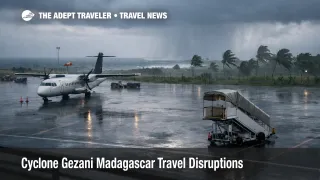
Cyclone Gezani caused widespread travel disruption in Madagascar after a damaging landfall in the east, with the heaviest early impact reported around the port city of Toamasina and surrounding districts. Travelers are most affected if they are relying on domestic flights, long overland transfers, coastal roads, or small boat connections that depend on calm seas in the Mozambique Channel region. The practical next step is to treat internal movement as conditional, confirm that your specific road, airport, or port link is operating, and be ready to pause or reroute rather than forcing same day connections.
Cyclone Gezani Madagascar travel plans face extra uncertainty because forecast guidance has continued to highlight the chance of the system curving back toward Madagascar, raising the risk of another round of weather driven shutdowns in the near term. International arrivals may still operate into larger gateways, but onward movement inside the country can fail in pieces, a drivable segment can be blocked by washouts, a local airport can close for weather, or a boat transfer can be suspended for sea state.
Who Is Affected
Travelers already in Madagascar are the most exposed, especially those with multi stop itineraries that depend on road reliability and regional aviation, including trips that connect the east coast to the central highlands, or that aim to reach the southwest during the next several days. If you are booked to visit Toamasina or nearby east coast areas, expect slower local services and a higher likelihood that hotel operations, tours, and transfers run on limited capacity while damage is assessed and basic infrastructure is restored. Reports from humanitarian and meteorological briefings indicate significant impacts and displacement, which usually translates into reduced transportation slack and less tolerance for missed check in windows.
Travelers with domestic flights are affected even if they are not near the worst damage, because domestic networks in island countries often depend on a small number of aircraft rotations, shared crews, and fuel positioning. When one or two airports go offline, aircraft and crews end up out of place, and the recovery pattern can take days, not hours, especially when weather remains active and maintenance capacity is stretched. That is why a storm that looks geographically contained can still break onward connections across the network.
Cruise and maritime travelers in the Mozambique Channel region should also expect knock on effects, because high seas and port constraints can interrupt tender operations, small craft transfers, and resupply. Even when a port is technically open, wind, swell, and debris risk can force operational limits that look like cancellations to a traveler.
What Travelers Should Do
If you have not entered Madagascar yet and your plan includes internal flights or long road transfers, prioritize flexibility over speed. Move flights to later departures or later dates where refunds or waivers apply, and avoid building an itinerary where one missed segment collapses the whole trip. If you must travel, favor routes that keep you near larger service centers, keep lodging refundable, and keep an extra day in reserve for recovery.
If you are already in country, use a simple threshold for whether to move or wait. If your itinerary requires a same day transfer plus a domestic flight, or a domestic flight plus a boat transfer, waiting is usually the better bet until you can verify that all legs are operating with real seats available, not just scheduled times. If you cannot confirm road passability, airport operating status, and a viable backup hotel at the far end, treat the move as a no go and stay put.
Over the next 24 to 72 hours, monitor three things in parallel. First, official storm bulletins and alert levels for the districts on your route, because renewed strengthening or a return track can trigger sudden closures. Second, airport and carrier notices for domestic services, because the first recovery schedules are often fragile and change after aircraft positioning becomes clear. Third, local accommodation availability where you might be forced to overnight, because displacement and response activity can tighten supply quickly, which turns a delay into a logistics problem.
Background
In the Southwest Indian Ocean, cyclones disrupt travel through a layered chain that starts with weather limits and ends with capacity and staffing constraints. At the source, heavy rain, wind, and poor visibility can close airports outright or force smaller aircraft to stop flying due to crosswinds, standing water, and approach minima. Roads then become the second failure point, because flooding, washouts, fallen trees, and bridge limits can make an overland transfer unpredictable even after the wind drops.
The second order effects arrive when networks try to reset. Aircraft and crews end up in the wrong places, fuel deliveries can be delayed, and carriers trim schedules to protect what they can reliably operate, which amplifies cancellations for travelers connecting through the domestic system. On the ground, hotels and transport providers can shift capacity toward response needs, and local shortages, power cuts, or staffing gaps can reduce the quality and reliability of services that tourists assume will be routine. This is why a forecast that signals possible additional landfall matters for travelers, it extends the window where recovery can be interrupted, and it increases the odds that you will need buffers, not just updates.
Sources
- Tropical cyclone Gezani hits Madagascar and threatens Mozambique
- Cyclone Gezani leaves 59 dead in Madagascar, displaces more than 16,000
- Overall Red alert Tropical Cyclone for GEZANI-26
- CMRSA_202602101955, RSMC La Réunion Tropical Cyclone bulletin (PDF)
- Weather Alert: Tropical Cyclone Gezani, Madagascar