

Cuba Jet Fuel Shortage Keeps Flights Unstable to March
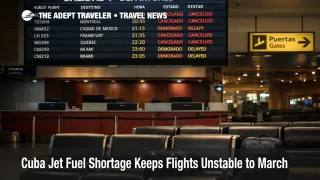
A month long jet fuel supply warning in Cuba is keeping commercial flight schedules unstable, with carriers suspending service, adding technical refuel stops, and reshuffling return legs through at least March 11, 2026. The disruption is most acute for travelers relying on direct lift from Canada, where multiple airlines have moved from cautionary measures into outright suspensions and repatriation flying. If you are traveling to Cuba in late February or early March, the practical move is to treat your flights as irregular operations, protect your return, and avoid plans that depend on a tight same day connection.
The Cuba jet fuel shortage flights issue matters because it changes the basic assumption that an aircraft can refuel locally for its return leg. When Jet A1 is unreliable or unavailable, airlines must either carry extra fuel in, route to a nearby airport to refuel, or cancel the flight entirely, and those choices ripple through seats, crew legality, and aircraft rotation timing.
Who Is Affected
Travelers departing Canada for Cuba are the most exposed group right now because Canadian carriers supply a large share of Cuba's winter leisure capacity and have publicly confirmed suspensions, wind downs, and recovery flights tied to the fuel situation. Air Canada suspended service and described operating empty southbound ferry flights to return customers already in Cuba, while also warning that fuel would not be commercially available at Cuban airports beginning February 10, 2026. WestJet Group announced an orderly wind down, suspended sales for remaining service, and said aircraft dispatched to Cuba would carry sufficient fuel to depart without relying on local fuel availability, with a stated suspension of service effective February 18, 2026.
Within Cuba, the gateways most likely to surface passenger facing impacts are the core international airports that feed resort zones and major cities. That includes José Martí International Airport (HAV) in Havana, Cuba, Juan Gualberto Gómez Airport (VRA) in Varadero, Cuba, Jardines del Rey Airport (CCC) in Cayo Coco, Cuba, Frank País Airport (HOG) in Holguín, Cuba, Abel Santamaría Airport (SNU) in Santa Clara, Cuba, Antonio Maceo Airport (SCU) in Santiago de Cuba, Cuba, Ignacio Agramonte International Airport (CMW) in Camagüey, Cuba, Jaime González Airport (CFG) in Cienfuegos, Cuba, and Sierra Maestra Airport (MZO) in Manzanillo, Cuba. Even if your ticket shows a nonstop, an airline may need to add a technical stop outside Cuba for fuel, which can shift arrival times, disrupt transfers, and complicate passenger rights or package timelines.
US travelers are not immune, but the operating profile differs. Reuters reporting indicates that some US carriers continued service because they can often carry sufficient fuel for the round trip on shorter segments, while longer haul flights, and heavier payload scenarios, face tighter performance limits that make tankering less workable. That difference can lead to an uneven pattern where some US flights operate, but connecting or longer distance services, and many Canada flights, remain suspended or more fragile.
What Travelers Should Do
If your trip is in the next two weeks, prioritize control of your return. Confirm whether your airline is operating the route as scheduled, whether it plans to tanker fuel for both legs, and whether it may add a technical stop for refueling outside Cuba. If you are on a package, get written clarification from the tour operator on hotel extensions, transfer coverage, and what happens if the return flight shifts by a day.
If your departure is in late February or early March, use decision thresholds. If you have a nonrefundable hotel, separate ticket connections, or work and family constraints that cannot absorb a one to two day slip, favor canceling or rebooking to a different window rather than hoping the schedule holds. If you are flexible, you can consider keeping the trip only if you have strong refund terms, a buffer of extra days, and an alternate return routing that does not depend on last minute seats from the same carrier.
Over the next 24 to 72 hours, monitor three signals that tend to predict whether this improves or degrades. First, airline operational updates, especially whether suspensions are extended beyond the current window. Second, whether carriers begin publishing consistent technical stop patterns, which can stabilize planning even if it adds time. Third, whether airports and airlines communicate that commercial Jet A1 availability has returned at the gateways you actually use, since a partial recovery at one airport does not necessarily fix the entire network.
How It Works
A jet fuel shortage hits air travel differently than a weather delay because it directly changes the physics and the schedule math of a flight. Airlines normally plan to refuel at the destination and then depart with a fuel load optimized for the return, plus required reserves. When destination fuel is not dependable, carriers can "tanker" fuel by departing the origin with extra fuel for both legs, but that extra fuel weight reduces payload capability, can force baggage limits, and can trigger performance constraints on takeoff, especially in hot conditions or with shorter runways.
Those constraints propagate quickly through the travel system. At the source layer, fewer flights operate, and the flights that do operate may run with lighter passenger loads or extra stops. At the connection layer, technical stops and shifted arrival times break tight onward connections and can force rebooking onto different days. At the lodging and ground layer, delayed returns can extend resort stays, strain hotel inventory, and disrupt planned transfers, tours, and car services, especially when many passengers are pushed onto the same limited set of remaining flights.
This is also why the pattern can differ by market. Shorter stage lengths from Florida to Cuba can make round trip tankering feasible for some aircraft, while longer flights from Canada face a more punishing tradeoff between fuel, payload, and operational margins. That is a structural reason you can see US service continue on some routes while Canada service is suspended, even when the underlying fuel problem is the same.