

New Zealand Storm Disrupts Flights, Ferries, Roads
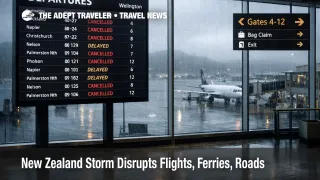
A powerful storm across New Zealand's North Island disrupted flights, ferries, trains, and roads, and the reset is still moving through the transport system after impacts peaked on February 16, 2026. Travelers were hit by widespread cancellations, closed corridors, and power outages that made even short transfers unreliable. If you are moving through Wellington, New Zealand, or relying on regional flights and interisland connections, the safest next step is to shift travel to a wider buffer window, and to treat same day chains as high risk until operators confirm stable schedules.
The practical change for travelers is that New Zealand storm travel disruptions are no longer just about the worst weather window, they are about recovery, repositioning, and capacity limits that can linger into the next 24 to 72 hours.
Who Is Affected
Travelers booked on Air New Zealand services touching the lower North Island are the most exposed, because the airline paused operations at multiple airports during the storm, and the after effects can persist as aircraft, crews, and gates fall out of sequence. The most common pain points are Wellington International Airport (WLG), Hawke's Bay Airport (NPE), and Palmerston North Airport (PMR), where weather driven pauses can collapse a day of short hops into a multiday rebooking problem.
Anyone relying on Cook Strait crossings should also expect a tighter capacity picture than usual. Interislander warned that a significant southerly system brought large swells and gale force winds across February 15 and February 16, 2026, which is the pattern that most often triggers cancellations and pushes travelers into the next available sailing. Even if sailings resume, vehicles and rental relocations can backlog quickly, and that can force itinerary changes for Marlborough, Nelson, and Canterbury plans.
Road travelers, airport transfer customers, and tour operators across the central and lower North Island are also affected because closures, flooding, debris, and stop and go traffic management can break timed connections to airports and ferry terminals. NZ Transport Agency Waka Kotahi advisories for Manawatū Whanganui included multiple state highway closures and a continued request to avoid unnecessary travel, with conditions changing through February 16, 2026, as crews inspected slips and fallen trees. Rangitīkei District, in particular, entered a local state of emergency, which is a signal that local road access and services may not behave normally even after the heaviest rain passes.
What Travelers Should Do
If you are not already en route, postpone nonessential travel, and rebook any itinerary that depends on a tight chain, such as a regional flight into Wellington followed by a same day Cook Strait ferry, or a road transfer that must arrive within a narrow check in window. When disruption is multi modal, the safest move is to separate legs by a night in the hub, because one broken link can cascade into expensive no show penalties.
If you are already traveling, use decision thresholds that prevent you from getting stranded mid chain. If your first leg is delayed enough that you will miss the last realistic onward option, rebook immediately rather than waiting at the gate, because recovery days compress remaining seats fast. For ferries, treat any cancellation as a capacity event, if the next sailing that fits your plan is not confirmable, shift dates or routes now instead of hoping for a walk up space that may not exist.
Over the next 24 to 72 hours, monitor three things, airline operational messages for your specific flight number, ferry service alerts for restart timing and rollover handling, and state highway condition updates for the exact corridors you must drive. Do not rely on general forecast headlines, because the travel failure points are often localized, such as a single flooded approach road, a wind constrained runway, or a slip that forces a long detour.
How It Works
Storm recovery is not just about weather improving, it is about rebuilding a timetable that depends on assets being in the right place at the right time. When regional flights are paused, aircraft end the day parked away from their next morning departure points, which forces ferry flights, equipment swaps, or outright cancellations to rebuild the rotation. That mismatch also affects crews, because duty time limits can prevent a crew from simply extending into the next bank, so the airline may need to find replacement crews in a city that is also dealing with road access problems and hotel constraints.
Multi mode disruptions amplify each other. Road closures and slowdowns can prevent passengers from reaching airports and ferry terminals, and they also slow down the staff, contractors, and supply movements that keep those sites functioning. NZ Transport Agency Waka Kotahi updates for Manawatū Whanganui showed closures and warnings evolving through the day, which is exactly the kind of uncertainty that turns a normal two hour drive into an all day problem. On the interisland link, ferry cancellations are not just a passenger inconvenience, they can block rental vehicle repositioning and tour schedules on both sides of Cook Strait, especially when multiple sailings are disrupted by southerly swells.
The second order ripple is that hubs like Wellington can accumulate stranded travelers who need hotels, rebooked flights, and replacement ground transport at the same time. Reuters reported tens of thousands of power outages and broad transport disruption, and those conditions tend to raise friction across everything from communications to lodging availability, even after the worst wind and rain move on.
Sources
- Wild New Zealand storm disrupts transport, leaves thousands without power
- Service Alerts, Interislander, Cook Strait Ferries
- SH1 between Hunterville and Taihape now OPEN, NZTA Journey Planner
- Traffic and travel information, NZ Transport Agency Waka Kotahi
- State of Emergency declared for Rangitīkei District, Rangitīkei District Council