

2026 Mexico Caribbean Sargassum Outlook Turns Up
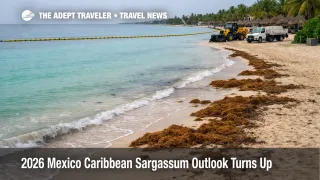
Sargassum is building earlier than many travelers expect across the Caribbean basin, and scientists are signaling that 2026 is trending toward another major year. The University of South Florida College of Marine Science Optical Oceanography Lab's January 31, 2026 bulletin, based on satellite monitoring, reported Caribbean Sargassum growth from about 0.45 million tons in December to about 1.7 million tons in January. The same bulletin flagged "measurable" Sargassum in the Gulf region, concentrated north of the Yucatán Channel, and noted that parts of the western Caribbean, including the Mexican Caribbean coast, should already be seeing some beaching events.
For Mexico's Caribbean destinations, the practical change is that municipalities are treating late winter as prep season rather than downtime. In Playa del Carmen, officials have started deploying offshore barriers ahead of the typical March start of the season, aiming to reduce how much seaweed reaches the sand where it quickly becomes a cleanup, odor, and guest satisfaction problem. The early moves matter because once heavy mats arrive, beach operations become a daily logistics fight that affects everything from where travelers spend daylight hours to how reliably a resort can deliver the "beach vacation" experience that many trips are priced around.
Who Is Affected
Travelers heading to Cancún, Quintana Roo, Mexico, Isla Mujeres, Quintana Roo, Mexico, Playa del Carmen, Quintana Roo, Mexico, and nearby Riviera Maya beach zones are the most exposed, especially if their trip is built around swimming, snorkeling near shore, or spending full days on public beach corridors. Day trippers and cruise passengers are also affected when a planned beach stop becomes less usable, which can push crowds into the remaining clear stretches, beach clubs, and pool decks, and can trigger last minute changes to shore excursions.
The ripple does not stop at the shoreline. When sargassum beaches heavily, resorts and municipalities often redirect labor and equipment to removal, which can slow other services and raise the odds that piles linger through the hottest parts of the day. If seaweed pushes ferry, small boat, or snorkel operators to change departure points, travelers can lose time in transfers, miss timed reservations, or eat rebooking costs, particularly on short stays where one disrupted day is a large share of the trip. Demand also shifts inland, with higher competition for cenote tours, cultural sites, and day trips, and that can tighten availability on popular dates in spring and summer.
What Travelers Should Do
If your trip is within the next few weeks, treat sargassum like a weather variable and check conditions daily, not just once before departure. Look for recent beach webcam footage where available, confirm whether your hotel maintains offshore barriers, and ask how quickly the property removes seaweed from its frontage when landfall happens. Build buffer into any day that depends on nearshore visibility or a specific beach club, and keep a backup plan that does not require perfect water conditions.
For trips during the typical March through October season window, set decision thresholds before you go. If beach time is the product you are buying, prioritize flexible rates, and consider shifting dates or choosing a property that has a track record of barrier maintenance and rapid removal. If you are already booked, a practical middle ground is to keep the lodging but reframe the itinerary, plan more inland days, and treat clear beach windows as a bonus rather than the schedule anchor.
Over the next 24 to 72 hours before your travel day, monitor three signals, wind direction and surf, recent photo reports from your exact beach corridor, and whether local cleanup operations are scaling up. Sargassum can arrive quickly with a change in conditions, and it can also clear faster than expected after a wind shift and sustained removal. The goal is not to predict perfectly, it is to avoid locking yourself into nonrefundable beach only plans when the nearshore environment is unstable.
Background
Sargassum is a floating brown macroalgae that can be beneficial in open water as habitat, but becomes a travel and public health nuisance when large mats wash ashore and begin decomposing. The monitoring system used by the University of South Florida's Optical Oceanography Lab tracks regional abundance via satellite and then publishes monthly outlook bulletins that describe where large masses are concentrated and where beaching is likely to expand. In the January 31, 2026 bulletin, the lab described three separated large masses across the eastern Atlantic, western Atlantic, and the Caribbean, and said that continued growth and record high January levels in most regions make 2026 very likely another major year.
On the ground in Quintana Roo, response strategy is increasingly treated as an operations system rather than a seasonal cleanup. Offshore barriers aim to intercept seaweed before it reaches the sand, but they require maintenance, redeployment timing, and coordination with collection crews at sea and onshore teams that remove what gets through. When that system is stressed, the disruption propagates into traveler behavior, shifting demand away from exposed beaches, straining taxis and tour inventory for inland alternatives, and increasing the odds of itinerary churn, especially for short stays and packaged vacations.
You may also want context from prior coverage on the same geography and mitigation tools, including Late Season Sargassum Returns to Cancún Beaches and Quintana Roo moves toward first sargassum biogas plant.
Sources
- Outlook of 2026 Sargassum blooms (USF bulletin, January 31, 2026)
- Sargassum Watch System (SaWS) project page, USF Optical Oceanography Lab
- Proactive approach: City starts installation of sargassum barriers ahead of official arrival
- Sea to shore sargassum collection strategy made permanent year round in Mexican Caribbean
- Mexican Caribbean Prepares for Record Sargassum Season