

Celebrity Infinity Piraeus Malfunction Cancels Sailing
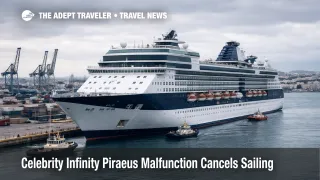
Celebrity Infinity suffered a malfunction in electrical distribution panels near Piraeus, Greece, and required tug assistance to reach port safely. The disruption matters most for travelers scheduled to embark in Piraeus and for guests whose voyage ended in Athens with tight onward flights or pre booked hotels. The practical next step is to treat this as an itinerary reset, lock down written documentation from the cruise line, and then rebook the pieces that will become scarce first, which are flights, nearby hotels, and ferry or rail connections out of Athens.
The Celebrity Infinity Piraeus malfunction changed a normal turnaround into a regulatory and logistics problem. Once a ship reports a critical technical issue, port authorities can require proof of repairs and certification before allowing departure, which keeps the itinerary unstable even after the vessel is alongside.
Who Is Affected
The most exposed group is anyone booked on the canceled next sailing that was scheduled to depart from Piraeus, because many travelers arrive in Athens a day or two early and have nonrefundable hotel nights, timed transfers, and flights purchased outside a cruise line air program. Those guests can get stuck paying peak last minute rates to change flights, and they can lose prepaid excursions unless vendors agree to refund or rebook.
Guests already onboard during the incident face a different problem set. An early arrival or an extended stay alongside can shift disembarkation windows, baggage access, and pre arranged transfers to Athens International Airport (ATH). Even a few hours of drift can break same day flight plans, especially for travelers who planned a short transfer buffer from Piraeus into the airport.
A third group is cruise travelers in Greece more broadly, including people on other sailings planning tight "back to back" itineraries, self connected flights, or island extensions that depend on fixed port arrival windows. When a ship is held pending certification, the knock on effects ripple into tour operators, private drivers, and hotels that suddenly see either a wave of stranded demand or a wave of cancellations.
What Travelers Should Do
Start by securing proof that a disruption occurred, and save it somewhere you can access offline. Ask Celebrity for a written notice that shows the ship name, the sailing date, and the change, for example cancellation, delayed return, or altered disembarkation. That document is what airlines, hotels, credit card trip protections, and travel insurers typically require before they will waive penalties or process a claim.
Then triage your spend and your time sensitivity. If you have flights within the next 24 hours, reprice realistic alternatives first, including later departures the same day, and next day options that still protect long haul connections. If you are in Athens without a hotel, book a flexible room as a buffer even if you hope you will not need it, because a full ship disruption can compress availability quickly in central Athens and along the port corridor.
Set decision thresholds so you do not drift while inventory disappears. If a replacement cruise option is available within one to three days at a reasonable airfare delta, rebooking can preserve the trip value. If alternatives require multiple expensive hotel nights and high airfare premiums, taking the refund and using any future cruise credit later may be the financially cleaner outcome, especially for travelers not protected by a cruise line air program.
Over the next 24 to 72 hours, monitor only signals that change decisions. The key indicator is not social chatter, it is whether the ship has documented repair certification and clearance to depart from port authorities, and whether Celebrity confirms the next operational sailing in writing. If you booked independent shore excursions, contact the operator immediately with your booking number and the ship disruption notice, because many vendors have short windows for refunds, and they may offer a rebook to a later date if you can provide proof quickly.
How It Works
A cruise ship technical malfunction becomes a travel disruption because the cruise system is a tight chain of regulatory checks, port slots, provisioning windows, and crew rotations that leaves little slack. When an issue is serious enough to affect maneuverability or shipboard power distribution, authorities can restrict departure until repairs are completed and certified, which creates uncertainty that is hard for travelers to plan around. Even if the ship is physically in port, the operational status can remain unresolved until inspections and documentation are complete.
The first order effects land at the port. Tug assistance, inspection holds, and a delayed or early end to a voyage can shift disembarkation timing, baggage flows, and ground transfer demand around Piraeus and Athens. The second order ripples show up quickly across at least two other layers. Air rebooking demand out of Athens can tighten seats, raise last minute fares, and push travelers into awkward one stop routings through European hubs, especially when large numbers of passengers are trying to move within the same 24 to 48 hour window. At the same time, hotels in Athens can see a sudden spike in same week demand, while tour operators and private transfer providers lose the predictability that cruise calls normally provide, because scheduled arrival windows drive staffing and vehicle positioning.
For compensation, multiple reports indicate Celebrity canceled the next sailing and offered refunds and future cruise credits, plus certain reimbursements tied to hotel and flight changes for affected guests, although exact eligibility can vary by booking channel and fare type. Travelers should read the specific notice for their reservation, because credits function like vouchers with terms, and reimbursement often depends on documentation, receipts, and booking method.
If this incident feels familiar, it is because Celebrity Infinity has had prior itinerary disruption tied to onboard electrical issues, and repeated technical events can increase the odds of conservative operational decisions by operators and regulators. That does not mean a traveler should assume future sailings will cancel, but it does mean planning with more buffer, and avoiding fragile self connections, is rational when official clearance is still pending.