

Emirates Autism Travel Rehearsal at Istanbul Airport
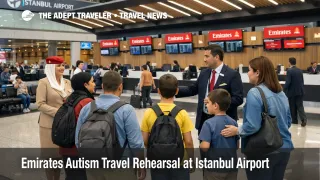
Emirates brought its "Travel Rehearsal" programme to Istanbul, Turkey, running a guided practice journey for autistic children and their families at İstanbul Airport (IST). The airline says the Istanbul rehearsal let participants experience each stage of travel, including transfers, check in, passport control, lounge entry, and a walk through of an Emirates aircraft, with staff in place to support sensory and communication needs. For families who have avoided flying because airports are noisy, crowded, and unpredictable, the practical takeaway is simple, a rehearsal can turn a first trip into a known process, instead of a blind stress test.
The Emirates travel rehearsal Istanbul initiative is designed to make the airport and onboard routine more predictable, so families can identify triggers, practice coping strategies, and build a plan before the real departure day.
Who Is Affected
The direct beneficiaries are families traveling with autistic children, and travelers with sensory sensitivities who do better when environments are rehearsed and structured. Emirates positions the programme as part of a broader "Accessible Travel for All" push, and it is being rolled out gradually across 17 airports in the carrier's network, which matters because your best routing choices often depend on where support exists, and where staff are consistently trained.
This also affects travel advisors and planners who build itineraries for neurodiverse travelers. When a hub offers rehearsal style support, the risk profile changes, not because delays disappear, but because the most stressful steps are less mysterious. That can make a connection through a large airport more viable than forcing an itinerary through smaller airports with fewer staff, fewer counters, and less ability to adapt when something shifts.
What Travelers Should Do
Families who want the benefits of a rehearsal should start by requesting assistance early through the airline and confirming what the departure airport can provide on the actual travel day. A rehearsal helps, but it does not replace day of operations realities like variable security wait times, last minute gate changes, or aircraft swaps, so planning should still assume some friction.
If the trip is time sensitive, choose flight times that give you slack. That usually means avoiding the last flight of the day, avoiding tight self connections on separate tickets, and leaving enough time that you can pause if sensory overload builds. The decision threshold is straightforward, if your itinerary requires a sprint through multiple queues to make a connection, rebook to a longer connection or a nonstop when possible.
Over the next 24 to 72 hours before departure, monitor anything that changes the flow you practiced, including check in counter locations, terminal changes, and schedule adjustments. If you are traveling during peak periods, confirm lounge eligibility and backup quiet spaces in the terminal, because crowding can be the difference between a smooth plan and a cascading stress response.
How It Works
A "travel rehearsal" is a controlled simulation of the real trip, designed to remove novelty from the highest stimulus moments. In Istanbul, Emirates says participants practiced the sequence from landside arrival through airport processing and into an aircraft visit, with trained teams creating a supportive environment.
The system ripple is where this becomes more than a feel good initiative. First order, rehearsals can reduce day of travel anxiety, which can lower the odds of last minute trip abandonment, gate area conflicts, or the need for urgent on the spot improvisation by families and staff. Second order, as more hubs adopt consistent training and structured support, routing choices can shift, families may prefer airports where the process is predictable, and airlines may see fewer service breakdowns that slow boarding or trigger reaccommodation needs. Emirates connects this to its Autism Certified Airline designation and says more than 30,000 cabin crew and ground staff have completed autism and sensory awareness training, which is the operational prerequisite for consistent execution across stations.