

Nairobi Airport Strike Recovery at JKIA Continues
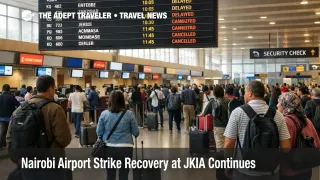
Operations at Jomo Kenyatta International Airport (NBO) in Nairobi, Kenya, are moving back toward normal after a two day airport worker strike was called off under a return to work agreement. Travelers are affected most when their plans depend on Nairobi as a connection hub across East Africa, or when they need same day domestic transfers that do not tolerate missed banks. The practical move is to treat the next part as a recovery problem, not a headline problem, recheck your flights, widen buffers, and avoid betting your entire trip on a tight connection until the system runs clean again.
The strike disrupted airport and air traffic operations, and it created a backlog that does not disappear the moment staff return. Kenya's transport ministry said industrial action had been resolved and operations were resuming, and reporting cited the Kenya Civil Aviation Authority confirming a return to service while Kenya Airways worked to restore its schedule. That combination signals the core event is over, but the tail risk is still real, because recovery depends on clearing queues, repositioning aircraft, and getting crews back into legal duty patterns.
Who Is Affected
The highest exposure is travelers connecting through Nairobi on one ticket with a short connection window, and anyone connecting on separate tickets where a missed onward flight becomes your problem, not the airline's. Even if your inbound flight lands, you can still lose time to check in congestion, security throughput, gate holds, or bags that do not make the transfer.
Transit passengers are also exposed in a specific way, because recovery often restores departures faster than it restores baggage tracing, rebooking desks, and consistent customer messaging. If you are traveling with checked bags, or you need airline help to reissue tickets, assume service times will be longer than normal until the backlog is cleared.
Downstream, the disruption can reach beyond the airport. Nairobi is a staging point for safari itineraries and coastal trips that rely on timed transfers, and missed connections can force unplanned overnights near the airport and compress hotel availability. When that happens at scale, the cost is not only a late arrival, it is the domino of lost tour days, vehicle pickups, and nonrefundable lodging.
What Travelers Should Do
If you are traveling within the next 24 hours, treat this as a verify, then move fast situation. Check your flight status in the airline app, confirm whether your departure time changed, and arrive earlier than you normally would for a major hub, because queues often reappear during recovery even when flights look on time. If you have checked baggage and a connection, build time for bag acceptance cutoffs, and take screenshots of bag tags and receipts in case tracing lags.
Set a decision threshold for rebooking versus waiting that matches your downside. If a missed connection costs you a safari day, a cruise embarkation, a protected tour segment, or a hard event start, do not gamble on a minimum connection during a recovery window, reroute or move the trip by a day if you can. If your plans are flexible and you are on a protected ticket with multiple same day options, waiting can be rational, but only until later flights start filling and your itinerary collapses into a single last option.
Over the next 24 to 72 hours, watch operational indicators, not reassurance language. Monitor whether flights are departing in sustained waves without cascading delays, whether baggage delivery times normalize, and whether your carrier is still issuing broad advisories about schedule changes. If you are connecting onward, choose longer connection times where possible, and keep near airport lodging in mind as a fallback if a late day cancellation forces an overnight. For a reference point on how hub disruptions can stay fragile after the initial event ends, see Schiphol De Icing Delays Raise Winter Connection Risk. For a strike day example where preemptive changes beat waiting, see Belgium Strike to Cancel Brussels Airport Flights Mar 12.
How It Works
A hub airport recovers in layers, and the slowest layer usually sets the traveler experience. The first layer is runway and air traffic flow, meaning flights can physically arrive and depart again. The second layer is ground handling, meaning aircraft can turn on time, bags can move, catering can load, and gates can stay fluid. The third layer is network math, meaning the aircraft and crews that were displaced during the strike can be put back into the right sequence without breaking duty time rules or causing knock on cancellations.
That is why a strike that lasts two days can produce uneven impacts for longer than two days. A delayed inbound aircraft can miss its next departure slot, which then forces a swap, which then displaces another rotation, and the chain continues until the airline cancels something to reset the schedule. Crew legality adds pressure because pilots and cabin crew cannot simply work indefinitely to catch up, so a late arrival can turn into a cancellation several legs later.
On the passenger side, backlogs concentrate at choke points. Check in counters and baggage drops slow down when large numbers of passengers are rebooked into the same departure banks. Security lines lengthen when staffing is still normalizing. Baggage is often the last system to feel normal because it depends on synchronized flows, space to stage bags, and time to reconcile what traveled and what did not.
In this case, official messaging and reporting indicate a return to work agreement brought staff back and services back online, with Kenya Airways indicating a push to normalize schedules quickly. That is good news, but travelers should still price in the reality that a major hub stabilizes only after it runs a full operating day without new disruptions, because that is when aircraft, crews, bags, and passenger queues realign at the same time.
Sources
- Industrial Action Resolved at JKIA, Operations Resume, Kenya Ministry of Roads and Transport
- Kenya airport workers call off strike after two days of disruption, Reuters
- Kenya's main airport resumes operations after 2 day strike, Associated Press
- A strike by workers at Kenya's main airport delays flights and strands passengers, Associated Press