

AmaWaterways Boosts Solo, Group River Cruise Deals
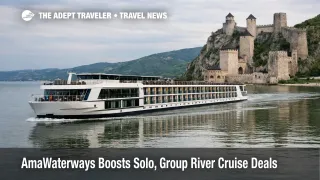
AmaWaterways has rolled out a pair of time boxed incentives aimed at two demand pockets that keep showing up in river cruise sales, solo travelers who hate paying a near double fare, and groups that want simple, bundled value. The headline changes are a reduced 10% single supplement on eligible 2026 and 2027 departures, plus a group offer for eligible 2027 sailings that layers in extra savings and prepaid gratuities. The booking window runs through March 31, 2026, which makes this an early commitment play for 2027 capacity rather than a last minute fill strategy. Travelers and advisors should treat the deadline as a decision point because the savings are meaningful, but the best cabins and most group friendly departures tend to disappear first.
The solo piece matters because single supplements are the main friction point that turns a willing solo cruiser into a shopper who waits, downsizes, or walks away. AmaWaterways is positioning the 10% rate as an easier yes for clients who want a cabin to themselves without paying the typical penalty. The group piece matters because it changes the economics of recruiting, and it gives advisors a cleaner story to tell, value per person plus gratuities covered, instead of a complicated bundle of small concessions.
AmaWaterways Solo and Group Promotions: What Changed
For solo travelers, AmaWaterways is advertising a 10% single supplement on more than 500 sailings across 2026 and 2027, with the reduced supplement applying to stateroom categories other than suites on eligible departures. That is a direct attack on the biggest solo pricing pain point, paying a high supplement that can make a river cruise look irrational compared with a land tour.
For group business, the new push is focused on 2027 departures and is designed to make group pricing and inclusions easier to sell. Public trade coverage summarizes the offer as a $500 per person group discount on new 2027 group bookings, with complimentary gratuities included, and it frames the move as an expansion of AmaWaterways' Enhanced Group program to more dates. In AmaWaterways' own advisor toolkit, the "Limited Time Group Offer" is described as added group savings, prepaid gratuities, and added amenity options across eligible 2027 departures, with the group component applying only to new groups contracted between February 11, 2026, and March 31, 2026, plus a later cutoff for reservations made into those groups. The practical takeaway is that the clock is real, and advisors who want to build a 2027 group should work backward from the contract and deposit milestones, not from the sailing date.
Who These Deals Fit Best, and Where They Do Not
Solo travelers benefit most when they have strong date flexibility, and they are willing to pick from eligible departures rather than insisting on one specific week, ship, or itinerary. A 10% supplement is only valuable if the sailing they actually want is eligible, and if the cabin category they want still has inventory. It is also most impactful for solo clients who would otherwise downgrade their trip, either by taking a shorter itinerary, a weaker season, or a less desirable cabin, just to blunt the supplement.
Group travelers, and the advisors organizing them, benefit most when the group has a clear shared purpose and a recruitable audience, for example affinity groups, milestone celebrations, clubs, and multigenerational families. The offer is structurally strongest when it lets you replace soft perks with hard math, especially when gratuities are included, because that reduces trip cost surprises that can derail group conversion late in the funnel. The tradeoff is that groups add operational constraints, including cabin block availability, contract timing, and the need to keep the group on the same departure. If your group is still speculative, the best move is often to shortlist two or three eligible sailings now, then recruit against the sailings that still have the cabins you need, rather than recruiting first and hoping capacity exists later.
What Travelers and Advisors Should Do Before March 31
Start by treating March 31, 2026, as the decision deadline, not a marketing line. For solo clients, the first action is to identify the exact sailing and cabin category they would book if the offer did not exist, then confirm eligibility and price it both ways. If the sailing is eligible and the cabin they want is available, waiting rarely improves outcomes, because solo friendly inventory and the most bookable cabins tend to tighten as soon as an offer gains traction.
For group organizers, the next decision point is contract timing. If the group offer you are targeting requires a signed group contract by March 31, 2026, you need to be working now on the basics that slow everything down, headcount targets, roommate plans, and deposit collection. A clean threshold is whether you can realistically secure enough committed travelers to justify the group contract inside the window. If yes, lock the group and recruit into the inventory you have. If no, you may be better off steering clients into individual bookings, then revisiting a formal group once you have proof of demand.
Finally, keep one operational caveat in view for European river itineraries. Water levels, seasonal heat, and navigation constraints can alter river cruise operations in some years. That does not make these offers bad, but it does argue for matching clients to seasons and rivers thoughtfully, and for setting expectations early about what happens if an itinerary needs adjustment. For deeper context on how low water risk can show up and how to plan around it, see 2025 European River Cruise Water Level Outlook.
Why AmaWaterways Is Leaning Into Solo and Group Demand
This is a demand capture strategy that also helps with yield management. Solo travelers are a high intent segment that often stalls at the single supplement step. Cutting the supplement on selected departures is a way to convert that demand earlier, and to do it on sailings the line wants to stimulate. Group incentives do something similar at a larger scale, because they pull future demand forward, and they reduce the sales friction that comes from lots of small line items, especially gratuities.
AmaWaterways is also explicitly tying the offers to advisor behavior, not just consumer discounting. The company's advisor facing toolkit positions the group offer as something not marketed directly to guests, and it links the group mechanic to other advisor incentives, including "Sell Five, Sail Free," which can function as a familiarization pathway for advisors who want product confidence before selling harder. In public remarks, AmaWaterways leadership is framing the push as a response to persistent strength in both segments, and as an attempt to make it simpler for solo clients to book, while rewarding advisors who build groups.