

Cyclone Mitchell Pilbara Port Closures Travel Impacts
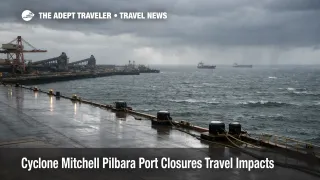
Tropical Cyclone Mitchell drove closures at multiple Pilbara ports in Western Australia, including Port Hedland and Dampier, as operators cleared vessels and suspended movements for safety. Travelers are affected even if they never go near a bulk export terminal, because the Pilbara travel system leans on the same weather window, the same roads, and the same limited regional flight capacity that industry uses. If you have time sensitive plans in the Pilbara or the North West Cape, treat this as a signal to widen buffers, avoid tight same day transfers, and monitor official alerts before committing to long road legs or fixed start tours.
The Cyclone Mitchell Pilbara port closures matter for travel because a confirmed shutdown tells you wind and sea state, visibility, and safety thresholds are already being breached, and that usually arrives before the most traveler visible failures, like road closures, regional flight cancellations, and reduced coastal services.
Who Is Affected
Travelers heading to the Pilbara coast, especially those moving through Port Hedland, Western Australia, and the Karratha, Western Australia, region, are the most exposed, because their options are thin when weather knocks out a single road segment or a small airport's schedule. Even if Mitchell's peak winds do not hit your exact town, the system still destabilizes when operators pause movements, inspect infrastructure, and restart in stages.
Leisure itineraries that combine Perth, Western Australia, with the northwest are also high risk when they rely on tight sequencing, for example a morning flight north followed by a same day long drive, a boat departure, or a prepaid tour that does not easily shift. The common failure mode is not the cyclone headline itself, it is the cascading loss of slack, where one cancellation forces everyone onto the next flight, the next car, and the next available room.
Business and work travel is often the earliest indicator of strain, because FIFO rotations, charter movements, and contractor schedules compete for the same limited seats and hotel inventory that tourists need. When ports close and reopen in steps, that demand can surge inland, and that is when "non industrial" travelers suddenly find that nothing is available at the last minute.
What Travelers Should Do
If you are inside the warning footprint or you are committed to a remote segment, act like you will lose a day. Lock in flexible lodging, add fuel and food margin for long drives, and avoid itineraries where missing a single departure destroys the whole trip. Use official weather updates, plus operator alerts from ports and local services, as the trigger for whether you move now or hold.
If your trip depends on one regional flight and one long road transfer on the same calendar day, the decision threshold is simple, either separate those legs by an overnight stop, or be willing to rebook without arguing with physics. Cyclone disruptions often produce a restart phase where services technically resume but run unevenly, so a "reopened" status is not the same as "back to normal."
Over the next 24 to 72 hours, monitor three things, the cyclone track and wind field, the staged restart language from operators, and road condition updates for any corridor you must drive. The travel winning move is to keep optionality, meaning refundable stays, backup routing through larger gateways when possible, and no separate ticket connections that leave you holding the loss when the first leg slips.
Background
Pilbara port closures happen through a staged cyclone plan, where operators monitor, prepare, clear vessels, shut down, and then reopen only after inspections confirm it is safe to resume movements. This is not just about ships, it is an operational marker that winds, rain bands, and sea conditions are high enough to threaten infrastructure and safe navigation, and that inspection and restart will take time even after the worst weather moves away.
Mitchell's event profile is a good example of why travel impacts can outlast the dramatic part of the storm. The Bureau of Meteorology's post event summary describes a system that intensified to Category 3 strength near the Pilbara, then weakened and ultimately crossed the coast near Shark Bay, with offshore industry disruption lasting for several days even without major wind damage on the Pilbara coast itself. For travelers, that translates into an extended period where services run conservatively, roads can be degraded by flooding and debris, and regional schedules can remain volatile as aircraft and crews reposition.
The second order ripple is where most travelers get surprised. When coastal operations pause, demand shifts inland, accommodations fill with displaced workers and stranded passengers, and rental cars and limited seat inventory get consumed fast. At the same time, supply chain delays can reduce basic availability in small towns, which can force itinerary changes for travelers who planned to stock up on arrival. The practical takeaway is that a port closure alert is an early warning of a broader constraint environment, not a niche maritime detail.
Sources
- Alerts, Pilbara Ports
- Severe Tropical Cyclone Mitchell, Bureau of Meteorology
- Ports for Australia's Pilbara iron ore region closed due to cyclone, Reuters
- Australia's iron ore hub of Port Hedland to be cleared due to cyclone threat, Reuters
- 'Winds that sound like banshees': residents told to take shelter as Pilbara braces for Tropical Cyclone Mitchell, The Guardian