

Berlin Hbf Escalator Outages Grow Into Accessibility Problem
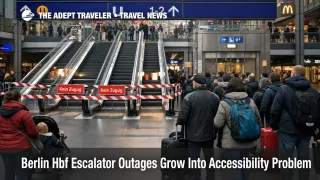
Berlin Hbf escalator outages are no longer a short, annoying outage, they are an operational accessibility problem that is reshaping how long it takes to change trains at Berlin Hauptbahnhof Berlin Hauptbahnhof. Deutsche Bahn says inspections with the manufacturer found defective gears in escalator gearboxes, and that repairs depend on replacement parts before gearbox swaps can begin. In practical terms, that means slower vertical movement between levels, longer elevator queues, and a higher miss risk for tight intercity connections, especially for travelers with limited mobility, strollers, and heavy luggage.
Berlin Hbf Escalator Outages, What Changed For Travelers
The most important change is that Deutsche Bahn has moved from emergency shutdown and inspection into a slower repair phase with no firm restart timeline for the remaining affected escalators. In Berlin Hauptbahnhof, Deutsche Bahn says 48 escalators of the affected type were checked, 21 are back in service, and 27 still require complex repairs, with gearbox swaps starting after needed parts arrive from the manufacturer. Deutsche Bahn has also kept extra staff and volunteers on site to help travelers navigate the station while this continues.
For travelers, the immediate consequence is not just extra walking, it is concentrated elevator demand. Berlin Hauptbahnhof spreads long distance, S Bahn, and U Bahn tracks across multiple levels, and the station's normal transfer times assume you can use stairs, escalators, or elevators. When escalators go offline, the elevator cores become the pinch point, and vertical circulation becomes the pacing item for your connection.
Which Berlin Hauptbahnhof Transfers Are Most Exposed
If you can comfortably take stairs, you still face longer walking paths and slower flow, but you can usually protect your connection with an earlier platform move. The highest hardship, and the highest miss risk, lands on travelers who must use elevators, including wheelchair users, travelers with mobility limitations, families with strollers, and anyone hauling multiple bags. The reason is structural: elevators are fewer, they load slower, and they are shared by everyone who decides the stairs are not worth it during a disruption.
Transfers that change levels are the ones to treat as at risk. Deutsche Bahn's own station guidance says neighboring track changes on the same level can often be done in about five to ten minutes, and that ten to 15 minutes is generally enough for a relaxed change on the same level, but it flags that moving between the lower level and the upper level crosses multiple station levels and should be planned with at least 20 minutes in normal conditions. When escalators are constrained, that cross station move is where elevator queues can turn a "legal" connection into a missed departure.
How To Plan Berlin Hbf Transfers During The Outage
Build your plan around levels, because "short" at Berlin Hauptbahnhof is often a vertical problem, not a horizontal one. If your connection stays on the same level, treat the normal five to ten minute change as the baseline, then add buffer for congestion at the platform access points and slower walking speed in crowds. If you are changing between tracks 1 to 8, which Deutsche Bahn describes as the lower level, and you can take stairs, aim for about 15 minutes door to door. If you need elevators, aim for 20 minutes, because the elevator is where your time becomes uncertain.
If your connection involves a level change between the lower level and the upper level tracks, plan more aggressively. Deutsche Bahn's baseline guidance is at least 20 minutes to move across the levels in normal conditions, and with escalators constrained, it is reasonable to treat 30 minutes as the safer target, especially at peaks when elevator queues are longest. If your itinerary includes a tight intercity departure, the simplest rule is to protect the departure, not the meeting point, go straight to the onward platform first, then handle food, restrooms, and group meetups after you have eyes on your train and its platform position.
Expect elevator bottlenecks in the same places every time: in the central elevator banks that serve each platform. Deutsche Bahn's station guidance notes that lifts are located in the center of each platform, which is helpful for finding them quickly, but it also concentrates demand into those cores when escalators are out. If you see a long queue, decide early whether you can safely switch to stairs, or whether you should immediately ask station staff for assistance instead of burning minutes in line.
If you have a genuinely tight connection and you cannot take stairs, treat this like an assisted transfer problem, not a self managed one. Deutsche Bahn's station pages direct travelers with reduced mobility to contact the Mobility Service Centre, and that is the channel designed for getting help with boarding, alighting, and navigating stations. If you are traveling same day and cannot pre book, go to DB Information on site as early as you can, and be explicit about your departure time and platform, because your main risk is elevator waiting time, not train running time.
Why The Disruption Is Spreading Beyond A Brief Outage
This escalation from "outage" to "accessibility problem" is driven by the repair dependency. Deutsche Bahn says the inspections with manufacturer KONE confirmed defective gears in escalator gearboxes that make safe operation impossible, and that repair work depends on replacement parts before gearbox swaps can start. That parts dependency is what turns a 48 hour incident into a multi day operational constraint, because you cannot restore capacity with staffing alone when the vertical transport hardware is offline.
The first order effect is straightforward: slower transfers and longer elevator queues. The second order effects are where the traveler experience degrades fastest. Longer vertical circulation times increase missed departures, missed meetups for tours and groups using Berlin Hauptbahnhof as a rendezvous point, and crowding around elevator lobbies that can slow everyone, including travelers who could otherwise use stairs. Deutsche Bahn has responded with additional on site staff and volunteers, but staffing primarily helps with wayfinding and assistance, it does not restore the station's vertical throughput while a large share of escalators remain unavailable.