

Puerto Rico Travel Demand Spikes After Bad Bunny Show
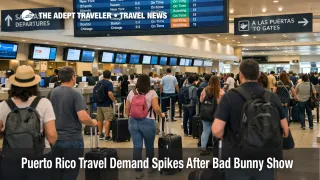
Interest in Puerto Rico is rising fast in the days after Bad Bunny headlined the Super Bowl halftime show on February 8, 2026. Discover Puerto Rico says its own site traffic is up year over year this month, and that Google search interest for Puerto Rico trip planning jumped sharply immediately after the performance. The practical takeaway for travelers is that a short, hype driven demand wave can translate into tighter airfare, faster hotel sellouts on prime weekends, and fewer "great deal" inventory pockets, especially around San Juan.
Puerto Rico travel demand is not a one day headline, it is a booking behavior shift that can harden into real price and availability pressure if airlines and hotels see sustained conversion. Travelers who want to ride the wave should plan like it is a mini peak season, lock cancellable lodging earlier, and avoid last minute weekend flights into San Juan unless they are price flexible.
Puerto Rico Travel Demand: What Changed for Travelers
Discover Puerto Rico reports a 16% year over year increase in visits to its website this month, and says Google saw a 213% jump in searches for phrases including "Puerto Rico travel" and "flights to San Juan" the day after the halftime show. That matters because the first phase of a demand spike tends to hit the simplest, highest intent products first, nonstop flights into San Juan, and centrally located hotels that can be booked in two clicks. If that behavior persists for even one to two weeks, travelers will feel it in higher average fares, fewer schedule friendly seats, and less hotel flexibility on weekends.
Separate from the destination marketer's data, Expedia has also described a surge in Puerto Rico flight search interest after the show, which reinforces the same direction of travel even if the exact percentages differ by dataset and timeframe. Search data is not the same as confirmed bookings, but it is often the earliest signal that pricing will firm up, and that the most popular travel windows will become harder to shop casually.
Who Benefits Most From the Post Show Surge
Travelers who benefit most are the ones with flexibility. If a traveler can shift departure days away from Friday and Sunday, or can travel midweek, they usually avoid the first wave of fare inflation that follows a pop culture trigger. Beach focused trips that can be anchored outside the highest demand neighborhoods also tend to hold value longer than the most obvious "first timers" picks.
The travelers most exposed are weekend bound planners flying into Luis Muñoz Marín International Airport (SJU) with fixed dates, families trying to book adjoining rooms, and anyone targeting the next available holiday weekend without advance purchase. Fan driven interest can also concentrate attention on specific places tied to the artist, including Vega Baja, which can create short term lodging pressure in smaller markets where supply is thin.
Business travelers are a quieter exposure group. When leisure demand rises suddenly, the second order impact is often rate hardening on the same downtown, airport corridor, and convention friendly hotels that corporate travel relies on. Even if flights operate normally, the cost of changing plans, and the availability of a same night room, can deteriorate quickly during a demand burst.
What Travelers Should Do Now
Travelers who know they want Puerto Rico in the next 30 to 60 days should treat this like a brief peak demand window. Book flights earlier than usual, and prioritize fare types that allow changes if price drops later. On hotels, choose refundable rates where possible, because the best play is often to lock a good room now, then re price shop once the initial surge cools.
The main decision threshold is simple. If travel dates are fixed and the trip is time sensitive, book now and protect flexibility with changeable fares and cancellable lodging. If travel dates are flexible and the trip is purely discretionary, it can be worth waiting one to two weeks to see whether search interest converts into sustained bookings, or fades as the news cycle moves on.
Over the next 24 to 72 hours, watch for two signals. First, whether airlines add capacity, extra sections, or tactical fare sales into San Juan, which can happen when demand is loud and measurable. Second, whether hotel availability starts to disappear for the next two to three weekends, which is usually the first confirmation that a "buzz" moment is becoming a real inventory problem.
Why This Is Happening, and How It Spreads Through Travel
The mechanism is not mysterious. A global live performance creates a burst of attention, attention becomes search, search becomes shopping, and shopping tightens the cheapest inventory first. For a destination like Puerto Rico, where many travelers can book without passport friction, the funnel from inspiration to purchase is shorter than it would be for an international trip, which speeds up the conversion cycle.
First order effects show up in flight shopping and hotel search behavior. Second order effects show up when revenue management systems respond, fares move up on the most convenient flights, minimum stay rules or higher weekend rates appear, and travelers who waited are pushed into less convenient times. A third ripple is what happens on the ground, higher occupancy stresses car rental inventory, popular tours, and restaurant reservations in the most visited areas.
Puerto Rico also has a recent proof point that Bad Bunny can move travel behavior beyond a single headline. Discover Puerto Rico previously cited sizable lodging activity and economic impact tied to his multi show residency at the Coliseo de Puerto Rico, which is why the destination marketer is trying to convert this moment into bookings instead of treating it as a social media win. The important distinction for travelers is that this is exactly the kind of surge that can make "I will book later" a bad strategy for prime weekends.
Sources
- Bad Bunny's Super Bowl show boosts interest in Puerto Rico travel
- Bad Bunny Super Bowl Review: A historic halftime show
- Bad Bunny's Super Bowl Halftime Show Drives 245% Spike in Puerto Rico Travel Searches
- Record Demand, Strategic Momentum in 2026
- How Much Did Bad Bunny's Residency Actually Generate for Puerto Rico?