

Paul Gauguin Cruises Drops Solo Supplement on 7 Voyages
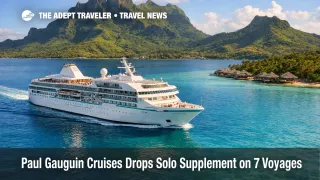
Paul Gauguin Cruises is waiving the solo supplement on a set of seven itineraries in French Polynesia and the wider South Pacific, timed around National Plan a Solo Vacation Day on March 1, 2026. For independent travelers, the practical change is simple, cabins that typically price as "single plus supplement" can be booked without that extra charge on specific sailings, which can materially lower the out of pocket cost versus cruising solo on most premium lines. The offer spans voyages on the 330 guest m/s Paul Gauguin, with dates running from late 2026 through 2027, so the decision point is not "travel next week," it is whether to lock in a qualifying sailing while inventory in the eligible categories remains.
Paul Gauguin Solo Supplement: What Changed for 2026 and 2027
The waived solo supplement is not a blanket "any sailing, any cabin" policy. Paul Gauguin Cruises is advertising a zero percent single supplement tied to select voyages, with the promotion surfaced on the line's site as a solo traveler offer and echoed in trade coverage. The participating itineraries include multiple one week Tahiti and Society Islands sailings in 2027, additional seven night Society Islands variations in 2027, a longer More Tuamotus and Society Islands option that includes December 2, 2026, plus 2027 departures, and several longer crossings and regional combinations that extend beyond French Polynesia into the South Pacific.
For travelers, the key operational detail is that "no solo supplement" changes the math on small ship cruising, where the base fare is often calibrated around double occupancy. When a line drops that supplement, the deal is effectively a pricing lever, not a new itinerary, so the traveler value depends on whether the dates and cabin categories match a real trip plan, and whether flights into Tahiti line up cleanly with embarkation timing. The March 1, 2026 hook is marketing, the actual decision window is cabin availability on those specific departures.
Who This Offer Fits Best, and Who Should Be Skeptical
This is best for solo travelers who already want French Polynesia, and who prefer small ship scale over mega ship social density. The m/s Paul Gauguin is built around the shallow lagoon and smaller port access that defines much of the Society Islands experience, and the line positions the ship as a destination focused platform rather than a floating resort. If a traveler's priority is maximum nightlife, constant onboard programming, or the lowest per night price, a "no single supplement" on a boutique ship may still land above alternatives even after the supplement disappears.
It is also a fit for travelers who want optional structure without being forced into it. The cruise line and trade reporting both point to solo friendly programming, including hosted gatherings, while still leaving ample self directed time ashore. That matters in French Polynesia because the best days often hinge on individual pacing, early lagoon time, a long lunch, then an evening market, and solo travelers who want control over tempo usually do better when the ship does not require constant group participation.
Travelers should be skeptical if they are only chasing the headline, because the core constraint is always category and inventory. A zero supplement promotion can be very real and still fail to help if the remaining cabins are not the ones a traveler is willing to book, or if flight timing makes the embarkation day brittle. Tahiti gateways are limited compared with major Caribbean cruise hubs, so the same cruise fare savings can be erased quickly by last minute air pricing or an extra hotel night if arrivals do not align.
How To Book, and the Thresholds That Matter
The first move is to identify whether the sailing date and itinerary match a real plan, then immediately verify which cabin categories qualify for the zero supplement before putting airfare at risk. If the only eligible cabins left are ones with tradeoffs you would not accept, like a layout you dislike or a location that is not comfortable for you, the correct decision is to walk away rather than forcing a misfit booking because the supplement is gone.
The next threshold is air alignment into Tahiti. If you cannot arrive at least one calendar day before the cruise departs, the risk rises fast, because a single delay can cascade into a missed sailing. The money saved on the solo supplement is not worth it if it pushes you into an arrival plan with no recovery margin. The tradeoff is straightforward, pay for an extra buffer night, or accept materially higher odds of a trip failure.
Finally, treat this as an inventory problem, not a calendar holiday. If you know you want one of the listed voyages, booking earlier usually wins, because solo cabins that price well disappear first when the pricing structure changes. If you are unsure about the trip window, waiting can be rational, but only if you accept that the most attractive cabin types may sell out, and you might end up paying the supplement on a different sailing later.
Why The Ship and Timing Matter for Solo Travel
Paul Gauguin Cruises has been modernizing the product, including a major refurbishment scheduled around a seven week drydock period in Singapore in February and March 2025. For travelers, refits matter because small ship comfort is a compound of cabin design, soft goods, dining flow, and public space usability, and solo travelers tend to feel friction sooner when spaces are dated or crowded. A refreshed ship can therefore amplify the practical value of a solo focused fare promotion, because the onboard experience is the "hotel" for the trip, not a backdrop.
The other mechanism is destination fit. French Polynesia is often marketed as couples only, but the region's day structure, lagoon excursions, hikes, markets, and community oriented cultural stops can work well for solo travelers who want immersion without needing a group itinerary to fill time. A small ship that can call in smaller ports can make that independence easier, because shore days are less about standing in long queues behind thousands of passengers, and more about choosing a plan and executing it.
The headline is a price lever, but the real traveler decision is whether this creates a clean path to a French Polynesia solo cruise at a cost and risk level that makes sense. If the dates work, the cabin categories qualify, and you can build in air buffer, a waived solo supplement is one of the few cruise promotions that directly targets the structural disadvantage solo travelers face in cabin pricing.