

Royal Caribbean Updates Prohibited Items List for 2026
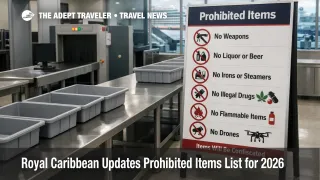
Royal Caribbean has refreshed its prohibited items guidance, clarifying what guests can bring onboard, and where certain tech can and cannot be used. The update matters because enforcement usually happens at the worst possible moment, embarkation screening, a shore day re entry checkpoint, or when a guest is already onboard and assumes a device is fine everywhere. The headline change for many travelers is that smart glasses are not banned outright, but they are restricted in privacy sensitive and security sensitive spaces, and the line says violations can lead to confiscation. The list also restates practical packing rules on beverages, small appliances, pets, and baby gear that routinely trigger delays at the terminal.
Royal Caribbean's FAQ now spells out that smart glasses cannot be worn in areas like the casino, spa service areas, restrooms, locker rooms, medical facilities, security screening locations, youth facilities, during back of house tours, and in crew areas, plus anywhere there is a reasonable expectation of privacy. The same guidance warns that guests seen violating the policy may have the glasses confiscated.
Royal Caribbean Prohibited Items List: What Changed
The operational change is not just the existence of restrictions, it is the level of specificity. Royal Caribbean's updated language answers the questions that typically blow up at check in, such as whether a device can be carried onboard but not used everywhere, and which ship spaces are treated as privacy zones. For smart glasses, the line's position is now explicit, use is limited to permitted areas, and certain onboard spaces are treated similarly to places where cameras are typically restricted on land.
The refreshed list also consolidates common categories that create friction at screening. For drinks, Royal Caribbean's beverage policy allows non alcoholic beverages within a defined carry on limit, while warning that beer, seltzer, and hard liquor brought to embarkation will be seized. For small appliances, the guidance is consistent with typical maritime fire risk controls, items that create heat or steam are the ones most likely to be refused.
Who This Applies To Most
The highest exposure group is anyone sailing with smart glasses that can record audio or video, including guests who primarily use the glasses as eyewear and do not think of them as a camera. On a ship, the places where privacy is expected are tightly defined, and the line is signaling that it will treat violations as a security issue rather than a simple etiquette problem.
Families also face higher friction because youth facilities are explicitly on the restricted list, and because baby gear tends to include small electronics and warming devices that vary by brand and function. Royal Caribbean's prohibited items guidance has historically resulted in case by case calls on certain baby related appliances, so traveling with niche warmers, sterilizers, or cleaners increases the chance of a screening conversation, even if the device is ultimately allowed.
A second, easy to miss exposure is shore days. Royal Caribbean's list highlights that destination rules can be stricter than ship rules. Mexico's vape crackdown is a live example, travelers can be fine onboard, then run into trouble when entering Mexico through customs at a cruise port if they try to bring vapes ashore. Barbados' camouflage restrictions are another example, it is illegal for anyone, including children, to wear camouflage clothing in public, which can turn a casual shore outfit into a preventable problem.
What Cruise Travelers Should Do Before Departure
Travelers bringing smart glasses should treat the policy like a venue rule, not a packing rule. Bring the device if you want it for permitted spaces, but plan a simple swap strategy for restricted zones. The most practical move is a backup pair of standard glasses or sunglasses so you are not forced into a no eyewear situation when walking through a restricted area like the casino, the spa corridor, or a medical visit.
For beverages, follow the carry on constraints exactly, and do not assume you can check drinks in luggage to get around the rule. Royal Caribbean's FAQ is clear that alcoholic beverages like beer, seltzer, and hard liquor seized on embarkation day will not be returned, which turns a packing mistake into a guaranteed loss. If you need distilled water or milk for infant, medical, or dietary use, keep it in carry on with a clear explanation, since the policy allows these exceptions.
For destinations, make a two layer plan. First, pack for onboard compliance. Second, pack for port compliance. If your itinerary includes Mexico, leave vapes and e cigarettes onboard to avoid customs issues and enforcement risk tied to Mexico's import and sales crackdown. If your itinerary includes Barbados, remove camouflage from shore day outfits for every traveler in the party, including kids, because both UK and US government travel guidance flags it as illegal.
Why Cruise Prohibited Items Lists Keep Changing
Cruise lines update prohibited items lists for two reasons that matter to travelers. First is onboard safety and privacy. A ship is a dense environment with shared spaces, and privacy expectations are enforced more like a hotel spa or a locker room than a public sidewalk, which is why the smart glasses limits focus on restrooms, medical spaces, youth areas, and crew spaces.
Second is enforcement reality. Screening teams need clear, simple rules they can apply quickly to thousands of guests, across many terminals and jurisdictions. When the policy language is vague, enforcement becomes inconsistent, and that inconsistency turns into guest frustration, delayed boarding, and confiscations that feel arbitrary. Royal Caribbean's revised wording is trying to reduce that friction by naming the exact onboard zones where the line expects compliance, and by stating the consequence up front.
Finally, ports add a second order layer. Even if an item is fine onboard, local law at the destination can change the risk instantly the moment a guest steps off the gangway. That is why a packing checklist for a Caribbean or Mexican Riviera sailing should include both cruise line policy and local restrictions, especially for vapes and camouflage.
Sources
- What Items Are Prohibited Onboard A Cruise Ship?
- What kind of food or drinks am I allowed to bring onboard?
- Royal Caribbean Revamps Banned Items List to Cut Confusion for Guests
- Royal Caribbean Moves to Restrict Smart Glasses in Key Onboard Areas
- Cruisers Warned Against Carrying This Common Item Following Strict New Ban in Mexico
- Mexico threatens eight years of jail in crackdown on vape sales
- Safety and security, Barbados travel advice
- Barbados International Travel Information
- Puerto Vallarta Cruise Skips Extend Into March 2026
- Sint Maarten ED Form Scam Sites Charge Fees, Warning