

Fiji Flood Warnings Disrupt Roads, Tours, Flights
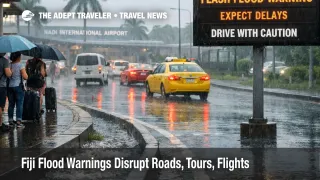
Fiji flood warnings are the operational trip killer because they break the part of the journey most itineraries assume is stable, the road transfer. As of March 3 to March 4, 2026, Fiji reporting and weather messaging indicate heavy rain and flash flood conditions affecting Viti Levu, with warnings and alerts tied to intense downpours and low lying flood prone areas. Flights can still operate, but your plan fails if you cannot reach the terminal, the marina, or the tour pickup point on time.
This matters most around the main tourism corridors on Viti Levu because those are exactly where travelers chain tight timing, hotel check outs, airport runs, day tours, and island transfers. The practical decision is to treat same day movement as unreliable until the warning language steps down, and to buy time with earlier transfers, later tours, or an extra night near the departure point.
Fiji Flood Warnings: What Changed On Viti Levu
The current signal is not just "rain," it is warning language tied to flash flooding risk across Viti Levu. Local reporting on March 3, 2026 cited a flash flood warning for all of Viti Levu, with an additional flash flood alert for Vanua Levu, and emphasized that intense downpours can trigger sudden flooding in low lying areas.
The most traveler relevant detail is where flooding is likely to concentrate. March 3 reporting cited flood prone areas adjacent to and downstream of named rivers and floodplains in the west and north of Viti Levu, including the Nakauvadra River near Rakiraki, Yaqara River, Tavua River, the floodplains of the Ba River, and the Nadi area. That cluster overlaps with routes many visitors use for airport access, Coral Coast drives, and day trips that rely on bridges and low crossings staying open.
Which Travelers Face The Most Disruption In Fiji
Travelers based on Viti Levu who have "must hit" timing face the highest downside. That includes anyone with a departure from Nadi International Airport (NAN), anyone trying to make a catamaran or ferry window out of Port Denarau, and anyone stacking a long drive with a fixed start tour like river safaris, highland, or interior excursions.
Resort areas are not immune even when the property itself is fine. The fragile point is the road network around low crossings and river catchments, where water can rise quickly during a burst of heavy rain, then drop again later. If your plan depends on a specific bridge or crossing being passable at a specific hour, you are exposed.
Visitors heading toward the Coral Coast and Sigatoka should also assume variability. Fiji Met's own bulletin language has recently called out an affected belt that includes Nadi and Sigatoka through the Coral Coast toward Navua, plus the Suva side, which is a good proxy for where thunderstorms and heavy falls can hit the routes tourists actually drive.
What Travelers Should Do Now
Start by protecting airport and port timing, then work backward. If you are flying out of Nadi International on March 4 or within the next 24 to 72 hours, treat the airport transfer as the critical leg. Move your pickup earlier than you normally would, and do not plan a last morning excursion that forces a tight return. If you are connecting from a different part of Viti Levu, consider repositioning closer to Nadi the night before departure so your final morning is a short hop, not a multi hour drive.
Use a simple decision threshold for tours and long drives: if your day requires crossing low lying river areas, or if your operator says access roads are questionable, reschedule rather than "trying it anyway." When conditions are in the flash flood warning zone, tours that look safe at 9:00 a.m. can become nonviable after a single afternoon thunderstorm cell. The tradeoff is straightforward, you may lose a specific tour slot, but you avoid losing the whole trip day, plus you reduce your odds of missing a flight.
Monitor official channels, but prioritize the ones that change your decisions fastest. For weather escalation and warning language, use the Fiji Meteorological Service alerts pages and updates. For road passability, check Fiji Roads Authority updates and local operator advisories before you get in a car, especially if your route includes rural crossings. If you are already on island and conditions deteriorate, let hotels and tour desks guide routing, because they usually know which crossings go first.
For additional local context on how Fiji road impacts can strand travelers even when airports remain open, see: Fiji Flood Warnings Close Northern Island Roads. For background on seasonal disruption risk in the wider region, see: Vanuatu, New Caledonia Cyclone Season Raises Cruise Risk. For destination logistics and trip planning around Nadi as a base, see: Nadi, Fiji - Travel News and Guides from The Adept Traveler.
Why Flood Warnings Break Trips Even When Flights Operate
Flood warnings turn a normally predictable chain into a timing trap. The first order effect is localized, water over roads, closed crossings, and delayed transfers. The second order effect is travel system wide, missed check in windows, missed ferry departure slots, and last minute rebooks that force higher fares, limited inventory, or unwanted overnight stays.
On islands, this is amplified by limited substitute options. If a key road segment is closed, there may not be a parallel highway, and detours can be long or impossible. That is why "the flight is still operating" is not the same as "my itinerary is safe." In practice, flash flood risk concentrates around low lying areas, small catchments, drainage systems, and river crossings that can change status within minutes during intense rainfall. Fiji's public forecast language repeatedly flags localized heavy falls and flash flooding potential in low lying and flood prone areas, which is exactly the mechanism that produces abrupt road passability changes.
Finally, these conditions tend to come in waves. Even if the rain eases, saturated ground and elevated river levels can keep crossings sensitive to the next burst. The operational play is to reduce the number of time critical legs you attempt in one day, and to add buffer where the failure mode is expensive, which is almost always airport and port departures.
Sources
- Fiji Meteorological Service Alerts and Warnings
- Fiji Meteorological Service Public Forecast
- Heavy Rain, Flash Flood and Flood Warnings remain in force for Fiji
- Urmil causes flooding, power outages in Fiji
- Severe Weather and floods (Fiji MET, media) ECHO Daily Flash
- Several roads and crossings remain flooded across the country