

Mahahual Sargassum Cleanup Plan for Perfect Day Mexico
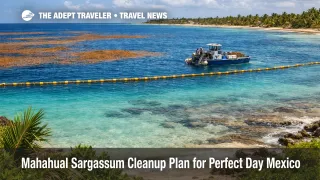
Royal Caribbean says it is funding a multi year sargassum protection and removal program in Mahahual, Quintana Roo, Mexico, pairing near term shoreline defenses with longer term plans to automate collection and support reuse. The program matters to travelers because sargassum is not just an eyesore, it can foul beaches, degrade nearshore habitats, and create odor and air quality complaints when it decomposes, which can change whether a beach day, snorkel plan, or shore excursion feels workable. Royal Caribbean is also building Perfect Day Mexico near Mahahual, with the company marketing a 2027 opening timeline, so the mitigation effort is being positioned as both a community quality of life project and a destination readiness issue.
Mahahual Sargassum Cleanup Plan, What Changed
The new element is an operational, on the water mitigation package tied to a formal community working group, not just a promise to address seaweed. Royal Caribbean says it has formed a community driven working group with residents, businesses, environmental specialists, and the Mexican Navy to identify mitigation strategies and shape both immediate and longer term solutions. On the practical side, the company says early efforts include adding new anchor points, in partnership with the Mexican Navy, to reinforce net systems intended to keep incoming sargassum from reaching the shoreline, plus deploying seaweed skimming equipment to remove floating mats before they pile up on beaches.
Royal Caribbean is framing the project as a direct response to community priorities around coastal health and quality of life, and it is explicitly linking the work to its wider sustainability program. In the press release, Ari Adler, President of Royal Caribbean Mexico, said, "Clean and thriving shorelines are essential to the people of Mahahual." The company also says the plan is aligned with SEA the Future, its corporate responsibility platform.
Who This Helps Most in Mahahual and Costa Maya
This is most relevant for three traveler groups. First, cruise passengers calling at Costa Maya who are counting on a beach day, water activities, or independent shore time around Mahahual, where sargassum impacts can be highly visible and can change the experience with little notice. Second, travelers staying on the Quintana Roo coast who are making the trip specifically for swimable, low odor beaches, especially in periods when sargassum is arriving in volume. Third, anyone planning around Royal Caribbean's private destination plans in the area, because the company is marketing Perfect Day Mexico as a 2027 product, and perceived shoreline quality will shape both guest satisfaction and excursion choices.
The main tradeoff for travelers is that a destination can be "open" and operating normally, while the nearshore experience is degraded by seaweed landings. Nets and skimmers can reduce what reaches the sand, but they do not eliminate regional bloom risk, and results can vary with wind, currents, and how quickly collection happens after a new influx. Royal Caribbean is also describing a longer term goal of automating collection with a low noise, low impact system that avoids pulling up sand and debris, which is a meaningful detail because beach grooming that mixes sand and seaweed can create its own erosion and disposal issues.
What Travelers Should Do Before Booking Shore Time
For cruise travelers headed to Costa Maya, the practical move is to treat beach plans as conditional. Book shore excursions with clear cancellation terms, and avoid locking in non refundable third party beach clubs or transfers until you see local conditions closer to arrival. If your itinerary has a single "big beach day" expectation, build a backup plan that works even if the waterline is messy, such as inland cultural tours, food focused tours, or activities that do not depend on pristine shoreline conditions.
For travelers staying in Mahahual or nearby areas, build buffer into day plans. Sargassum landings can shift quickly with wind and currents, so it is worth keeping mornings flexible and checking the beach before committing to boat departures or long transfer rides. If you are choosing lodging primarily for beach quality, ask hotels what their current collection approach is, whether they coordinate with local cleanup crews, and how often the beach is cleared during peak weeks, because the difference between daily removal and slower response can be the difference between tolerable and trip ruining.
For Perfect Day Mexico watchers, the decision threshold is timing and expectations. If you are booking a 2027 sailing specifically for the private destination promise, watch for operational proof points as they emerge, not just renderings. Look for evidence that collection is happening offshore and consistently, and that disposal or reuse pathways are real, because moving seaweed off sand is only half the problem, it still has to be handled safely and sustainably.
Why Sargassum Keeps Returning, and Why Mitigation Is Hard
Sargassum is a floating brown algae that can be ecologically valuable offshore, but it becomes a coastal problem when winds and currents push large mats onto beaches. When it piles up and decomposes near shore, it can generate strong odor and contribute to air quality complaints, and it can smother nearshore habitats when heavy accumulations sink. These events are also difficult to "solve" locally because the supply is regional, tied to broad ocean conditions and transport patterns, not a single local discharge pipe or one beach's maintenance practices. That is why credible mitigation usually looks like layered defense, offshore interception where feasible, rapid nearshore removal, and an end use plan that avoids simply moving the problem from beach to landfill.
Royal Caribbean's stated approach maps to that layered model. Nets and reinforced anchor points are an interception strategy, skimming targets floating mats before they beach, and the longer term automation concept tries to address the chronic labor and equipment burden of repeated manual removal while minimizing sand capture. The unresolved question is scale and consistency, meaning how the system performs during heavier regional years and how quickly it can respond to rapid influx days. NOAA and other agencies note that sargassum inundation events can be forecast and managed, but they remain episodic and conditions driven, which is why traveler planning still needs flexibility even when local mitigation improves.