

CDC Global Polio Advisory Hits 32 Destinations
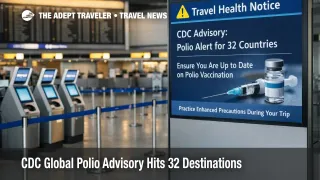
Travelers heading out for Spring Break should factor in a new CDC Level 2 Travel Health Notice for global polio, which urges "practice enhanced precautions" for destinations where circulating poliovirus has been detected. The notice matters because it changes the pre trip checklist, it is not about canceling travel, it is about vaccination status, timing, and reducing avoidable exposure risks in transit and on the ground. The CDC's current notice was last reviewed on March 3, 2026, and it includes several high volume leisure and gateway markets in Europe, including Germany, Spain, Finland, Poland, and the United Kingdom.
This advisory is not a blanket "do not travel" signal. It is a planning signal, especially for families traveling with children who are still completing routine vaccines, college travelers stacking nights out with tight flight schedules, and anyone who is adding side trips across multiple countries. If your itinerary includes one of the listed destinations, the most important decision is whether you are up to date on polio vaccination well before departure, because last minute clinic availability can be the actual constraint, not the flight.
CDC Global Polio Advisory: What Changed, and Why It Matters
The CDC's global polio advisory identifies 32 destinations with circulating poliovirus detected within the past 12 months and recommends that travelers make sure they are up to date on polio vaccines before any international travel. For travelers specifically going to a destination on the list, the CDC says adults who previously completed the full routine polio vaccine series may receive a single, lifetime booster dose.
As of the CDC's March 3, 2026 review, the destinations listed are Afghanistan, Algeria, Angola, Benin, Burkina Faso, Cameroon, Central African Republic, Chad, Côte d'Ivoire, Democratic Republic of the Congo, Djibouti, Ethiopia, Finland, Gaza, Germany, Ghana, Guinea, Israel, Niger, Nigeria, Pakistan, Papua New Guinea, Poland, Senegal, Somalia, South Sudan, Spain, Sudan, Tanzania, United Kingdom, Yemen, and Zimbabwe.
Which Spring Break Trips Should Pay Closest Attention
The highest exposure trips tend to share the same structure: lots of close contact settings, shared bathrooms, inconsistent hand hygiene conditions, and travel days where you eat on the move and touch many shared surfaces. That includes multi city itineraries that mix big airports, rail stations, and nightlife heavy schedules, and family trips with younger children who may not have completed the full routine vaccine series yet.
Europe trips are an important nuance here. Many travelers hear "polio" and assume it only applies to a short list of countries far from their itinerary. The CDC list includes several popular European destinations, which makes this a mainstream Spring Break planning issue, not a niche health scenario.
If your Spring Break plan is to "book first and deal with details later," this is one of the details that can bite you. The trip rarely fails because an airline will not let you board, it fails because you realize too late that a vaccine appointment, a booster decision, or a child's routine schedule needs lead time you no longer have.
What Travelers Should Do Before Departure
Start with verification, not assumptions. The CDC's guidance is that children and adults should be up to date on routine polio vaccines, and that fully vaccinated adults traveling to a listed destination may choose a one time booster if they have not already had one as an adult. If you cannot confirm your status quickly, treat that uncertainty as a risk you can eliminate now, rather than a problem you will solve during a busy departure week.
The practical decision threshold is time. If you leave in the next two weeks and you are not sure about vaccination status, book a travel clinic or primary care visit immediately, because appointment scarcity becomes common in the run up to Spring Break. If you are traveling later in March or early April, you have more flexibility, but you still want vaccination decisions finalized before you start locking in nonrefundable day trips, timed entry tickets, or tight connection itineraries.
Finally, do not treat vaccination as the only control. The CDC also emphasizes basic hygiene mechanics because poliovirus can spread through fecal contamination, including via contaminated hands, food, or water. For travelers, this translates into a simple operational posture: wash hands well, be deliberate about food and drinks in high turnover settings, and assume that travel days increase exposure because you touch more shared surfaces than you do at home.
Why This Alert Exists, and How Risk Spreads Through Travel
The mechanism is straightforward. The CDC's notice is triggered by detection of circulating poliovirus in the listed destinations, and travel connects those detections to large volumes of people moving through shared infrastructure. Most people with polio do not feel seriously ill, which can allow silent spread, and in rare cases infection can cause paralysis.
First order, risk increases at the destination through exposure to contaminated hands, food, drinks, or surfaces, especially when sanitation breaks down or crowd density increases. Second order, risk management becomes a trip resilience issue, because an illness event can force itinerary changes, missed onward flights, and unexpected medical visits in places where you do not have your usual care access. This is why the CDC's framing is "enhanced precautions," it is about reducing avoidable exposure, and preventing a preventable problem from becoming the reason your trip collapses mid week.