

Avora Lumina Opens 2028 Residential Cruise Sales
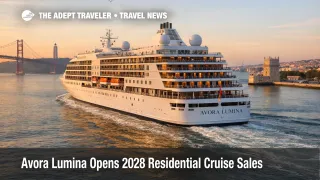
Avora Lumina residential cruise sales are now open after Avora Residences said it acquired Seven Seas Navigator from Regent Seven Seas Cruises and plans to relaunch the ship in January 2028 as a long stay residential vessel. The move matters most for affluent travelers considering life at sea, because it adds a new premium option between mainstream residential cruise concepts and the far more rarefied ownership model long associated with The World. For now, the practical takeaway is simple: this is a real ship with a real launch window, but buyers should treat several design and inventory details as provisional until Avora reconciles inconsistencies in its own sales materials.
That caution matters because Avora's launch announcement says Lumina will offer 242 private residences, while the company's current ownership pages market 268 villas aboard the same ship. The broad concept is clear, a residential conversion of Regent's 496 guest Seven Seas Navigator into a floating home platform, but the exact final mix of residences, common space, and onboard configuration still looks fluid. Travelers thinking seriously about buying should read this as an early sales opening, not a fully settled delivery blueprint.
Avora Lumina Residential Cruise: What Is New
What changed is not just a name reveal. Avora says it has secured the ship under a nine year charter with a nominal purchase option and will convert Seven Seas Navigator into Avora Lumina for long duration living at sea. The company is pitching two ownership paths, life of ship ownership from about $545,000 (USD) to about $4.288 million (USD), and a five year program starting at about $219,600 (USD), with monthly fees layered on top. Sales are already live on Avora's site.
The ship itself is the more interesting part of the story. Seven Seas Navigator is not a paper concept. Regent currently lists it at 28,803 gross tons, 496 guests, 365 crew, and 244 suites, which gives Avora a proven small ship platform rather than an unbuilt vessel or a speculative conversion candidate. Avora also says Lumina will launch from Lisbon, Portugal, on a three year circumnavigation with more than 140 countries and 400 destinations, and with port stays of up to five days. That longer port time is one of the clearest distinctions between residential cruising and ordinary luxury itineraries built around faster turnover.
Who This Is Best For
This product fits a very narrow buyer, someone wealthy enough to absorb a large upfront cost and monthly carrying fees, but who wants a smaller, more operationally flexible ship than a giant luxury cruise vessel. Avora is clearly trying to sell a middle lane in the residential cruise market, above the more contemporary and lower priced Villa Vie proposition, but below the ultra wealthy estate style positioning associated with The World. That is a sensible commercial pitch, even if the category remains tiny.
The best fit is probably a buyer who values mobility more than square footage on land, and who wants a real home base at sea rather than a long world cruise booking. Avora's emphasis on a business and connectivity center, residence personalization, and extended port stays suggests it is aiming at retirees, location flexible business owners, and high net worth travelers who want a primary or semi primary residence that moves. Buyers who mainly want a luxury cruise vacation, by contrast, may be better served by a traditional premium sailing product such as Regent's existing fleet or other new upper end launches like Crystal Names First New Ship Crystal Grace.
How To Evaluate Buying Now
The immediate decision is not whether Avora has a compelling story. It does. The real decision is whether the current level of detail is enough for a deposit or serious negotiation. Buyers should ask for the finalized residence count, deck specific configuration, monthly fee schedule, cancellation terms, refurbishment timeline, internet specifications, medical capabilities, and how expedition style claims translate into actual operating limits.
Waiting may be smarter if you want construction certainty. Avora's broad launch plan is credible because the underlying ship exists and continues sailing with Regent through 2027, but the sales materials still leave meaningful questions on inventory and final layout. Rebooking risk is not the issue here. Execution risk is. A ship conversion for long term living has to solve different problems than a luxury cruise program, including storage, work space, provisioning rhythm, maintenance cycles, community governance, and resident turnover.
Travelers and advisors who want broader context before committing should also compare this launch against the conventional luxury cruise model and the longer itinerary planning logic in World Cruise - Travel News and Guides from The Adept Traveler, as well as recent Regent related fleet changes such as Oceania and Regent roll out PressReader fleetwide. That helps separate what comes from the ship's existing operating DNA, and what will need to be rebuilt for residential use.
Why This Launch Matters
This matters because residential cruising is moving out of novelty territory and into segmentation. For years, the category was easy to caricature as either ultra elite fantasy or operationally messy experimentation. Avora is trying to make it look more like a premium, financeable housing product with a known vessel, a known operator relationship, and a clearer place in the market. That does not make it mainstream, but it does make the category more legible for buyers who were previously priced out of the top end and skeptical of the lower end.
The mechanism is straightforward. A small proven ship can reach ports and regions that larger vessels cannot, while a residential model spreads demand across years instead of selling one sailing at a time. As a result, the business case depends less on filling weekly departures, and more on converting cabins into durable homes with enough service, connectivity, and itinerary depth to justify ownership. The second order effect is that cruise lines retiring older luxury assets now have another exit path besides scrap, resale into conventional cruising, or idle layup. If Avora executes well, more older premium ships could be repurposed into live aboard products over the next cycle.
Sources
- Avora Residences Residences Overview
- Avora Residences Full Ownership Page
- Seven Seas Navigator Ship Page, Regent Seven Seas Cruises
- Avora Residences Acquires Former Regent Ship, Plans Launch With Three-Year World Circumnavigation, TravelAge West
- Avora Residences Acquires Regent's Seven Seas Navigator, Cruise Industry News
- Avora Residences Acquires Seven Seas Navigator, Cruise Critic