

Scottish Island Ferries Stay Fragile Through March 14
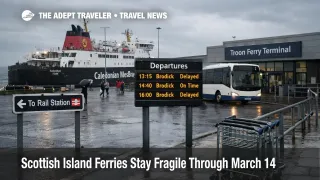
Scotland's island access chain remains fragile through Friday, March 14, 2026, with two different weak points now shaping traveler risk. On the west coast, Caledonian MacBrayne says reduced rail service tied to the ongoing Glasgow Central disruption is still affecting ferry handoffs at Troon, and it is running an extra shuttle bus between Troon station and the ferry terminal every 30 minutes through March 14. Farther north, NorthLink Ferries warns adverse weather from March 11 through March 13 may delay passenger arrivals into Kirkwall and Lerwick, and it has already canceled some freight sailings. Travelers with same day rail to ferry connections should add buffer time now, and overnight on the mainland is the safer call when the last island connection matters.
Scottish island ferry disruption this week is not one single outage. It is a stacked transfer problem, with west coast passengers exposed to rail to ferry timing risk around Troon, while Orkney and Shetland passengers face weather related arrival delays and freight disruption on NorthLink's northern network.
Scottish Island Ferry Disruption: What Changed
The new element on the west coast is not a ferry cancellation headline, but a weaker connection into the ferry itself. ScotRail says Glasgow Central High Level will not reopen this week after the fire beside the station, and services to Ardrossan South Beach and Harbour remain suspended. In response, CalMac says it is running an additional shuttle bus between Troon station and Troon ferry terminal every 30 minutes, with the temporary support in place through Friday, March 14, 2026. That keeps the route usable, but it also adds another transfer step into a trip that many passengers normally treat as a simpler rail to ferry handoff.
For the northern islands, the issue is weather rather than rail disruption. NorthLink says forecasts point to disruption from Wednesday, March 11, through Friday, March 13, 2026. Its current Aberdeen sailing update says arrival into Kirkwall may be delayed by up to one hour, and arrival into Lerwick on Friday, March 13, may be delayed by up to two hours. NorthLink's freight update also confirms cancellations to some freight sailings because of the same adverse weather pattern.
Which Scottish Island Trips Are Most at Risk
The most fragile west coast itineraries are foot passenger trips that depend on Glasgow rail services feeding directly into Troon sailings, especially where a missed ferry would force a long wait or an unplanned overnight. The route is still functioning, but travelers now have to absorb rail disruption, a station to terminal shuttle transfer, and ferry check in timing in one chain. Each extra handoff raises the chance that a small delay becomes a missed sailing.
For Orkney and Shetland, the highest risk sits with passengers who are treating the ferry as part of a longer timed itinerary. A weather related late arrival into Kirkwall or Lerwick can break hotel check in plans, car rental pickup timing, onward island transport, and fixed activity bookings. Freight cancellations matter too, even for visitors who are not shipping cargo themselves. When freight sailings drop out, supply chains tighten, and that can add pressure to island accommodation operations, food deliveries, and local transport if disruption drags on.
What Travelers Should Do Now
Travelers heading for Arran via Troon should build more buffer than usual between rail arrival and ferry check in through Friday, March 14. If you are starting from Glasgow or connecting from a longer rail journey, treat Troon as a two step transfer, not a single station arrival. For late day sailings, or for plans where missing the ferry would break the trip, an overnight on the mainland is the safer option than chasing a tight same day handoff.
For Orkney and Shetland trips on NorthLink, the decision threshold is simple. If your arrival triggers something expensive or hard to replace, such as a lodge check in, a guided departure, a car hire closing time, or a same day onward island connection, build slack into the first night and keep plans flexible. If your schedule is loose, waiting and monitoring may still be reasonable, because NorthLink is warning about delays rather than a full passenger shutdown across the network.
Over the next 24 to 72 hours, watch three things before you move: ScotRail's Glasgow Central recovery status, CalMac's Troon shuttle and sailing updates, and NorthLink's same day port notices for Aberdeen, Kirkwall, and Lerwick. This week's main risk is not that every service stops, but that a half functioning chain looks workable until one weak handoff fails.
Why the Disruption Spreads Beyond One Ferry
A rail to ferry transfer is only as strong as its weakest leg. On the west coast, the mechanism is straightforward. Glasgow Central disruption removes normal rail flow, which pushes passengers into altered train patterns and a shuttle bus link at Troon before they even reach the ferry terminal. That adds time, uncertainty, and another queue point. In practical terms, reduced rail service does not have to cancel a ferry to damage the trip, it only has to make the connection less predictable.
NorthLink's northern issue works differently. Adverse weather affects vessel timing directly, which then ripples outward into port arrival windows and freight movement. Freight sailings matter because island travel systems are small and less forgiving than mainland networks. A canceled freight movement does not automatically create a visitor crisis, but it does reduce slack in places where accommodation, food service, and local transport already operate with tighter margins. That is why even a moderate delay warning in Kirkwall or Lerwick can matter more than the same delay would on a larger mainland route.