

Cozumel Beach Access Added for Royal Beach Club
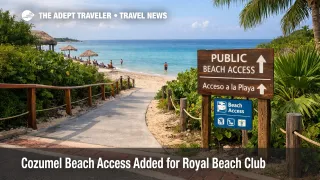
Royal Caribbean says it will build a new public beach access path in Cozumel, Mexico, as part of Royal Beach Club Cozumel, a move that matters beyond a routine resort update because it directly addresses how residents, independent visitors, and future cruise guests reach the shoreline in the Zona Hotelera Sur. The company says the current access will stay open until the replacement is fully operational, and that construction will start only after regulatory and environmental permits are complete. For travelers, the practical takeaway is simple, beach access in this area is not supposed to disappear during the transition, but the project is still tied to an active permitting process.
The Cozumel beach access change is also part of a larger Royal Caribbean destination push. Royal Beach Club Cozumel is still officially listed as opening in 2026, with Royal Caribbean marketing an all inclusive day pass product built around two pools, a beach, three food outlets, and six bars. That makes the access question more important than it sounds at first glance, because this is not just a path improvement for a quiet shoreline, it is infrastructure tied to a high volume cruise product that will need predictable, safer pedestrian flow on one of the island's most visited coastal stretches.
Cozumel Beach Access: What Changed
What changed is narrow but meaningful. Royal Caribbean says the new public access route is meant to replace an existing access point that has faced traffic conflicts, weak signage, and poor lighting, and the company is framing the shift as a safety and accessibility upgrade rather than a reduction in shoreline rights. That distinction matters in Mexico, where public beach access is a politically and legally sensitive issue, and it is why the company explicitly said uninterrupted public access will remain in place while the transition happens.
This also changes the travel story around Royal Beach Club Cozumel. Until now, most of the public messaging around the project centered on paid beach day amenities and Royal Caribbean's broader private destination strategy. The new announcement puts local access and circulation into the foreground, which suggests the company knows the public value test in Cozumel is not only what cruise guests get inside the venue, but also whether the development leaves basic shoreline access more usable than before.
Who Benefits From the Cozumel Beach Access Shift
Local residents benefit first if the new route actually solves the problems Royal Caribbean identified, namely vehicle conflict, weak wayfinding, and limited lighting. Independent travelers who are not buying a Royal Beach Club pass also benefit if public entry becomes easier to find and safer to use. For cruise passengers, the relevance is more indirect right now. They are not getting a new bookable product from this announcement alone, but they are getting an early signal that Royal Caribbean is trying to reduce friction around a project that will eventually sit inside one of the busiest cruise destinations in the Caribbean.
The travelers most likely to care are those planning Cozumel calls in late 2026 and beyond, especially people comparing independent beach days with line sold shore access. This is where Royal Caribbean's destination model starts to matter. In Nassau, the company has already used dedicated transport and tightly managed inventory to make its beach club product feel more predictable, as Adept covered in Royal Beach Club Paradise Island unveils colorful ferry fleet. In Mexico, the company is trying a similar controlled shore experience while also needing to show that public access remains intact outside the paid venue.
What Travelers and Locals Should Watch Next
The main next step is permits. Royal Caribbean says construction will begin only after regulatory and environmental approvals are complete, and Mexico's environment ministry public consultation system currently lists Royal Beach Club Cozumel in consultation through March 23, 2026. That means this is still a live review process, not a finished construction phase. Travelers should read this announcement as a project update, not as proof that the new access route is already under way.
If you have a 2026 Cozumel sailing and are specifically interested in Royal Beach Club Cozumel, the sensible move is to treat the access promise as a positive planning signal, but not a final operational guarantee until permits clear and Royal Caribbean publishes firmer opening and shore logistics details. If your priority is independent beach time in Cozumel, keep checking whether local access patterns change once work starts. The company says the current route will remain open during the transition, so any closure or meaningful restriction would be a material development worth verifying before you sail.
Travel advisors should also watch how this fits into Royal Caribbean's wider Mexico strategy. The company has already shown, through projects like Royal Caribbean Takes Over Costa Maya Port for Perfect Day Mexico, that it wants more control over the ship to shore experience. In Cozumel, that creates a tradeoff, more predictable beach day products for cruise guests, but more scrutiny over how public shoreline access works alongside them.
Why Royal Beach Club Cozumel Needed a New Access Path
The mechanism here is straightforward. A large cruise linked beach club concentrates people, vehicles, deliveries, and shore excursion movement into a tight coastal zone. If the existing public entry point already suffers from traffic conflict, weak signage, and poor lighting, those problems become more visible, and potentially more risky, once a bigger tourism asset opens nearby. In that sense, the access project is not separate from Royal Beach Club Cozumel, it is enabling infrastructure that helps the company argue the development can coexist with public use of the shoreline.
There is also a second order effect for destination management. Better marked and safer public access can reduce confusion between paid venue space and public shoreline rights, which lowers the odds of conflict on arrival days and makes it easier for residents and independent visitors to keep using the beach without relying on resort controlled entry points. That is the real traveler value in this update. It is not about a flashy new amenity. It is about whether Cozumel's next cruise focused beach project adds order to the shoreline instead of squeezing it.
Sources
- ROYAL CARIBBEAN ANNOUNCES NEW PUBLIC BEACH ACCESS FOR COZUMEL AS PART OF ROYAL BEACH CLUB COZUMEL DEVELOPMENT
- Royal Beach Club Cozumel | Private Beach Experiences | Royal Caribbean Cruises
- Proyectos en Consulta Pública
- Royal Beach Club Paradise Island unveils colorful ferry fleet
- Royal Caribbean Takes Over Costa Maya Port for Perfect Day Mexico