

Frontier U.S. Routes Expand For Summer 2026
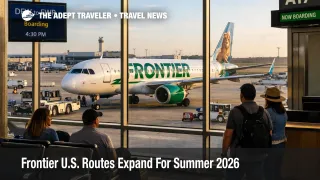
Frontier Airlines is adding four new domestic nonstop routes that begin between May 5 and June 11, 2026, giving budget travelers more direct options from Dallas Fort Worth, Fort Lauderdale, Las Vegas, Nashville, Newark, Santa Ana, and Washington Dulles. The immediate value is simple: more nonstop choices on leisure heavy city pairs before peak summer demand tightens fares. The tradeoff is that these are mostly thin routes with daily or four times weekly service, so schedule changes or cancellations can still leave travelers with fewer same day backup options than they would get on a larger network carrier.
In Frontier's March 17 announcement, the airline said Dallas Fort Worth International Airport (DFW) to Newark Liberty International Airport (EWR) starts May 5 with daily service, Dallas Fort Worth to John Wayne Airport (SNA) starts May 21 with four weekly flights, Fort Lauderdale Hollywood International Airport (FLL) to Dulles International Airport (IAD) starts May 21 with daily service, and Harry Reid International Airport (LAS) to Nashville International Airport (BNA) starts June 11 with four weekly flights. Frontier is advertising introductory one way fares from $49, though the lowest published promo price in the release applies only to Fort Lauderdale and Dulles, while the other three routes launched with $89 intro fares.
The Frontier new U.S. routes matter because they add nonstop access in markets where a low fare nonstop can change the trip math. A same plane option can reduce overnight stays, car rental days, and misconnect risk, especially for shorter leisure trips where one extra stop can wipe out the value of a cheap base fare. Frontier also framed the expansion as part of its push to widen affordable domestic coverage ahead of summer.
Frontier New U.S. Routes: What Is New, And When It Starts
The biggest winner here is Dallas Fort Worth, which gets two of the four new routes. The daily Newark flight gives North Texas travelers another low fare option into the New York area, while the Santa Ana link adds a more Orange County focused Southern California arrival point that can be more convenient than flying into Los Angeles. For Washington area and South Florida travelers, the new Fort Lauderdale and Dulles route is the most straightforward value play in the announcement because it launches daily and carries the lowest advertised intro fare.
Las Vegas and Nashville are a slightly different fit. Four weekly service can work well for long weekend traffic, concerts, bachelor and bachelorette travel, and leisure demand that does not require a daily schedule, but it is less forgiving if your preferred departure day changes. That matters more on Frontier because the base fare can look very attractive up front, while flexibility depends heavily on how many alternate departures the airline actually offers in the same market. That broader network tradeoff is worth keeping in mind alongside Frontier Fleet Cuts May Tighten Flights In 2026, which explains why thinner schedules can matter when operations slip.
Who Benefits Most From These New Frontier Flights
These routes are best for travelers who value a nonstop more than they value schedule depth. A family trying to reach South Florida or Orange County on fixed vacation dates may find the new service useful because it cuts time and often lowers the entry fare. A solo traveler doing a quick business trip or a same day event may care more about recovery options, and that is where daily service is materially safer than four times weekly service.
The Dallas Fort Worth additions also show Frontier continuing to grow in a market where price competition matters, but where travelers already have strong alternatives. That means Frontier will likely win on certain days for pure fare shoppers, while legacy airlines may still hold the edge for travelers who need more departure times, better reaccommodation, or bundled benefits. In other words, the main benefit is low fare nonstop convenience, but the tradeoff is still a thinner operating cushion.
How To Book Or Plan Around It
Travelers interested in these routes should compare total trip cost, not just the advertised fare. Frontier's March 17 release promotes fares starting at $49, but the route table shows only Fort Lauderdale to Dulles at that level, with the other announced markets starting at $89. Once bags, seats, and change flexibility are added, the cheapest base fare is not always the cheapest trip.
There is a simple booking threshold here. If you are eyeing the daily Fort Lauderdale and Dulles route, or the daily Dallas Fort Worth and Newark route, booking earlier can make sense because there is a clearer utility case and a bit more schedule resilience. If you are considering the four weekly Santa Ana or Nashville routes for a fixed date event, book only after checking whether a cancellation would force a next day move, an airport switch, or a much higher same day fare on another airline.
After booking, monitor for retimes at least once a week, then again within 72 hours and 24 hours of departure. That matters on any airline, but it matters more on thinner schedules because a modest timing change can break a car pickup, event window, or separate ticket connection faster than travelers expect.
Why This Launch Matters For Summer Airfare
This launch is not huge in raw route count, but it is useful because it adds incremental domestic capacity before summer. First order, travelers in these seven airports get new nonstop options. Second order, even modest low cost carrier entry can pressure competitors to defend pricing or refine schedule timing in the affected markets, especially on leisure routes where travelers are highly price sensitive.
The more cautious reading is that new routes do not erase Frontier's broader operating constraints. The airline is still in the middle of a fleet adjustment that includes early aircraft returns and deferred deliveries, which can make thin routes more sensitive to disruptions. That does not make these launches unimportant, but it does mean travelers should treat them as useful new options, not as high frequency business shuttle style service.
Frontier quoted Josh Flyr, its vice president of network and operations design, saying the new service gives consumers more low cost options "just in time for the summer travel season." That is the correct frame. For travelers, this is a summer convenience and pricing story first. The main decision point is whether the value of a cheaper nonstop outweighs the tighter recovery margin that often comes with ultra low cost schedules.