

Langkawi Green Hotel Certification Goes to Ritz-Carlton
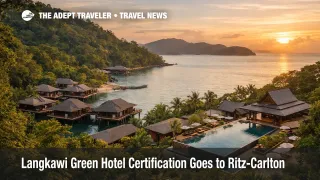
Langkawi Green Hotel certification now covers The Ritz-Carlton, Langkawi, adding a formal Malaysian sustainability credential to one of the island's best known luxury resorts. The resort said on March 18, 2026 that it had been certified under the Ministry of Tourism, Arts and Culture Malaysia's Green Hotel framework, with approval tied to the Tourist Accommodation Premises Grading Panel and validity running through 2029. For travelers, that does not change airport access, room categories, or booking rules overnight, but it does give eco minded guests a more concrete signal that the property has been assessed against a defined environmental standard rather than relying only on brand level sustainability language.
The practical value is mainly in trip selection, not itinerary mechanics. Travelers comparing high end resorts in Langkawi now have another local certification marker to weigh alongside beach location, villa style, family programming, and loyalty benefits. The resort is about 10.2 kilometers from Langkawi International Airport (LGK), which keeps transfers simple for short stays, and Marriott's property page already lists published sustainability information such as carbon and water footprint figures and guest room recycling.
The tradeoff is that certification alone does not tell a traveler whether this is the best sustainability fit on the island. It confirms the resort passed Malaysia's framework, but it does not, by itself, rank the property against every competing luxury stay in Langkawi. Travelers who care deeply about environmental performance should still compare how each resort explains water use, waste handling, habitat protection, and guest participation in conservation programs. That matters more than marketing language.
Langkawi Green Hotel Certification, What Changed
What changed here is formal recognition inside Malaysia's Green Hotel system, not a new resort opening or renovation. MOTAC's Green Hotel materials show the program is built around a defined classification framework, and the published guideline breaks the scoring into categories including environmental policy, green products, community collaboration, human resource development, waste management, energy efficiency, water efficiency and quality, air quality management, noise control, wastewater treatment, and toxic and chemical disposal management.
That matters because it moves the conversation from vague sustainability claims toward a more structured local standard. In plain language, the credential suggests the property was reviewed against operational criteria that affect how a hotel actually runs, not just how it presents itself in brochures. For travelers booking a luxury nature trip in Langkawi, that is more useful than a generic promise to be greener.
Who Benefits Most From This Resort Signal
This development is most relevant for travelers who already wanted a high end Langkawi stay and needed a better sustainability filter. That includes couples booking a premium beach and rainforest trip, families who prefer a full service resort with organized activities, and Marriott loyalists trying to narrow choices without giving up brand comfort. It is also relevant for advisors and corporate travel planners who increasingly need some form of ESG or sustainability rationale when selecting upper tier properties.
It will matter less to travelers choosing primarily on price. A certification like this can strengthen confidence in the product, but it does not change the core fact that The Ritz-Carlton, Langkawi remains a luxury resort first. Guests looking for the cheapest practical base on the island will still find better value elsewhere. The fit is strongest for travelers who want a resort experience that combines nature access, a premium service model, and more visible sustainability credentials.
The resort also has some story specific relevance because its setting makes environmental credibility more important than usual. Marriott describes the property as a rainforest and Andaman Sea resort, while Ritz-Carlton's broader sustainability pages highlight Langkawi experiences such as a sea cucumber nursery tied to marine sustainability. When a resort sells nature as a core part of the stay, travelers have stronger reason to care whether conservation claims are backed by real programs and formal standards.
What Travelers Should Do Before Booking
Travelers comparing Langkawi resorts should treat this certification as a positive filter, but not the only one. Start by deciding whether sustainability is a soft preference or a hard booking requirement. If it is a hard requirement, check not just for certifications, but also for property level specifics on water use, waste systems, reef or mangrove protection, local sourcing, and guest participation options.
For Marriott Bonvoy members, this news may make The Ritz-Carlton, Langkawi easier to justify when the property is already competitive on rates or redemptions. If rates are materially higher than nearby alternatives, the right move is to decide whether the combination of luxury positioning, location, and the Langkawi Green Hotel certification actually improves the trip enough to justify the premium.
Over the next few months, watch for whether the resort publishes more detail on the initiatives behind the certification. That is the next useful decision point. A badge is helpful, but the strongest booking case comes when a hotel clearly explains what changed operationally, how guests can see it, and how the surrounding environment benefits in practice.
Why This Matters Beyond One Resort
This story matters because hotel sustainability is slowly becoming easier to compare at the property level, and that is better for travelers. Too much of the sector still depends on broad corporate ESG messaging that can feel detached from what a guest actually encounters on site. A local Green Hotel framework, even if imperfect, gives travelers a more specific way to judge whether a resort is aligning with national tourism and environmental goals.
There is also a second order effect for Langkawi itself. When high visibility resorts pursue formal certification, it can pressure competing properties to sharpen their own environmental practices and disclosures. That does not guarantee better outcomes across the island, but it can improve the baseline for how luxury hotels talk about energy, water, waste, and community impact. For travelers, that means the market gets a little easier to read.
The main caveat is transparency. The resort announcement confirms the award, and MOTAC's public materials confirm the framework exists, but a public ministry recipient database was not easy to verify in search. That means travelers should read this as a credible resort level sustainability milestone, not as proof that every operational claim has been publicly benchmarked in detail. Even with that caveat, the Langkawi Green Hotel certification is still a meaningful booking signal for travelers who want a luxury stay in Langkawi with a clearer sustainability credential behind it.
Sources
- THE RITZ-CARLTON, LANGKAWI AWARDED "GREEN HOTEL" CERTIFICATION
- Green Hotel Grading, MOTAC Malaysia
- Green Hotel Download Page, MOTAC Malaysia
- Guidelines for Hotel Classification, Green Hotel, MOTAC Malaysia PDF
- The Ritz-Carlton, Langkawi Overview
- The Ritz-Carlton Sustainability Page
- Good Travel With Marriott Bonvoy, Environmental Protection