

Belgium Sends Soldiers to Guard Jewish Sites
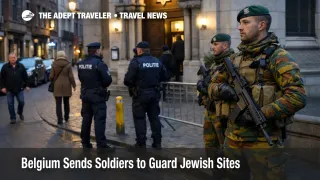
Belgium Jewish site security tightened on March 23, 2026, after the government sent soldiers back onto the streets of Brussels and Antwerp to help protect synagogues, schools, and other Jewish sites. The move follows a synagogue blast in Liege, an arson attack on a synagogue in Rotterdam, and an explosion at a Jewish school in Amsterdam. For Jewish travelers, the immediate implication is not a blanket shutdown of tourism in Belgium, but a higher security environment around community institutions, more visible armed patrols, and a stronger need to plan visits to Jewish neighborhoods and sites with more care than usual.
Belgium Jewish Site Security: What Changed
Belgian authorities said the deployment is being carried out with federal police and will cover Jewish locations including synagogues and schools. Reuters reported that soldiers were first deployed in Brussels and Antwerp, with a Belgian defense ministry spokesperson saying the rollout would later extend to Liege. Defense Minister Theo Francken publicly framed the move as a response to safety concerns after recent antisemitic attacks in Belgium and the Netherlands.
For travelers, that changes the operating environment more than the broad destination map. Belgium is not under a general tourism closure, and there is no indication that ordinary airport, rail, or hotel activity in Brussels or Antwerp has been suspended because of this measure. The real change is concentrated around Jewish institutions and the neighborhoods around them, where visitors should expect tighter police or military presence, possible short notice access controls, and more sensitivity around event schedules and arrivals. That can affect synagogue visits, school related travel, heritage trips, community events, and escorted group itineraries that include Jewish sites.
The seriousness is real, but it is specific. This is an elevated security posture tied to a pattern of attacks on Jewish sites, not a citywide breakdown in public order. That distinction matters. A traveler staying in central Brussels or Antwerp for general business or leisure travel faces a different risk profile from a traveler planning to attend services, a school program, a community event, or a neighborhood visit linked to Jewish institutions.
Which Travelers Face the Most Friction
Jewish travelers, community delegations, school families, and tour groups visiting synagogues or Jewish schools are the most directly affected. So are travelers whose plans depend on being admitted at fixed times to religious or community sites, because even minor security changes can break tightly timed local transport, guided visits, or same day onward plans.
Antwerp stands out because of the size and visibility of its Jewish community, and because Reuters specifically identified the city as one of the first places where soldiers returned to the streets. Brussels also matters because it is both the Belgian capital and a major arrival point for international travelers, which means some visitors may move quickly from airport or rail arrival into neighborhood level plans without allowing for extra checks or route changes.
The cross border pattern also raises the planning stakes. Dutch police arrested five suspects, aged 17 to 19, in the Rotterdam synagogue arson case. In Amsterdam, officials said an explosion damaged a Jewish school, caused limited damage, and prompted a wider security response. None of those incidents caused injuries, but they show that the recent problem is not confined to one building or one city.
That matters for travelers building multi city Benelux itineraries. A trip that includes Amsterdam, Rotterdam, Antwerp, Brussels, or Liege now carries a different level of security friction around Jewish institutions than a standard city break would suggest. First order, access may become slower or more controlled at the site itself. Second order, travelers may need to rebuild local timing, ground transfers, and meeting points if institutions tighten entry rules or change how and when guests are admitted.
What Travelers Should Do Now
Travelers visiting Belgium for general tourism do not need to treat this as a reason to cancel routine city travel on its own. But travelers with synagogue, school, heritage, or community related plans should shift from casual assumptions to confirmed arrangements. Confirm opening status directly with the institution, allow more time for arrival, and avoid building a same hour museum, rail, or restaurant booking immediately after a visit to a protected site.
Group organizers should be stricter than individuals. A small delay at a protected site can cascade through coach timings, restaurant reservations, rail departures, and hotel check in windows. The safer approach is to widen buffers on the day of any Jewish institution visit, keep one backup routing option inside the city, and make sure participants know the exact meeting point before they travel.
The main decision threshold is simple. If a visit to a Jewish site is central to the trip, do not rely on walk up access or old assumptions about neighborhood movement. Reconfirm plans before departure and again on the day of travel. If the visit is optional and local conditions tighten further, it may be smarter to defer that stop than to force a rushed or uncertain visit into an already tight itinerary.
Over the next 24 to 72 hours, watch for three things, whether Belgium broadens the military deployment beyond Brussels and Antwerp, whether local institutions issue updated visitor guidance, and whether Dutch or Belgian investigators release more detail that changes the risk picture. If authorities keep the response concentrated and site specific, most broader city travel should remain manageable. If institutions begin reducing access or public events, that would be the signal that itinerary changes need to become more aggressive.
Why Belgium Acted, and What Happens Next
Belgium's move is best understood as a protective response to a cluster of recent attacks, not as a symbolic show of force alone. Reuters reported that the latest deployment followed an explosion at a synagogue in Liege that Belgian authorities called an antisemitic act, along with the Rotterdam and Amsterdam incidents across the border. In the Netherlands, police and prosecutors have continued investigating the Rotterdam case, while officials have been careful not to over confirm social media claims about who directed or coordinated the attacks.
That distinction is important for travel reporting. The attacks are confirmed. The broader motive and any international coordination claims are still being investigated. Travelers should not plan around rumors, but they should plan around the visible operational response, which is already real, armed protection at Jewish sites, heightened policing, and a more controlled environment around community institutions.
What happens next will likely depend on whether authorities view this as a short lived surge or a longer security phase. If no new incidents occur, Belgium may keep protection focused on the most exposed cities and institutions. If more attacks or credible threats emerge, the likely next step is tighter access, broader deployment, and more visible security around community events. For travelers, the practical lesson is straightforward, Belgium remains visitable, but Jewish site visits now require deliberate planning, extra time, and closer attention to official and institution level guidance than they did even a week ago.
Sources
- Belgium deploys soldiers to reinforce security at Jewish sites
- Dutch police apprehend fifth suspect for Rotterdam synagogue arson
- Amsterdam police probe new blast claimed by same group that claimed Jewish school explosion
- No injuries reported after explosion at Jewish school in Amsterdam, officials say