

Brooklyn's First Hyatt Opens as The Livingston
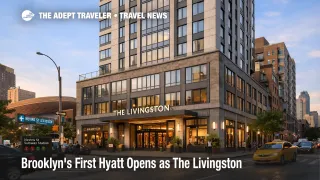
The Livingston Brooklyn hotel gives Hyatt its first branded address in the borough, a notable addition for travelers deciding where to stay in New York on or after Hyatt's March 18, 2026 opening announcement. The 104 room JdV by Hyatt property sits in Downtown Brooklyn's cultural district near Barclays Center, Brooklyn Academy of Music, and multiple subway stations, which makes it more useful as a transit and event base than a pure neighborhood boutique stay. For travelers, the practical question is not whether Brooklyn has another hotel, it is whether this one creates a better New York base than Manhattan or Brooklyn's existing independent options. The answer looks strongest for short city breaks, event nights, and loyalty minded travelers who want Brooklyn access without giving up a major hotel program.
The Livingston Brooklyn Hotel: What Is New
What changed is simple. Hyatt now has its first branded hotel in Brooklyn, New York, through The Livingston, a 22 story property developed by Midas Hospitality and ACRES Capital as part of the JdV by Hyatt brand. Hyatt says the hotel has 104 guest rooms, including 15 with balconies, along with an all day restaurant called The Grove Lantern, a lobby café called Goldfinch Café, and an 820 square foot rooftop terrace for events and social use. The hotel is also pet friendly, which widens its appeal for road trippers and longer city stays, although travelers should still check current policy and fees before booking.
The location is the real operational hook. The Livingston stands at 291 Livingston Street in Downtown Brooklyn, within walking distance of Barclays Center and several subway connections that can move travelers into Manhattan in about 15 minutes under normal conditions. That does not make it a better fit than Midtown for every trip, but it does give Hyatt loyalists a Brooklyn based alternative that is far more transit connected than many travelers may assume from a borough hotel. In a city where transfer friction often shapes the whole trip, that matters more than the branding alone.
The room package also signals what kind of opening this is. Hyatt is positioning the property as upscale and design forward, not ultra luxury and not select service. The confirmed features include city views, white marble showers, mini fridges, coffee makers, desks, lounge chairs, and complimentary Wi Fi. That puts the hotel in a practical middle lane for travelers who want a lifestyle leaning stay without moving into top tier Manhattan pricing.
Who The Livingston Fits Best
The Livingston looks best suited to three traveler groups. The first is the event and entertainment segment. Travelers coming for concerts, games, or shows around Barclays Center and the Brooklyn Academy of Music can cut down on late night cross city transfers by staying nearby. That is a concrete advantage in New York, especially when post event subway platforms, rideshare demand, and Manhattan return times can all deteriorate at once.
The second is the leisure traveler who wants New York access without centering the whole trip on Manhattan. Downtown Brooklyn gives easier reach into neighborhoods, museums, live music venues, and local dining, while still preserving fast transit into Lower Manhattan and beyond. The tradeoff is familiar. You gain borough texture and often a calmer base, but you give up the immediate walkability of Midtown's biggest hotel districts. Travelers who spend most of their time in central Manhattan may still prefer to stay there.
The third is the World of Hyatt member who specifically wants Brooklyn. Before this opening, Hyatt's lack of a branded Brooklyn address narrowed the program's usefulness in this part of New York. The Livingston changes that. It gives loyalty members a way to earn and redeem within the borough rather than defaulting to Manhattan and commuting back across the East River for Brooklyn heavy itineraries.
Business travelers may also find value here, but with a caveat. The hotel's positioning near transit and cultural anchors helps for mixed work and leisure trips, yet travelers with repeated Midtown meetings or early airport runs should compare total travel time carefully. A Brooklyn stay can save the trip, or quietly add friction, depending on where each day starts and ends.
What Travelers Should Do Before Booking
Travelers considering The Livingston should start with trip geometry, not the brand name. If the center of gravity is Barclays Center, BAM, Downtown Brooklyn courts and offices, or a borough first leisure itinerary, the new hotel is immediately competitive. If the trip revolves around Midtown offices, theater plans, or very early departures from Manhattan side rail hubs, the value case is less automatic.
Rate comparison matters too. A new Hyatt opening in New York can attract both curiosity and early pricing volatility. Travelers should compare The Livingston against Manhattan Hyatt options and against strong independent Brooklyn competitors rather than assuming the borough address guarantees a lower total trip cost. The savings on room rate can disappear if the trip requires repeated extra transfers, while a slightly higher nightly rate may still win if it removes late night rideshare costs after events.
Booking timing also matters. New hotel openings often improve quickly during the first months as service rhythms settle and guest feedback surfaces. Travelers who want the novelty and location now can book with flexible terms and watch for opening offers, while travelers prioritizing a fully stabilized operation may prefer to monitor a few review cycles first. The next decision point is not abstract, it is whether early rates, cancellation terms, and your exact Brooklyn versus Manhattan movement pattern make the property a real fit.
Pet owners should verify the current fee and weight limits directly with the hotel before booking. Hyatt's live policy page says dogs up to 50 pounds are accepted for a nightly fee, which is a material planning detail for travelers driving in or combining city nights with a longer regional trip. That kind of operational detail can matter more than design language once the trip is actually underway.
Why Hyatt Finally Entered Brooklyn
This opening matters beyond one hotel because it closes an obvious portfolio gap for Hyatt in New York City. Brooklyn is no longer an overflow market for Manhattan, it is a primary destination for events, culture, dining, and hybrid business travel. A major loyalty brand without a branded Brooklyn address was missing a meaningful slice of demand, especially from travelers who increasingly choose neighborhoods by purpose rather than defaulting to Midtown.
The mechanism is straightforward. Hotel companies expand where brand reach, distribution strength, and traveler patterns intersect. Downtown Brooklyn now supports that equation. It has major event demand, year round cultural traffic, reliable subway connectivity, and enough identity to support a lifestyle flagged hotel rather than a generic business box. JdV by Hyatt is also the logical brand lane here, because it gives Hyatt neighborhood character without forcing the property into luxury expectations the site does not need to carry.
There is a second order effect for travelers, too. More branded supply in Brooklyn can sharpen price competition and segment choice across New York stays. Travelers who once defaulted to Manhattan for loyalty reasons may now split more nights into Brooklyn, while rivals may need to work harder on neighborhood experience or pricing to defend share. That does not mean The Livingston Brooklyn hotel will reset the city's hotel market by itself. It does mean Hyatt now has a credible borough base in a part of New York where location choice can materially change how a trip feels and functions.