

Spain Airbnb Fine Must Be Paid During Appeal
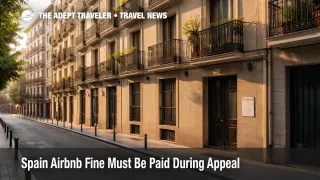
Spain Airbnb fine pressure just became more immediate for travelers who rely on short-term rentals in major Spanish cities. On March 23, 2026, Spain's consumer ministry said the High Court of Justice of Madrid refused Airbnb's request to suspend payment of a €64,055,311 fine while the company appeals. The ruling does not settle the full case, but it keeps the penalty in force now, which signals that Spain's enforcement campaign against illegal and misleading holiday rental listings is still moving forward. Travelers with upcoming apartment stays in Madrid, Barcelona, Málaga, Valencia, Seville, and other high-demand markets should verify listings carefully and keep a refundable backup option in play.
Spain Airbnb Fine: What Changed
The immediate change is procedural, but it still matters operationally. Airbnb asked the court for interim relief so it would not have to pay the fine until a final ruling on the merits. The court said no. That means the platform must pay while the legal fight continues, even though Airbnb says the sanction conflicts with Spanish and European law and intends to keep contesting it.
The fine was imposed in December 2025 after Spain's consumer ministry said Airbnb had published listings for tourist accommodation without valid licenses, used false or incorrect registration numbers, and failed to provide truthful information about whether hosts were private individuals or professional operators. The ministry said those practices affected 65,122 listings and calculated the main sanction at six times the illicit profit it believes Airbnb earned from the conduct. In practical terms, this is not a new booking ban for travelers, but it is another sign that Spain is still willing to force the platform layer, not just individual hosts, into stricter compliance.
That matters for travel because apartment inventory can disappear faster when enforcement shifts from warnings to paid penalties and court-backed pressure. In an earlier Adept Traveler article, Spain Airbnb Fine Hits Tourist Rental Listings tracked the original sanction. This week's court move shows that the case is no longer only an announced fine on paper. It is a live financial penalty that Airbnb has to absorb while the appeal runs.
Which Spain Apartment Bookings Face the Most Risk
Not every Airbnb stay in Spain is suddenly in danger. The main exposure sits with travelers booking in tightly regulated city neighborhoods where enforcement is politically and economically tied to housing pressure. Central Madrid, central Barcelona, old town districts, beach cities with heavy tourist turnover, and other markets where licensing rules are strict face the highest practical risk of listing changes, removals, or last-minute host corrections.
Families and small groups are more exposed than solo travelers because they often depend on kitchens, multiple bedrooms, and lower per-person costs that hotels do not match easily in city centers. If an apartment listing disappears, the replacement path is usually an aparthotel, multiple hotel rooms, or a longer commute from a legal lodging option outside the core. That raises total trip cost and can change daily timing for tours, trains, and restaurant bookings.
The timing matters too. Short stays during holidays, festivals, and shoulder-to-peak spring and summer periods are more fragile because alternative inventory tends to thin out first in the same neighborhoods where short-term rentals were most attractive. In an earlier Adept Traveler article, Spain Airbnb Delisting Will Remove Thousands of Rentals we covered how Spain's wider delisting drive was already shrinking supply. This court setback adds another signal that regulatory pressure is not easing.
What Travelers Should Do Now
If you already have an Airbnb booking in Spain, verify that the listing displays a registration or license number and that the host can restate that number in writing through the platform message thread. Take screenshots of the listing, cancellation terms, host messages, and check-in instructions. Those records matter if a listing changes status or disappears before arrival.
The next decision point depends on timing and trip rigidity. If your stay is within the next two weeks, or it anchors a nonrefundable rail, concert, cruise, or flight plan, price a refundable hotel or aparthotel backup now. Waiting may preserve the cheaper apartment booking, but it can also leave you shopping for replacement lodging after the best legal alternatives are gone. If your stay is farther out and your dates are flexible, you can wait, but only with a defined trigger, such as rising hotel rates in your district or a host who cannot clearly document registration status.
Over the next 24 to 72 hours, and again closer to check-in, watch for host edits, platform notices, or abrupt changes in listing details. Travelers should also monitor local accommodation prices in the exact zone they want, not the citywide average. Once central inventory starts tightening, the second-order effect is broader than the apartment itself. It can change airport transfer times, push travelers into less convenient neighborhoods, and force earlier or later rail arrivals to match new lodging logistics.
Why Spain's Airbnb Crackdown Keeps Tightening
Spain's consumer and housing push is broader than this single court decision. The enforcement logic is that tourist rental platforms can contribute to housing scarcity when listings operate outside regional licensing rules or obscure who is really offering the stay. Spain has been tightening controls through delistings, registration requirements, and closer platform scrutiny as part of a wider effort to push more stock back toward the regulated market.
The mechanism for travelers is straightforward. When authorities increase verification and punish misleading or illegal listings, some hosts regularize, some listings disappear, and some demand moves into hotels, aparthotels, and licensed guesthouses. The first-order effect is smaller short-term rental supply in the most pressured districts. The second-order effect is tighter legal lodging inventory, higher rates in central areas, and more trip planning friction when one canceled apartment forces changes to trains, airport transfers, or daily sightseeing structure.
What happens next is narrower but still important. Airbnb can continue litigating, and the court has not yet ruled on the full merits of the appeal. But the refusal to suspend payment makes clear that Spain's regulators are still advancing the case rather than pausing it. For travelers, the right takeaway is not panic. It is that Spain short-term rental risk now sits in a stricter compliance environment, especially in cities where housing politics and tourism pressure overlap.
Sources
- La justicia obliga a Airbnb a pagar los 64 millones de euros previstos en la multa que le impuso Consumo, Ministerio de Derechos Sociales, Consumo y Agenda 2030
- Spain fines Airbnb $75 million for unlicensed rental listings, Reuters
- La justicia obliga a Airbnb a pagar una multa de 64 millones de euros impuesta por Consumo, El País
- Spain Airbnb Fine Hits Tourist Rental Listings, Adept Traveler
- Spain Airbnb Delisting Will Remove Thousands of Rentals, Adept Traveler