

Viking India River Cruise Grows With Second Ship in 2028
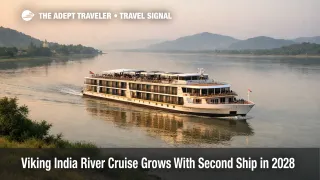
Viking has turned its India program from a one ship trial into a two ship commitment. On March 24, 2026, the line said bookings are now open for 2027, 2028, and 2029 departures, and confirmed that the new 80 guest Viking Ganges will enter service in 2028 alongside the Viking Brahmaputra, which is due to start sailing in late 2027. For travelers, that shifts this from a limited inaugural product into a more credible long haul planning option, especially for guests who want India with less internal trip stitching and more guided structure. The immediate takeaway is simple, early planners now have a wider booking window, more cabin inventory, and more reason to decide before the first seasons fill.
Viking India River Cruise: What Changed
The expansion centers on Viking's 15 day Wonders of India itinerary, which runs round trip from Delhi, India, and combines hotel stays in Delhi, Agra, and Jaipur with an eight day Brahmaputra River voyage through Assam. Viking said both ships will sail between Guwahati and Nimati Ghat, with 13 included tours and access to as many as 10 UNESCO World Heritage Sites. The company is also adding pre and post trip land extensions in Delhi, Dubai, Kathmandu, and Cochin and Mumbai. Viking is currently marketing savings of up to $5,000 per couple for North American travelers through March 31, 2026, with a $25 deposit.
This is more than a routine booking calendar update. A second ship doubles Viking's planned Brahmaputra capacity in 2028, which gives the line more room to capture demand without forcing every interested traveler into a narrow launch window. In an earlier Adept Traveler article, Viking Brahmaputra River Cruise Debuts in 2027 outlined the first ship's role in opening the market. In another earlier Adept Traveler article, Viking's New "Wonders of India" Itinerary Blends Golden Triangle Touring with a Brahmaputra River Cruise described the original product design. The new development is scale, Viking is no longer only testing whether one ship can work in Assam, it is building enough inventory to sell the route across multiple seasons.
Who Benefits Most From the New Assam Sailings
The travelers most likely to benefit are high spending long haul guests who want India's headline sights without managing multiple domestic bookings on their own. Viking's package keeps the Golden Triangle and Assam in one guided itinerary, which reduces friction for travelers who might otherwise skip Northeast India because of transport complexity, hotel changes, or the uncertainty of arranging wildlife and cultural visits separately. Viking says both vessels will carry 80 guests in 40 staterooms, with veranda accommodations throughout, which also places the product squarely in the small ship premium category rather than the mass market end of river cruising.
The fit is strongest for travelers deciding between a standard North India land tour and a more structured hybrid trip. First order, the added ship should make it easier to secure preferred dates in 2028 and 2029. Second order, a larger Brahmaputra program may improve traveler confidence in a region that still sits outside the mainstream cruise map. That does not make it a simple impulse booking. Assam remains a more specialized destination than Europe's core river markets, and the appeal depends on wanting a guided, culturally dense trip rather than a loose, independent India itinerary.
What Travelers Should Do Before Booking
Travelers interested in the first three seasons should compare 2027, 2028, and 2029 dates now rather than waiting for broad retail promotion later. The practical advantage is not just price. It is choice, cabin location, extension availability, and the ability to align the sailing with other long haul flights or a wider South Asia trip. For anyone who specifically wants the new Viking Ganges, 2028 is the first relevant season. For travelers who care more about being early into the product than about the second ship itself, late 2027 on Viking Brahmaputra is the earlier entry point.
There is also a clean decision threshold here. Book earlier if you want the most controlled version of the trip, meaning veranda choice, favored sailing direction, and the best odds of adding guided extensions without compromise. Wait longer only if you are still uncertain about whether the Golden Triangle plus Assam structure fits your travel style, or if you want to compare Viking against future competitors that may enter India's river market. The current Viking offer through March 31, 2026, creates an immediate planning window for North American travelers, but the more durable reason to act is limited early season capacity, even after the second ship arrives.
Why Viking Is Expanding India Now
The mechanism behind this move is straightforward. Viking appears to be responding to stronger than expected early demand for a product that solves a real planning problem, how to combine India's best known inland landmarks with a softer, more contained river segment in Assam. Chief executive Torstein Hagen said the company had already seen strong guest interest since announcing the India voyages, and framed the second ship and 2029 opening as a way to bring more travelers into the region. That matters because it suggests this is being driven by booking traction, not only by long range destination branding.
What happens next is likely a slow normalization of India, and specifically the Brahmaputra, as a sellable premium river product rather than a one off curiosity. If Viking fills the first seasons well, the second order effect could be broader supplier confidence in Assam facing tourism infrastructure, including guides, shore programs, and associated hotel stays around the land package. For travelers, the serious change is not disruption, but shelf life. A product that looked novel in 2025 now looks more established for 2027 through 2029, which makes it easier to plan around rather than merely watch.