

Colorado Drought Hits Ski and Lake Travel
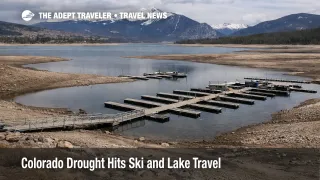
Colorado drought travel is moving from a water management issue into a spring and summer trip planning problem. Record low snowpack in key Colorado watersheds is already cutting into late season ski value, and low reservoir levels are beginning to reshape boating, marina access, and summer mountain trip assumptions. Travelers planning April ski weekends, early summer Colorado lake trips, or Lake Powell boating vacations should treat 2026 as a lower margin season. The main decision now is whether the trip still works if snow, water access, or smoke conditions deteriorate further.
Colorado Drought Travel: What Changed
The clearest shift is that the dry winter is no longer just a background weather story. Denver Water said on March 23, 2026 that snowpack in the Colorado River Basin within its collection system was 55% of normal, while the South Platte River Basin was at 42% of normal, both at the worst level on record for that date. It later moved to Stage 1 drought restrictions, with mandatory outdoor watering limits and a stated goal of reducing water use by 20% this year.
That matters for travelers because Colorado's mountain economy depends on the same snowpack that fills reservoirs and sustains late season ski conditions. In an earlier Adept Traveler article, Mountain West Ski Areas Close Early After Thin Snowpack, spring skiing was already showing signs of strain across the region. What has changed now is that the water side of the picture is catching up fast enough to affect summer planning as well.
Denver Water has also warned that Dillon Reservoir, a key recreation asset in Summit County, may not support normal marina access this year. In its March 24 drought announcement, the utility said boat ramps and docks at Frisco Marina were not expected to be accessible because of low water. That turns what might have been a scenic add on for mountain travelers into a reduced access season.
Which Trips Face the Most Exposure
The most exposed travelers are not all Colorado visitors equally. They are late season skiers still assuming April means dependable on mountain value, families combining mountain lodging with lake recreation, and summer boaters or houseboat renters counting on standard launch and marina conditions.
For ski travelers, the problem is not only whether a resort is technically open. It is whether enough terrain, lift access, and snow quality remain to justify airfare, lodging, rentals, and time off. Warm afternoons and weak lower mountain coverage can leave a resort operating with a thinner product than travelers expected when they booked.
For lake travelers, the risk spreads beyond Colorado. Glen Canyon National Recreation Area has already warned that projected low water levels at Lake Powell will increase congestion at launch points later in the 2026 season, and it says visitors should expect changing conditions and monitor ramp status before traveling. The National Park Service also says the Lake Powell ferry is not expected to operate until further notice because water levels are too low. First order, that can mean harder launches, altered marina layouts, and longer waits. Second order, it can disrupt road routing, houseboat logistics, and tightly timed vacation handoffs.
What Travelers Should Do Now
Travelers with April ski trips should stop treating posted closing dates as firm guarantees. A trip still makes sense if you are driving in, have refundable lodging, or mainly want a mountain weekend with some skiing. It becomes harder to justify if you are flying in for a short trip built almost entirely around lift access and full late season terrain.
Travelers planning Colorado reservoir trips or Lake Powell boating vacations should confirm marina, ramp, and ferry conditions before final payment, not after. The smarter move this year is to avoid nonrefundable bookings that depend on one launch location, one marina setup, or a single transfer assumption. Flexibility matters more than usual because low water changes operational details before it closes a destination outright.
The next threshold is what happens in April and early May. A meaningful recovery would require unusually strong late snow. If that does not arrive, travelers should expect more conditional ski operations, more altered boating logistics, and a higher chance that late summer trips run into smoke or fire related visibility issues. Families booking July and August mountain travel should build slack into driving days, activity plans, and cancellation terms now rather than waiting for wildfire season headlines.
Why The Disruption Reaches Beyond Snow
The mechanism is simple, and it reaches across seasons. Colorado's snowpack is both a winter tourism product and a summer water bank. When the snow season underperforms badly, the impact shows up first in ski quality and resort calendars. It then moves into reservoirs, marinas, landscaping restrictions, and the broader dryness that raises wildfire exposure later in the year.
NRCS reporting shows Colorado snowpack remained far below normal through March, even after some late winter improvement. Denver Water has said April would need to be extraordinarily snowy to reverse the current deficit. That makes 2026 a structural travel story, not just a rough ski week.
The likely next phase is not immediate collapse of western travel. It is a season of narrower margins. More trips will still happen, but more of them will require flexible planning, closer monitoring, and more realistic expectations about what Colorado and nearby drought exposed destinations can deliver. Travelers who adapt early can still salvage value. Travelers who book as if this were a normal snow and water year are the ones most likely to get caught out.
Sources
- Denver Water snowpack and water supply update
- Denver Board of Water Commissioners declares Stage 1 drought, implements mandatory watering restrictions
- February Storms Brought Needed Snow, but Early Warmth Limits Seasonal Recovery
- Colorado Snowpack Products
- Glen Canyon National Recreation Area Working With Partners to Sustain Lake Access Through 2026
- Changing Lake Levels, Glen Canyon National Recreation Area