

Brisbane Rail Disruption Hits Airport Trips Before Easter
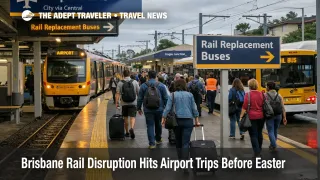
Brisbane rail disruption has become a sharper travel problem just before Easter, because union related cancellations on April 1, 2026 landed only two days before a long run of planned closures that will reshape rail access across South East Queensland. Queensland Rail said about 180 services were cancelled across the Ipswich and Rosewood, and Cleveland lines on Wednesday morning, while official closure notices show major network changes begin on April 3 and continue through April 26. For travelers, the immediate risk is not only a bad commuter day. It is a shrinking margin for airport transfers, hotel arrivals, and onward trips to the Gold Coast, Sunshine Coast, and Brisbane suburbs at the start of a holiday period.
Brisbane Rail Disruption: What Changed
The live disruption on April 1 centered first on the Cleveland and Ipswich and Rosewood corridors. Queensland Rail warned on March 31 that no trains would operate between Darra and Rosewood, and between Central and Cleveland, while ABC reported that only limited rail replacement buses were available. Translink now says full timetabled services are expected to resume on Thursday, April 2, but it also warns that new protected industrial action could still create further network disruption.
The larger issue for travelers starts on Friday, April 3. Queensland Rail, Translink, Cross River Rail, and Airtrain all say major closures will affect the network from April 3 through April 26, 2026. From April 3 through April 11, the Sunshine Coast, Caboolture, Redcliffe, Doomben, Shorncliffe, Airport, Gold Coast, and Beenleigh lines are affected. From April 12 through April 26, the closures continue on the Beenleigh and Gold Coast lines. Buses replace trains on affected sections during the closure periods, and Airtrain warns that some journeys may take significantly longer than usual.
Which Travelers Face the Biggest Transfer Risk
Airport users are the most exposed from April 3 through April 11, especially those expecting a simple rail trip between Brisbane Airport and the city. For the Easter weekend closure window from April 3 through April 6, Translink says Airport line trains will run only between Domestic Airport and Eagle Junction. Passengers heading into central Brisbane then need a bus connection, and Cross River Rail says travelers heading toward the Gold Coast must transfer at Eagle Junction to an express railbus and then connect again further south.
Travelers going south face the next highest risk. During the same Easter window, Beenleigh and Gold Coast trains run as a combined all stops service between Varsity Lakes and Banoon, while railbuses fill the missing section farther north. Translink lists express and all stops railbus links between Boggo Road and Banoon, plus an express service between Banoon and Eagle Junction. That means airport to Gold Coast, airport to inner south Brisbane, and hotel to airport transfers lose the normal rail redundancy that usually helps absorb small delays.
Sunshine Coast travelers also take a meaningful hit in the first phase. Translink says Sunshine Coast line services will not run during the April 3 to April 6 Easter closure, with buses replacing trains between Gympie North and Caboolture in the broader closure plan. That does not affect every Brisbane trip equally, but it raises the odds of longer, more crowded substitution journeys for anyone linking regional stays with Brisbane Airport or the CBD.
What Travelers Should Do Before April 26
For flights from Brisbane Airport, the safest move is to stop treating rail as a single mode trip during the first closure phase. From April 3 through April 11, travelers should expect at least one transfer if they are heading between the airport and central Brisbane, and often more if they are continuing to the Gold Coast or south side suburbs. A practical buffer is an extra 45 to 60 minutes beyond the normal rail journey, with the longer end of that range more sensible on April 3 to April 6 and on Saturday, April 11, when the closure pattern remains broad and bus substitution is heaviest. That recommendation is an inference from the official service plans, which add bus legs and road exposure to trips that are normally rail only.
For hotel arrivals, cruise transfers, and timed tours, the decision point is whether a missed arrival would break the day. If the answer is yes, road based transfers or a night closer to the airport are stronger options than trying to preserve a rail dependent itinerary. Rail replacement buses are still useful, but Translink notes that they are affected by road and traffic conditions, and bikes and e scooters are not allowed on railbuses. That matters for families, travelers with large luggage, and anyone building a same day airport to resort or airport to event connection.
The dates that deserve the biggest caution are April 3 through April 6 for broad Easter weekend disruption, April 7 through April 10 because all lines still see timetable changes, and April 20 through April 26 for Gold Coast and Beenleigh corridor travelers because no trains run between Banoon and Boggo Road while southern services operate as a combined pattern. Even after full Cleveland and Ipswich and Rosewood timetables return, travelers should keep checking Translink's journey planner and same day updates because Queensland Rail says it has received 30 further notices of protected industrial action.
Why Brisbane Rail Risk Stays Elevated Through Easter
This is a compounding disruption story, not a one day strike story. The first order effect is obvious, trains are cancelled or cut back, and buses replace some sections. The second order effect is where the traveler pain rises, because airport access, hotel check in timing, intercity transfers, and Gold Coast or Sunshine Coast connections all become more dependent on roads just as holiday travel ramps up. Once a rail trip becomes train plus bus plus train, small delays spread faster and recovery options shrink.
The closure program is tied to major rail works, including Cross River Rail and other network upgrades. That longer term capacity story is real, but it does not reduce the short term operational hit. In an earlier Adept Traveler article, Summer Rail Closures In Brisbane And Gold Coast outlined how recent Brisbane and Gold Coast closures already pushed travelers onto buses and road based alternatives. The April 2026 pattern revives the same vulnerability, only now it begins after an active labor disruption and with official warnings that more industrial action could follow.
For now, the working assumption should be simple. Rail remains usable for some Brisbane journeys, but it is less direct, less forgiving, and less reliable for airport linked trips through much of April. Travelers who can leave earlier, shift to road transfers, or avoid tight same day connections will protect their itineraries better than those who rely on the normal rail map still functioning as usual.
Sources
- Queensland Rail Urges Unions To Call Off Protected Industrial Action (As At 10am, 1 April 2026)
- Customer Alert: Rail Impacts Due To Protected Industrial Action (As At 31 March 2026)
- Potential Train Disruptions, Protected Industrial Action
- Plan Ahead: April Track Closures For Major Rail Works
- April 2026 Extended Track Closures
- Track Closures, Cross River Rail
- Extended Track Closures, Friday 3rd To Sunday 26th April 2026 Overview
- Trains On Queensland's Ipswich And Cleveland Lines Disrupted As Workers Take Industrial Action