

France River Cruise Demand Stays Strong as Tauck Expands
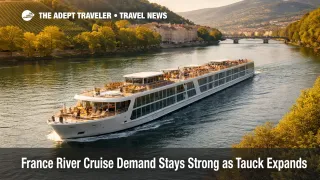
France river cruise demand got another visible vote of confidence on March 27, 2026, when Tauck christened ms Lumière in Lyon, France, ahead of Rhône sailings, while sister ship ms Serene joined the Seine program days later. The immediate traveler takeaway is not just that Tauck has prettier hardware in the market. It is that one of the sector's premium operators is adding meaningful France capacity because it believes demand is strong enough to fill it. Tauck has said France demand remains exceptionally strong, and outside Tauck, other operators have also been opening future river inventory early or adding ships as bookings stay firm.
Tauck says the two ships are part of a broader river expansion that lifts its river cruise capacity by more than 30 percent versus 2025, with another Seine ship and a Douro vessel due in 2027. That matters because river cruising does not expand like ocean cruising. These are small vessels, not floating resorts, and the new France ships still cap out at only 130 guests on ms Lumière and 124 on ms Serene. Additional capacity helps, but it does not create unlimited space, especially when demand clusters around the same rivers, the same shoulder season windows, and the same cabin categories.
Which River Cruise Travelers Feel the Tightest Supply
The travelers most likely to feel pressure first are not necessarily everyone shopping for a river cruise. They are the travelers chasing the most constrained combinations, France in spring and fall, holiday themed departures, premium upper deck cabins, solo friendly inventory, and exact date windows tied to airfare, school calendars, or pre and post cruise land stays. In an earlier Adept Traveler article, River Cruise Demand Rises, Availability May Tighten outlined the broader pattern already forming across the category. That earlier piece pointed to firm selling conditions, limited ship size, and the reality that the best fit inventory usually disappears before the whole market looks "sold out."
Tauck's own France buildout fits that same logic. The line is not only adding new ships, it is concentrating on rivers where product fit is strong, the Rhône for food, wine, and Provence demand, and the Seine for Paris linked itineraries, family sailings, and multi city combinations such as Bordeaux, Paris & the Seine. The mechanism is straightforward. France remains one of the easiest river cruise sells in Europe because it pairs strong gateway appeal, especially Paris, with recognizable food and wine regions, shorter transfer chains than some multi country itineraries, and a travel style that appeals to both first time and repeat river guests.
What Travelers Should Do Before the Best Space Tightens
Travelers interested in France river cruises should book around ship and cabin availability first, then shape airfare and hotel nights around the sailing, not the other way around. That is especially true for travelers who care about a specific deck, suite category, solo pricing, or a narrow departure band in spring harvest season, or the late year festive period. Waiting can still work for broad date ranges and flexible cabin choices, but it is a weaker strategy when the trip depends on one exact fit.
There is also a difference between "availability exists" and "good availability exists." A sailing can still be technically open while the most attractive cabins, best value entry categories, or easiest Paris paired dates are already gone. Travelers comparing brands should also watch what is happening one layer above Tauck. Viking opened its 2026 European river season early because 2024 dates were already selling out and 2025 was moving well, while TUI says it is growing its river fleet in response to rising consumer demand and improving occupancy. That does not prove every departure will sell out, but it does support a market where early planners keep getting rewarded with better fit and less compromise.
A second decision point is operational, not commercial. France river cruise shoppers should pair demand awareness with water level realism. On the Rhône and Seine, weather risk is usually not the same as on the Rhine or Danube, but river conditions still matter to schedule integrity, excursions, and contingency planning. Travelers building expensive Europe trips around a river departure should read beyond brochure language and understand how seasonal conditions can affect the experience. Adept Traveler's 2025 European River Cruise Water Level Outlook remains a useful reference point for how river mechanics can shape trip outcomes.
Why the Market Still Looks Tight Even With New Ships
The broader context is that river cruising keeps benefiting from a demand structure that favors early commitment. The product is small by design, easy to understand, and often bundled in a way that appeals to travelers who want Europe without constant hotel changes, internal flights, or daily repacking. France adds another advantage, it sells a familiar dream to North American travelers. Paris, Normandy, Burgundy, Bordeaux, Provence, and the Rhône wine corridor are easier to imagine and easier to market than many less familiar river combinations. As a result, operators can add ships and still face pressure in the most popular windows.
What happens next is likely more selective tightness, not a universal shortage. The market usually does not run out of all river cruise space at once. It runs short on the combinations people actually want most. Tauck's France expansion should relieve some pressure, and it gives travelers more choice on the Rhône and Seine. But the line's own growth plan, plus similar moves from competitors, points to a category where suppliers still see room to add capacity because demand is there to support it. For travelers, that means the practical rule still holds, book early for exact fit, stay flexible if you are bargain hunting, and treat prime France sailings as finite inventory, not endlessly replaceable product.
Sources
- Tauck Announces Godmothers for New ms Lumière and ms Serene Riverboats
- Tauck Celebrates Christening of New Riverboats in France
- Tauck Christens New River Cruise Ships in France
- Viking Announces Opening of 2026 European River Season
- TUI River Cruises Further Accelerates Growth With Two Next Generation New Build Ships for 2028
- River Cruise Demand Rises, Availability May Tighten
- 2025 European River Cruise Water Level Outlook